(7% discount is applied at checkout)
Cart is empty
Your go-to destination for cutting-edge server products
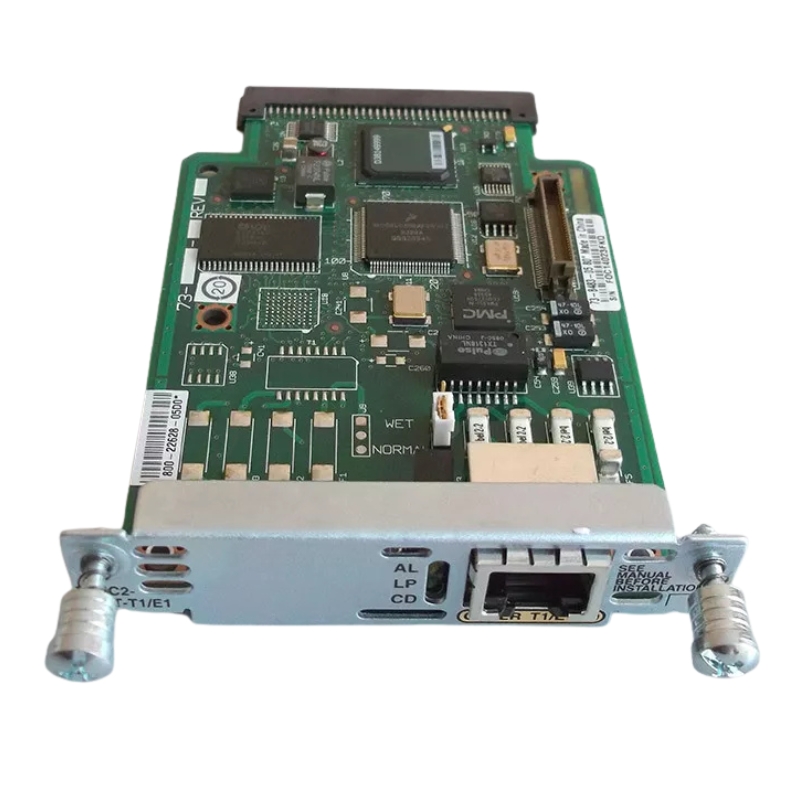


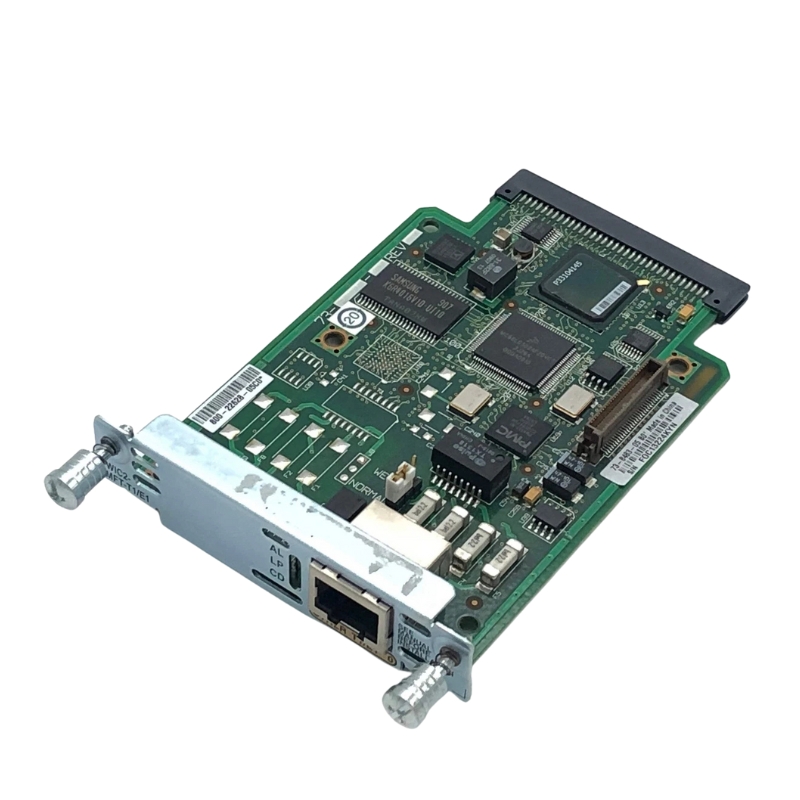
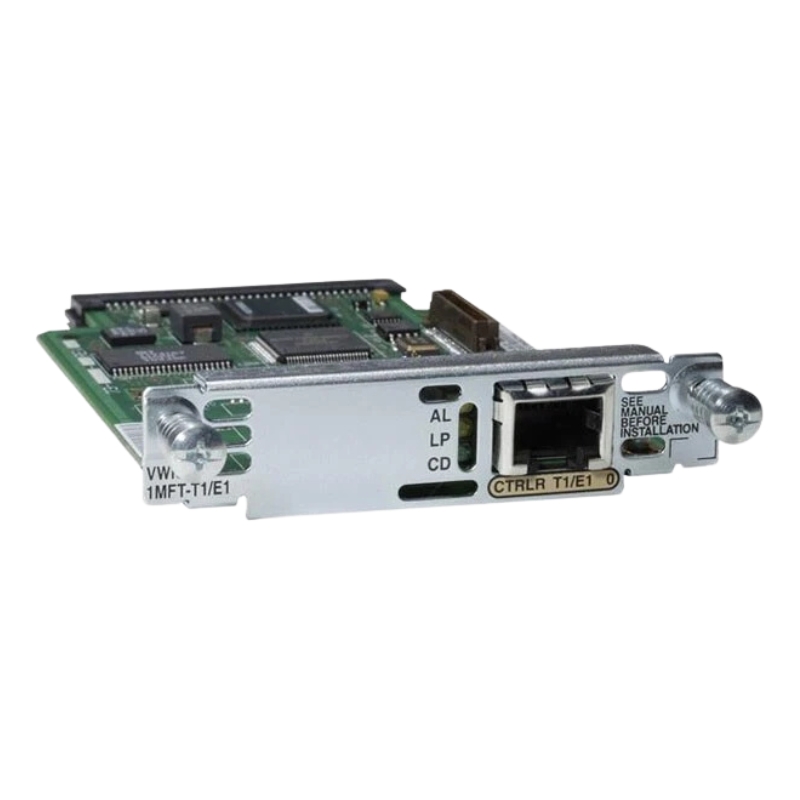
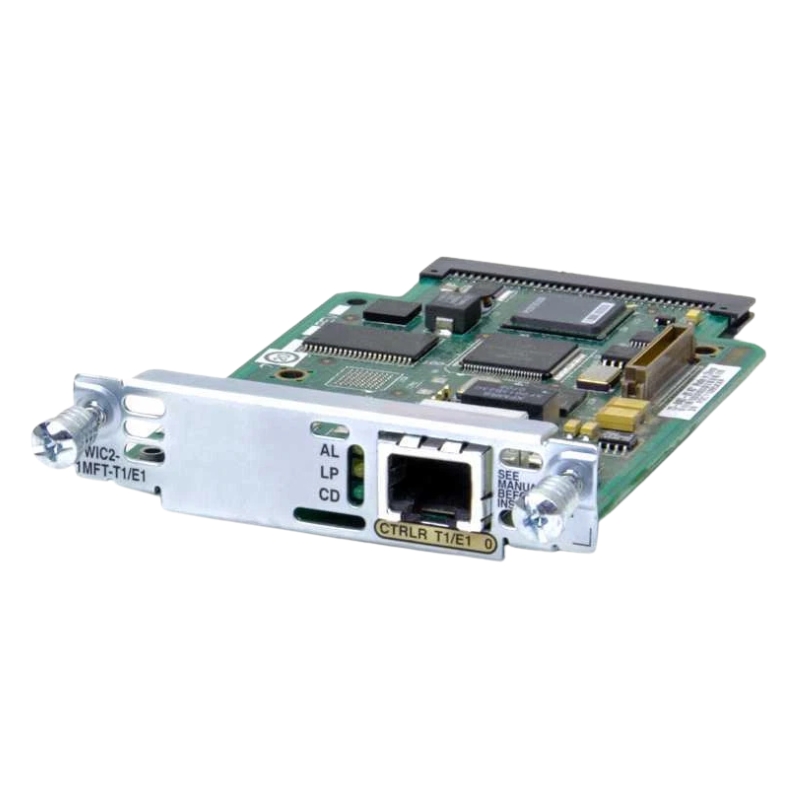
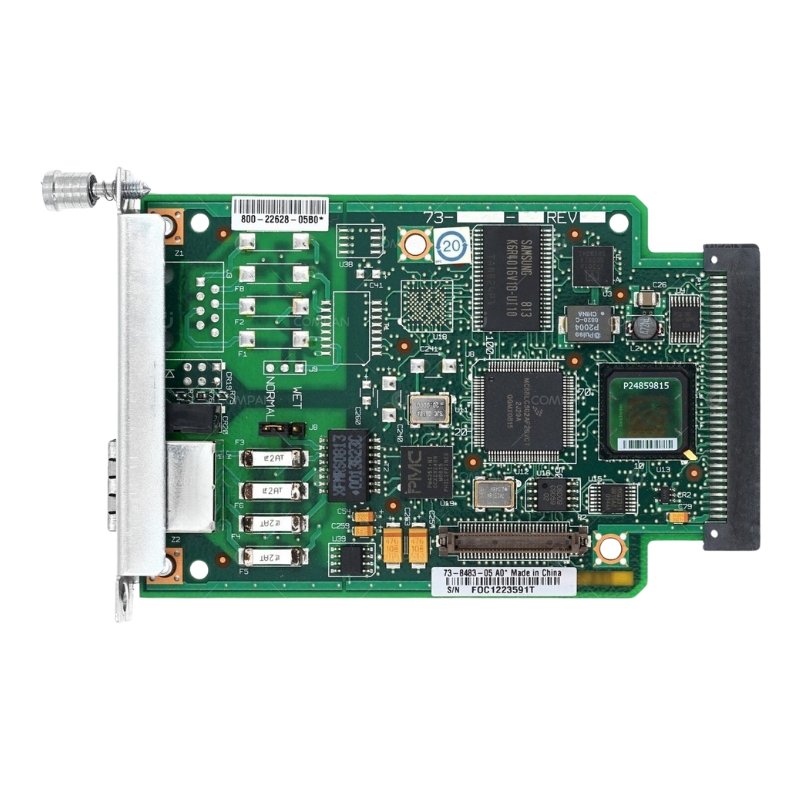
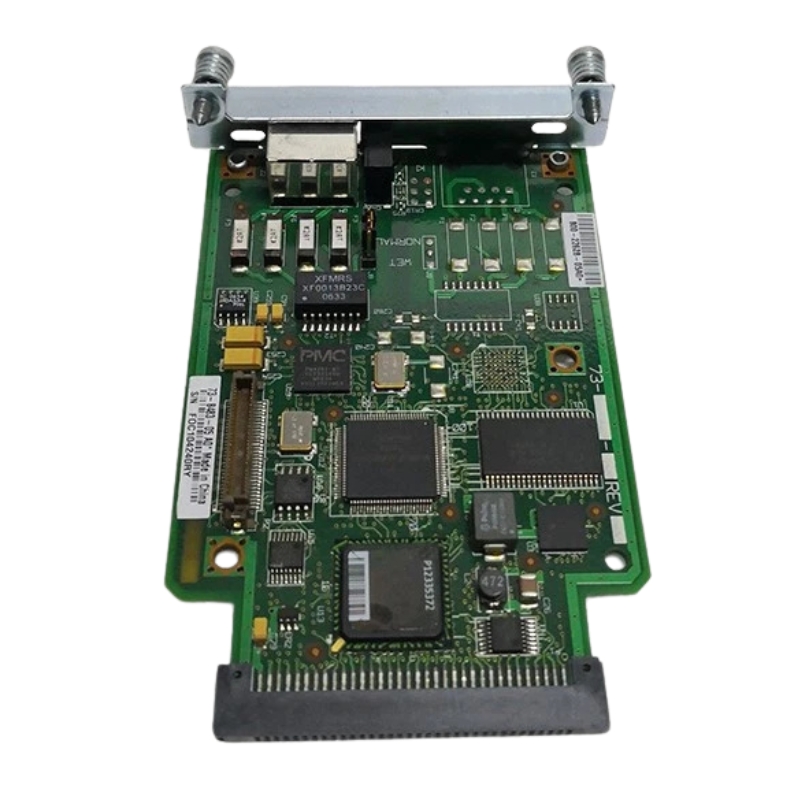
Cisco VWIC2-1MFT-T1/E1 1 Port Voice/WAN Interface Card. Excellent Refurbished with 1 year replacement warranty
| SKU/MPN | Warranty | Price | Condition | You save |
|---|---|---|---|---|
| VWIC2-1MFT-T1/E1 | 1 Year Warranty | $50.00 | Excellent Refurbished | You save: $17.50 (26%) |
| VWIC2-1MFT-T1/E1 | 1 Year Warranty | $220.00 | Factory-Sealed New Retail in Original Box (FSB) | You save: $77.00 (26%) |
The Cisco VWIC2-1MFT-T1/E1 is a high-performance 1-port Voice/WAN Interface Card designed to deliver reliable voice and WAN connectivity for Cisco integrated services routers. Supporting both T1 and E1 digital circuits, this plug-in network module enables organizations to deploy voice, data, and WAN services through a single, compact interface. It is an excellent solution for businesses seeking dependable network expansion with seamless Cisco IOS compatibility.
The Cisco VWIC2-1MFT-T1/E1 supports several industry-standard line coding methods to ensure compatibility with a wide range of telecommunications infrastructures.
The Cisco VWIC2-1MFT-T1/E1 1 Port Voice/WAN Interface Card is a high-performance modular networking component designed to provide flexible voice and data connectivity over T1 and E1 circuits. It is widely deployed in enterprise-grade Cisco router environments where integrated voice and WAN services are required over a single physical interface. This interface card belongs to Cisco’s second-generation WAN Interface Card (WIC) family and is optimized for converged network infrastructures that demand reliable voice transport, data communication, and telephony integration.
Engineered for scalability and reliability, the Cisco VWIC2-1MFT-T1/E1 supports both T1 (commonly used in North America and Japan) and E1 (widely used in Europe, Asia, and other global regions) standards. This dual compatibility makes it a versatile solution for multinational organizations and service providers operating hybrid telecom environments.
The architectural design of the Cisco VWIC2-1MFT-T1/E1 focuses on modular integration with Cisco Integrated Services Routers (ISRs). It functions as a voice and WAN interface expansion module, enabling routers to connect directly to PSTN networks, PBXs, and carrier-provided leased lines. The card supports channelized T1/E1 services, allowing individual time slots to be used for voice calls, data traffic, or signaling.
One of the core capabilities of this interface card is its support for channelized T1 and E1 circuits. A T1 line provides 24 channels at 64 kbps each, while an E1 line provides 32 channels, with 30 available for voice or data and 2 reserved for signaling and framing. This channelization enables efficient bandwidth utilization, allowing organizations to allocate specific channels for voice calls, VoIP gateway connectivity, or legacy data transmission.
The VWIC2-1MFT-T1/E1 card enables intelligent handling of these channels, ensuring synchronized timing and low-latency communication between endpoints. This makes it highly suitable for mission-critical telephony systems.
Unlike traditional interface cards that focus solely on WAN or voice services, the VWIC2-1MFT-T1/E1 combines both functionalities into a single module. This convergence reduces hardware requirements while improving network efficiency. The card supports both circuit-switched voice traffic and packet-based data transmission when used in conjunction with Cisco voice-enabled routers.
The card can be deployed in various network configurations, including voice gateway setups, leased line WAN connections, and hybrid VoIP-PSTN environments. Its flexibility allows network administrators to adapt infrastructure without replacing existing Cisco router hardware.
The ability to support both T1 and E1 standards eliminates the need for separate hardware versions. This feature is especially valuable in global deployments where telecom standards vary by region. The interface automatically adapts to the configured framing and line coding requirements.
The VWIC2-1MFT-T1/E1 ensures clear and reliable voice transmission through precise timing synchronization and jitter reduction mechanisms. It supports voice compression and digital signal processing when integrated with Cisco voice-capable routers, enhancing call quality even over long-distance circuits.
This interface card is designed exclusively for Cisco ISR platforms. It integrates seamlessly with router operating systems such as Cisco IOS, enabling centralized configuration and monitoring. This tight integration reduces configuration complexity and enhances operational efficiency.
The Cisco VWIC2-1MFT-T1/E1 is compatible with a range of Cisco Integrated Services Routers and voice-enabled networking devices. These include legacy and mid-range ISR platforms designed for enterprise branch offices and service provider edge deployments.
In Cisco 1800 Series routers, the VWIC2-1MFT-T1/E1 provides essential voice and WAN connectivity for small to medium branch offices. It enables businesses to establish secure voice links to centralized call managers while maintaining data connectivity over leased T1/E1 lines.
The card is also widely used in Cisco 2800 and 2900 Series routers, where it supports more advanced unified communications deployments. These platforms benefit from higher processing power and enhanced voice capabilities, making them suitable for medium to large enterprises.
In higher-end ISR 3800 Series devices, the VWIC2-1MFT-T1/E1 plays a critical role in large-scale voice gateway deployments. It enables integration with multiple PSTN trunks and supports higher call volumes, ensuring scalability for enterprise communication systems.
The Cisco VWIC2-1MFT-T1/E1 is widely used across enterprise and telecommunications environments due to its ability to support both legacy and modern communication systems. Its primary role is to bridge traditional circuit-switched telephony with IP-based voice networks.
In VoIP deployments, the interface card acts as a gateway between PSTN networks and IP telephony systems. It converts traditional voice signals into digital packets, enabling seamless communication between legacy phone systems and modern unified communications platforms.
Beyond voice applications, the VWIC2-1MFT-T1/E1 is also used for leased line WAN connections. Enterprises utilize this capability to establish dedicated point-to-point data links between branch offices and headquarters, ensuring consistent bandwidth and low latency.
Call centers rely heavily on this interface card for managing high volumes of inbound and outbound calls. Its ability to handle multiple voice channels simultaneously makes it ideal for customer service environments requiring stable telephony infrastructure.
Cisco designs the VWIC2-1MFT-T1/E1 with enterprise-grade reliability in mind. It supports continuous operation in high-demand environments with minimal downtime. The hardware is optimized for low latency voice processing and stable WAN throughput.
Accurate timing is critical in T1/E1 communications. The interface card maintains precise clock synchronization with the carrier network, reducing errors such as slips and jitter that could affect voice quality or data integrity.
The module includes built-in mechanisms for detecting line errors, framing issues, and signal degradation. These diagnostics help network administrators quickly identify and resolve connectivity problems before they impact service availability.
The VWIC2-1MFT-T1/E1 differs from standard WIC modules by combining voice and WAN capabilities. While WIC modules focus primarily on data connectivity, VIC modules are designed specifically for voice interfaces. VWIC modules bridge both functionalities into a single integrated solution.
By combining voice and WAN functionality, the VWIC2-1MFT-T1/E1 reduces hardware complexity, lowers deployment costs, and simplifies network architecture. This makes it a preferred choice for converged communication environments.
Branch offices often use this interface card to maintain secure communication with headquarters over T1/E1 leased lines. It ensures reliable data transfer and voice connectivity without dependency on public internet infrastructure.
Telecom service providers deploy this module at network edges to interface with customer PBX systems and deliver managed voice services.
Organizations transitioning from legacy telephony to VoIP systems use the VWIC2-1MFT-T1/E1 as a bridging solution, enabling gradual migration without service disruption.
Although the interface itself operates at the physical and data link layers, it plays a role in secure voice transmission when integrated with encrypted VoIP systems and secure routing protocols.
The module allows segmentation of voice and data traffic, reducing congestion and improving overall network security by isolating critical communication channels.


 Contact Us
 Information
 Catalog
 Solid State Drives (SSD)
 Network Switches
 Hard Disk Drives
 HBA & Controllers
 PC & Servers
 PC & Server Memory
 CPU & Processors
 Network Routers
 Power Supplies
 Tape Drives & Libraries
 Network Devices
 Computer & Network Cables