(7% discount is applied at checkout)
Cart is empty
Your go-to destination for cutting-edge server products
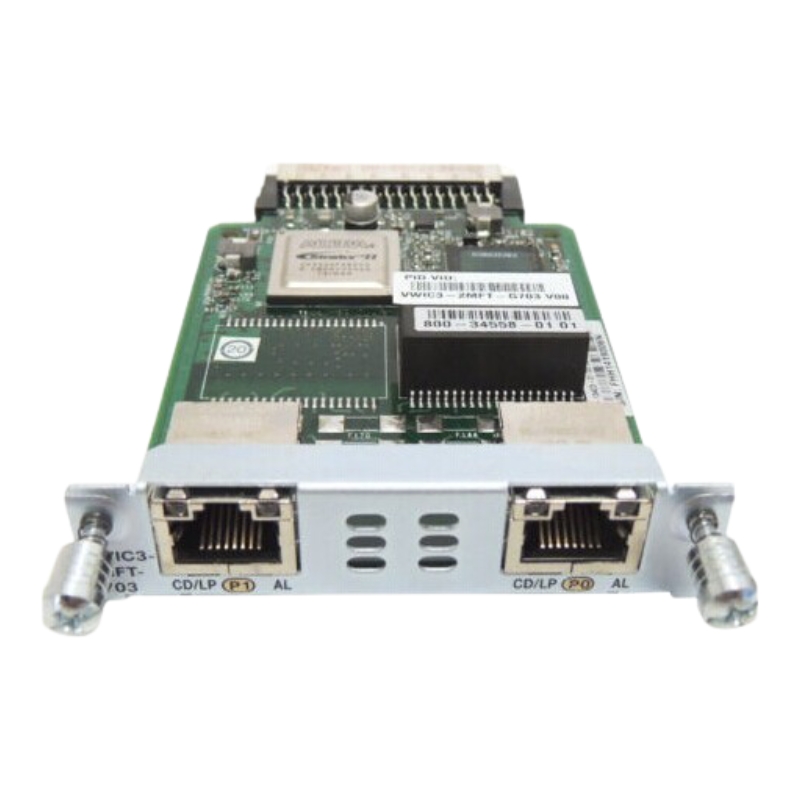


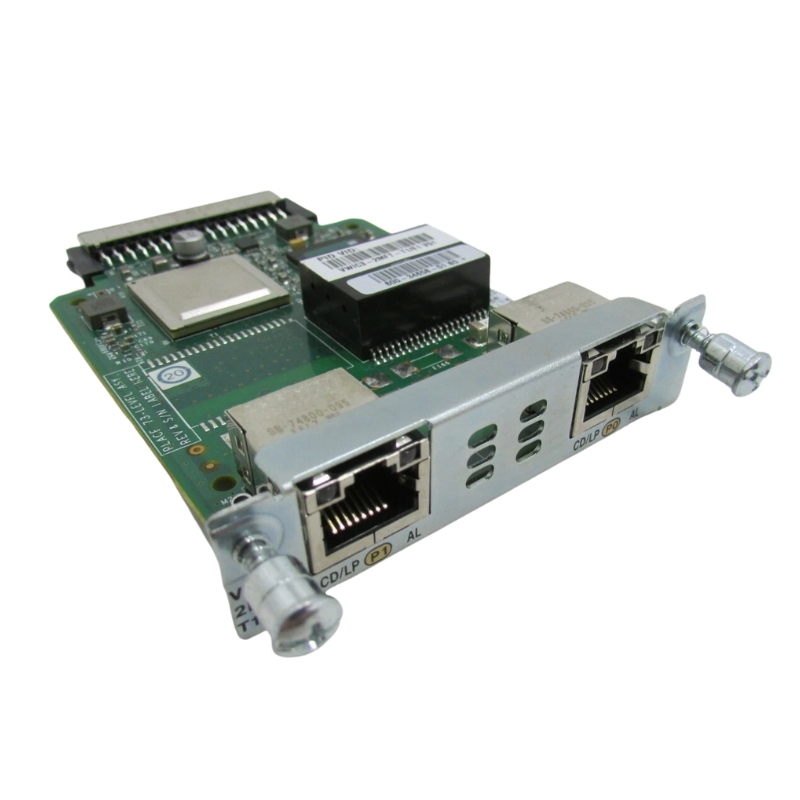
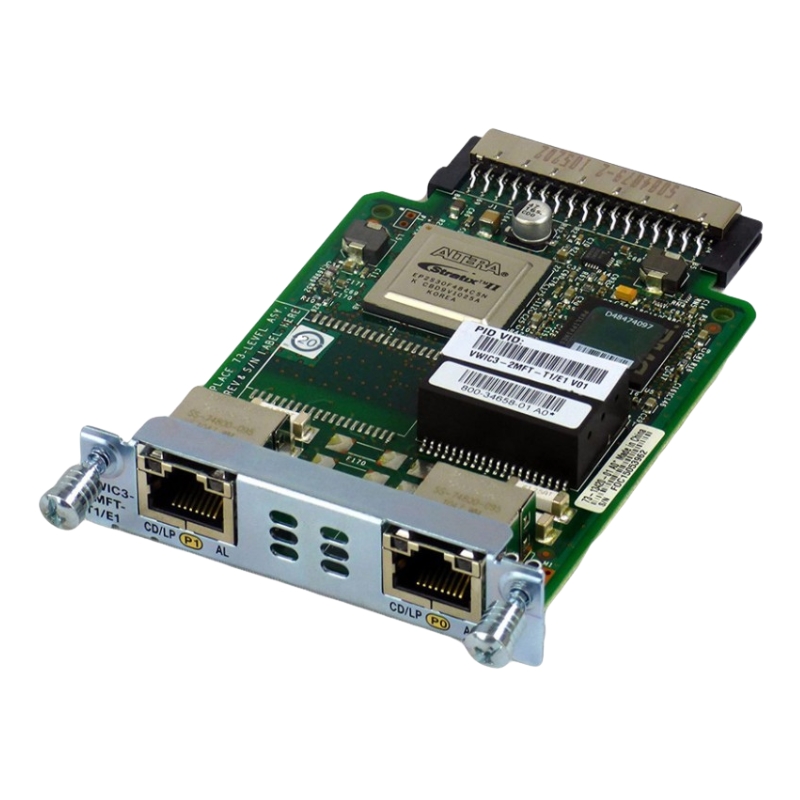
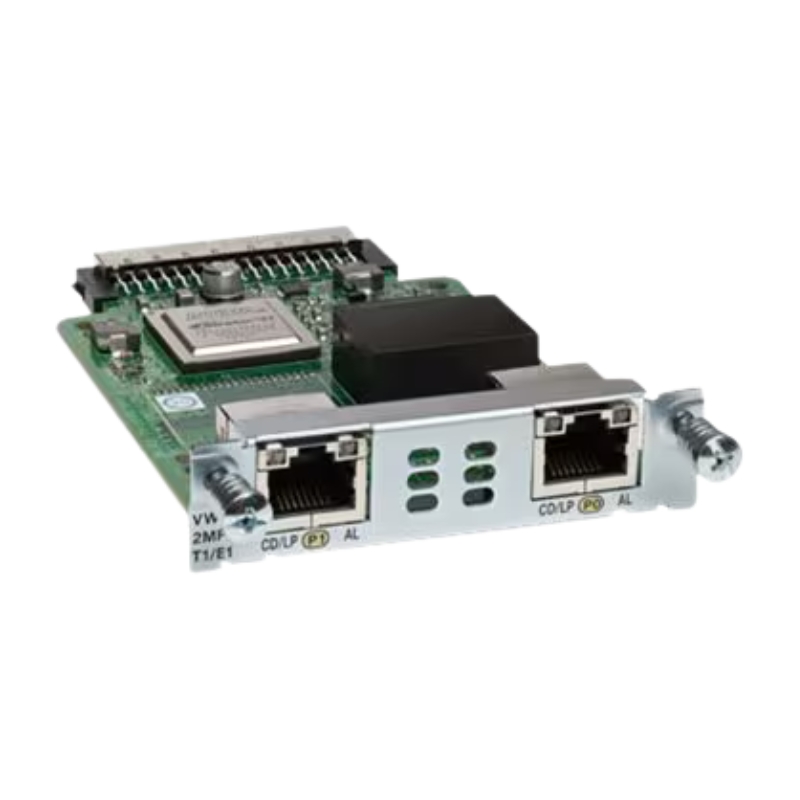
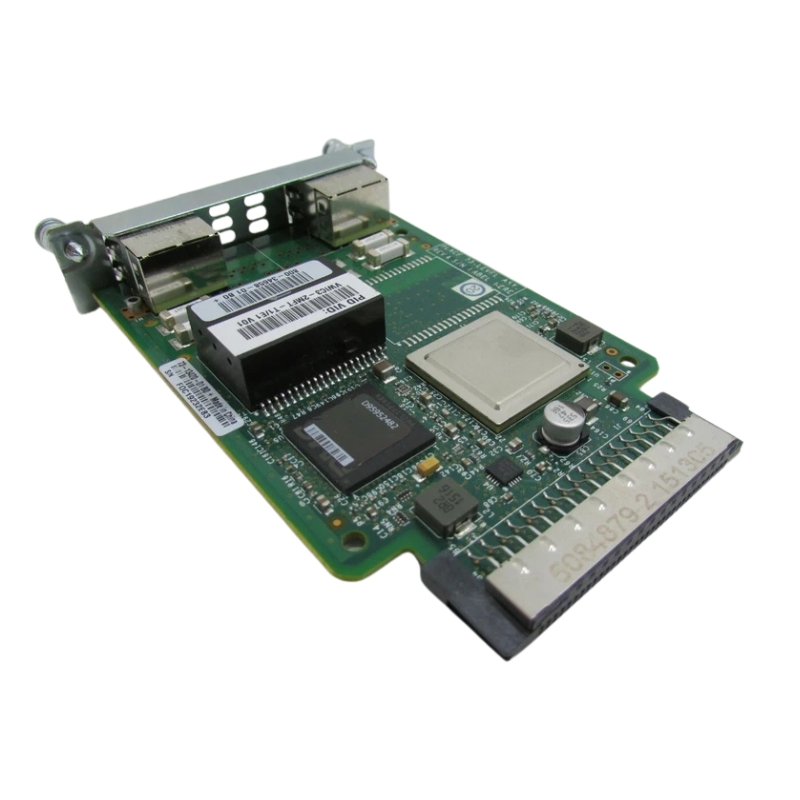
Cisco VWIC3-2MFT-G703 2 Ports Voice/Wan Interface Card. Excellent Refurbished with 1 year replacement warranty
| SKU/MPN | Warranty | Price | Condition | You save |
|---|---|---|---|---|
| VWIC3-2MFT-G703 | 1 Year Warranty | $135.00 | Excellent Refurbished | You save: $47.25 (26%) |
| VWIC3-2MFT-G703 | 1 Year Warranty | $825.00 | Factory-Sealed New Retail in Original Box (FSB) | You save: $288.75 (26%) |
The Cisco VWIC3-2MFT-G703 is a high-performance Voice/WAN Interface Card engineered to expand the functionality of Cisco Integrated Services Routers. Designed for enterprise branch offices and service provider environments, this network module supports simultaneous voice and data connectivity over G.703 digital circuits, delivering reliable communication and seamless WAN integration.
The Cisco VWIC3-2MFT-G703 2 Ports Voice/WAN Interface Card is a high-performance modular network interface solution designed for enterprise-grade routers, enabling integrated voice and data services over traditional WAN infrastructures. Built to support flexible connectivity requirements, this interface card plays a crucial role in hybrid networking environments where legacy telephony systems must coexist with modern IP-based communications. As part of Cisco’s modular WAN interface portfolio, it delivers reliable circuit-switched connectivity through E1 and G.703 standards, ensuring seamless integration into global telecommunications infrastructures.
Within enterprise networking architectures, this interface card is widely adopted for its ability to consolidate voice and WAN traffic, reducing infrastructure complexity while maintaining high availability and deterministic performance. It is especially relevant in deployments involving branch offices, call centers, service provider interconnects, and government communication networks where legacy voice systems remain operational.
The VWIC3-2MFT-G703 is engineered for compatibility with Cisco Integrated Services Routers (ISR), allowing organizations to extend the life of existing telephony investments while gradually transitioning toward full IP convergence.
The Cisco VWIC3-2MFT-G703 is built using a modular architecture that allows it to be inserted into supported Cisco router slots. This modularity ensures that network administrators can scale WAN and voice capabilities without replacing entire routing systems. The dual-port configuration enhances flexibility by enabling simultaneous handling of multiple TDM circuits.
Each of the two ports on the card supports independent operation, allowing administrators to configure separate WAN links or dedicate one port to voice and the other to data traffic. This separation improves traffic engineering and enhances Quality of Service (QoS) control across converged networks.
While installation typically requires planned maintenance windows, the card is designed for stable insertion into compatible ISR platforms, minimizing downtime and ensuring predictable integration into production environments.
The interface card includes embedded digital signal processing capabilities that support encoding, framing, and synchronization for G.703 and E1 standards. These hardware-level optimizations reduce CPU load on the host router, improving overall system performance in high-traffic deployments.
The VWIC3-2MFT-G703 supports key telecommunications standards including G.703, E1, and T1 in certain configurations. G.703 is widely used for digital transmission over physical media such as copper coaxial or balanced twisted pair systems, ensuring interoperability with global telecom infrastructures.
G.703 defines the electrical and physical characteristics of hierarchical digital interfaces. The VWIC3-2MFT-G703 leverages this standard to provide stable 2.048 Mbps E1 connectivity, which is widely used in Europe, Asia, and many international telecom markets.
The card supports structured and unstructured E1 framing formats, enabling compatibility with a wide range of carrier networks. This includes support for time-slot assignment, signaling channels, and channelized voice circuits.
Designed with convergence in mind, the interface card supports voice traffic over TDM circuits, enabling integration with PBX systems and traditional telephony infrastructure. This is particularly important in organizations transitioning toward VoIP while still maintaining analog or digital voice trunks.
The card enables channelized voice processing, allowing individual time slots within an E1 stream to be allocated for separate voice calls. This improves resource utilization and supports high-density voice deployments.
Accurate timing is essential for TDM networks. The VWIC3-2MFT-G703 supports internal and network-based clocking modes to maintain synchronization with carrier networks, reducing jitter and packet loss in voice transmissions.
Organizations with distributed branch offices often rely on E1/G.703 circuits for reliable WAN connectivity. The VWIC3-2MFT-G703 enables secure and consistent data transmission between headquarters and remote sites, supporting mission-critical applications such as ERP systems and centralized databases.
Many enterprises still operate legacy PBX systems that depend on TDM-based voice trunks. This interface card allows direct integration of these systems into Cisco routers, bridging traditional telephony infrastructure with modern IP networks.
In hybrid deployments, the card facilitates coexistence of VoIP and circuit-switched telephony. Calls can be routed dynamically based on network conditions, cost optimization strategies, or redundancy requirements.
Telecommunications providers use G.703 interfaces to interconnect switching centers and aggregation nodes. The VWIC3-2MFT-G703 ensures compatibility with carrier-grade infrastructures, supporting high reliability and low-latency transport.
Industries requiring secure and deterministic communication paths, such as banking and government agencies, benefit from the predictable performance of E1-based WAN links supported by this interface card.
The interface card is compatible with multiple Cisco Integrated Services Routers, allowing organizations to deploy it across various network tiers. Compatibility ensures that enterprises can standardize on a single hardware ecosystem while scaling network capabilities.
The card fits into dedicated VWIC slots within ISR routers, where it is recognized automatically by the system firmware. This plug-and-play capability simplifies deployment and reduces configuration overhead.
The VWIC3-2MFT-G703 integrates with Cisco IOS software, enabling administrators to configure WAN interfaces, voice channels, and routing policies through a unified command-line interface.
Network engineers can configure the card for various operational modes including channelized E1, unchannelized E1, and fractional bandwidth allocation depending on organizational needs.


 Contact Us
 Information
 Catalog
 Solid State Drives (SSD)
 Network Switches
 Hard Disk Drives
 HBA & Controllers
 PC & Servers
 PC & Server Memory
 CPU & Processors
 Network Routers
 Power Supplies
 Tape Drives & Libraries
 Network Devices
 Computer & Network Cables