(7% discount is applied at checkout)
Cart is empty
Your go-to destination for cutting-edge server products
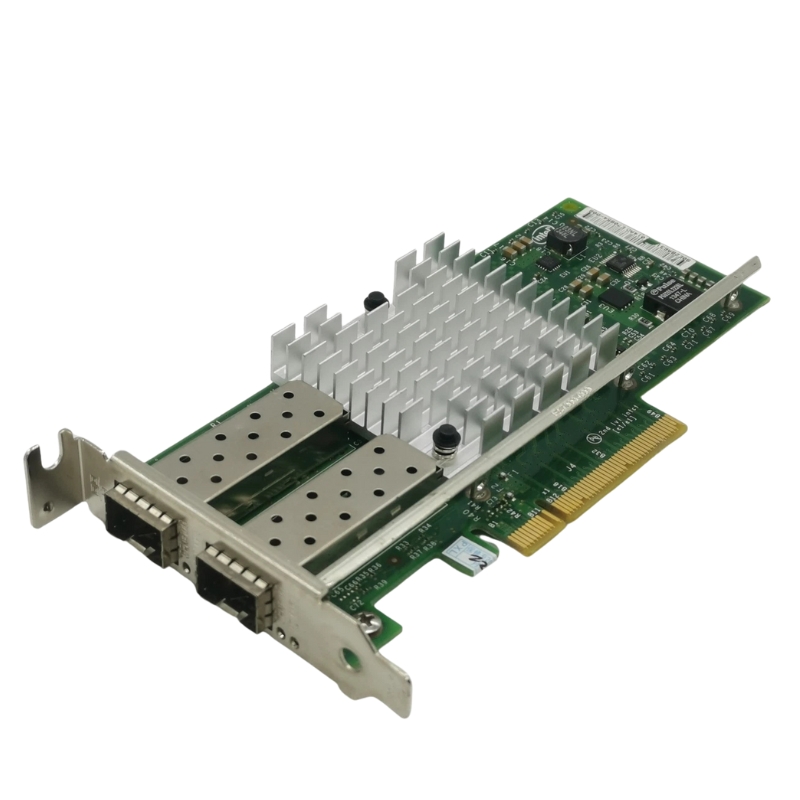


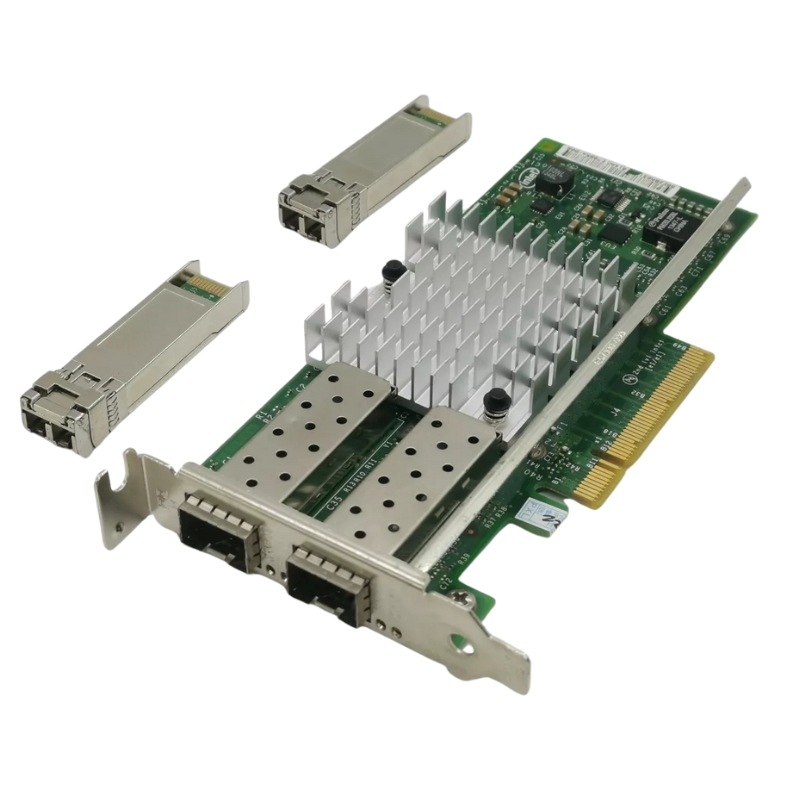
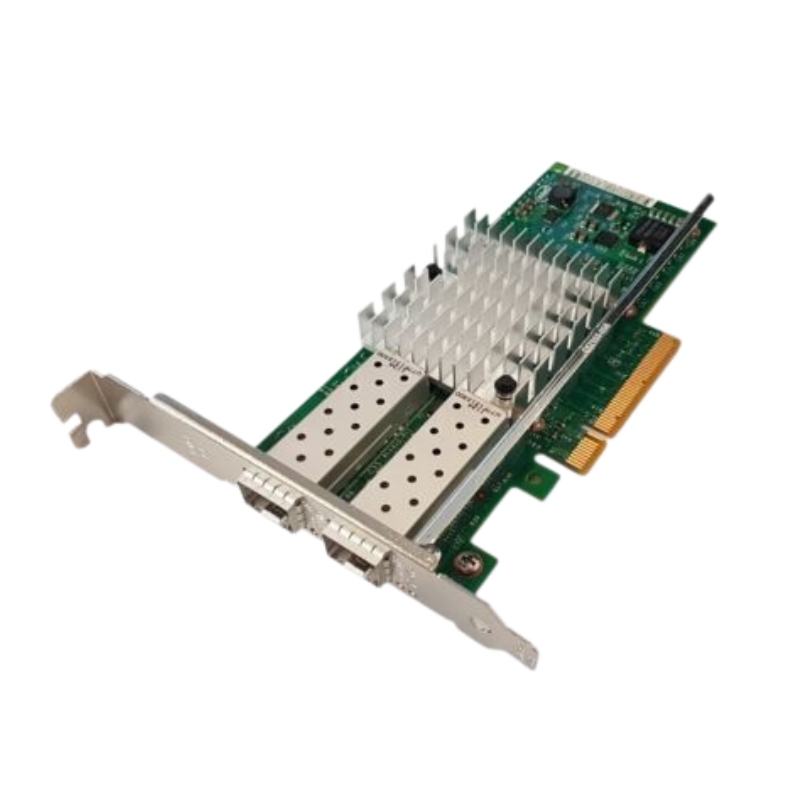
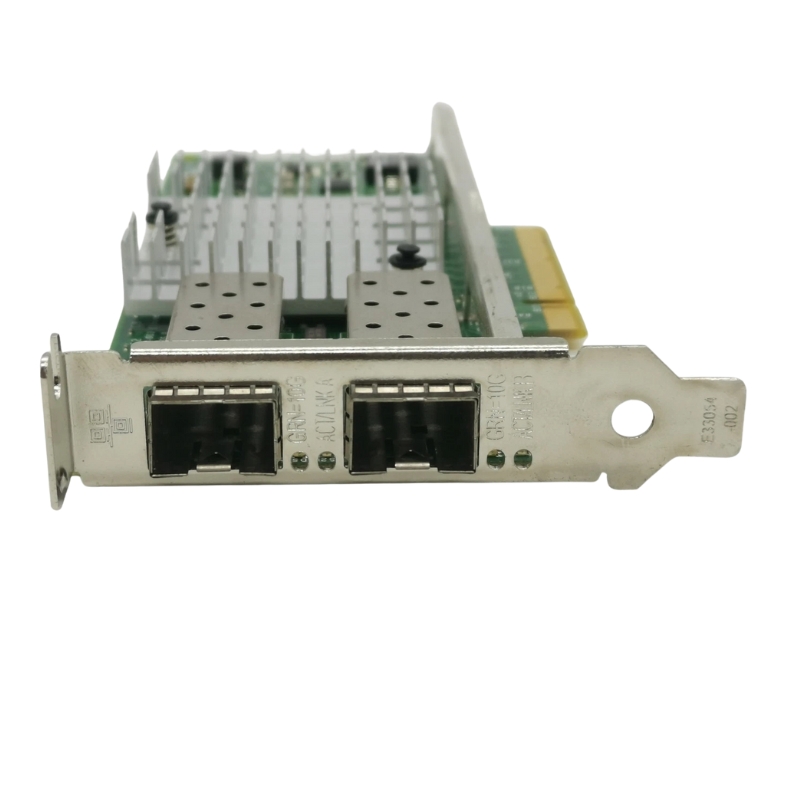
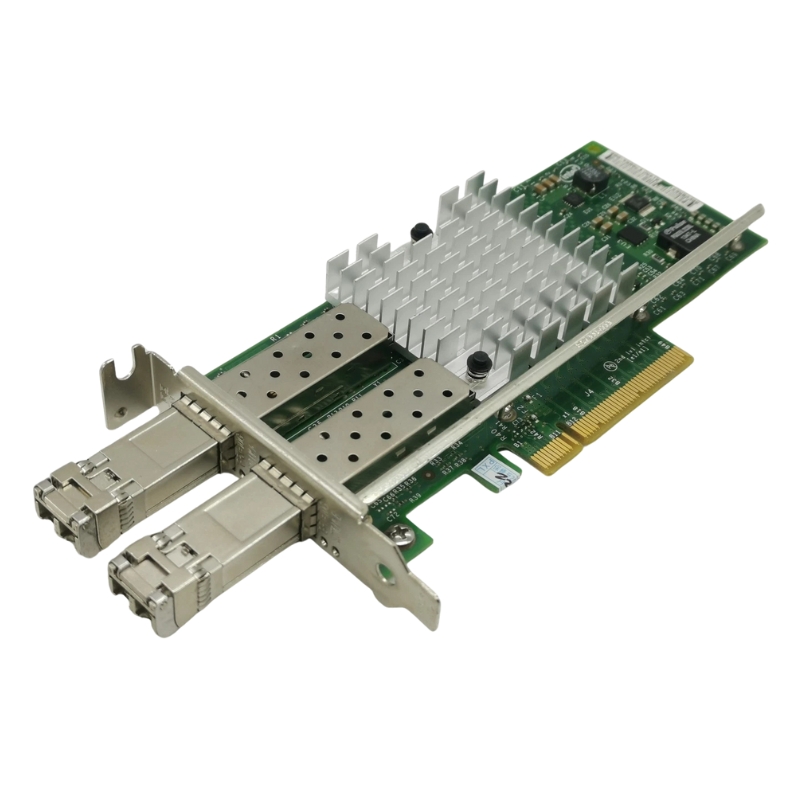
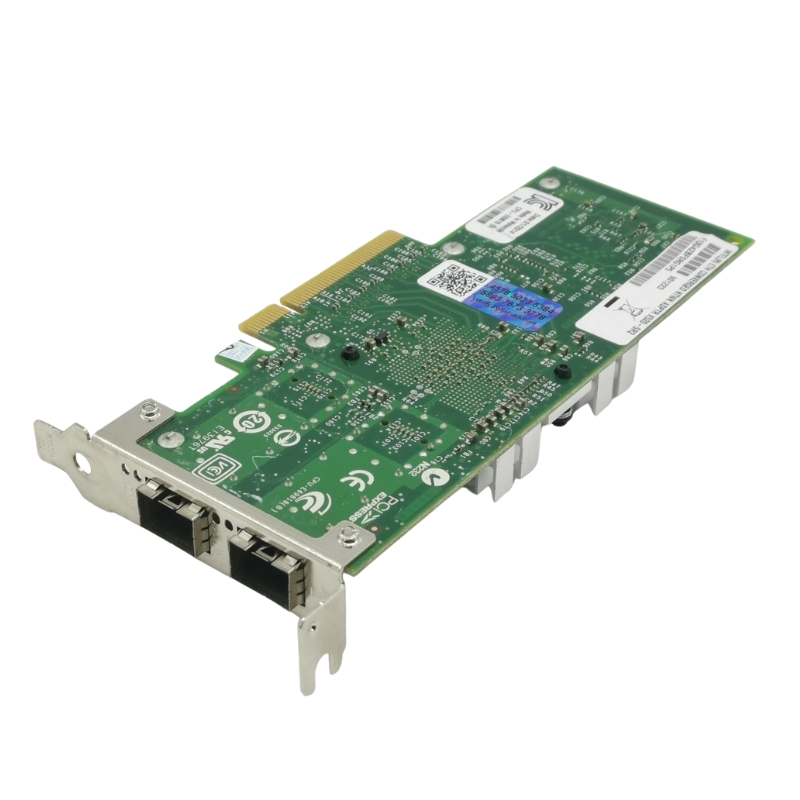
Intel X520-DA2 Dual-Ports SFP+ 10Gigabits Server Adapter. Excellent Refurbished with 1 year replacement warranty
| SKU/MPN | Warranty | Price | Condition | You save |
|---|---|---|---|---|
| X520-DA2 | 1 Year Warranty | $49.00 | Excellent Refurbished | You save: $17.15 (26%) |
| X520-DA2 | 1 Year Warranty | $66.00 | New Sealed in Box (NIB) | You save: $23.10 (26%) |
Overview of Intel X520-DA2 Dual-Ports SFP+ 10G Server Adapter
The Intel X520-DA2 10 Gigabit Ethernet Server Adapter is engineered as a high-throughput networking solution designed to meet the demands of modern enterprise infrastructure, cloud computing platforms, and virtualization-intensive environments. Built as a dual-port network interface card, it delivers exceptional data transmission performance and scalable connectivity for mission-critical applications.
This adapter is structured as a low-profile plug-in expansion card, making it suitable for compact server chassis while maintaining full enterprise-grade capabilities. Its PCI Express 2.0 x8 interface ensures high bandwidth communication between the host system and the network fabric, minimizing bottlenecks and maximizing throughput efficiency.
The category of dual-port 10 Gigabit Ethernet server adapters is fundamentally centered around high-performance network interface cards designed for enterprise servers, virtualization platforms, and data-intensive computing environments. Among these solutions, the Intel X520-DA2 Dual Ports 10GbE Server Adapter stands as a widely adopted architecture built to address the increasing demand for bandwidth-intensive workloads, low-latency communication, and highly reliable network throughput across modern IT infrastructures.
This category represents a transition from traditional Gigabit Ethernet toward significantly faster 10GbE environments, where server consolidation, cloud computing, virtualization, and software-defined networking require stable and predictable network performance. Dual-port configurations such as those found in this adapter category are designed to provide redundancy, load balancing, and increased aggregate bandwidth without requiring multiple single-port cards, making them essential in enterprise-grade deployments.
At the heart of this category lies a sophisticated network controller architecture built around Intel’s 82599 10 Gigabit Ethernet controller family. This silicon foundation enables advanced packet processing capabilities that reduce CPU overhead while improving throughput efficiency in server environments. The controller integrates multiple hardware offloading engines that handle checksum calculation, segmentation tasks, and packet filtering operations directly on the adapter hardware.
The dual-port design integrates two independent 10GbE interfaces within a single PCI Express card, allowing simultaneous data transmission and reception across two separate network channels. This architecture is particularly useful in environments requiring traffic segmentation, such as separating storage traffic from application traffic or isolating production and management networks.
The Intel X520-DA2 category utilizes SFP+ (Small Form-Factor Pluggable Plus) interfaces, which provide modular connectivity options that can be tailored to specific deployment requirements. This flexibility allows system administrators to select either direct attach copper (DAC) cables for short-range connections or optical transceivers for longer-distance fiber optic networking.
SFP+ technology plays a critical role in ensuring compatibility across a wide range of networking environments. In high-density data centers, DAC cables are often preferred for their low latency and cost efficiency, while optical modules are deployed in campus-level or inter-rack communication scenarios requiring extended reach. The adaptability of SFP+ cages makes this adapter category highly versatile for different infrastructure topologies.
The dual-port 10GbE server adapter category relies heavily on PCI Express architecture to deliver the necessary bandwidth between the network controller and the host system. Typically operating over PCIe Gen2 or higher interfaces, these adapters are designed to ensure that the full potential of dual 10GbE ports can be utilized without bottlenecking internal system resources.
Efficient lane allocation within the PCIe interface ensures balanced data flow, minimizing latency and maximizing throughput. This is essential in environments such as virtualization clusters and storage arrays, where consistent and high-speed data movement is critical to maintaining performance stability.
A defining characteristic of this category is its strong support for virtualization technologies, including Single Root I/O Virtualization (SR-IOV). This capability allows the physical network adapter to be partitioned into multiple virtual functions, enabling direct assignment of network resources to virtual machines.
By bypassing the hypervisor’s software switching layer, SR-IOV significantly reduces latency and improves packet processing efficiency. This is particularly important in cloud computing environments where multiple tenants share physical infrastructure but require isolated and predictable network performance.
The dual-port nature of the adapter further enhances virtualization flexibility by allowing separation of different traffic types across physical interfaces while still supporting multiple virtual functions on each port.
Performance optimization in the dual-port 10GbE adapter category is achieved through a combination of hardware and driver-level enhancements. Features such as interrupt moderation reduce CPU interruptions during high packet rates, allowing systems to process network traffic more efficiently.
Multiple transmit and receive queues enable parallel processing of network packets, distributing workloads across available CPU cores. This is especially beneficial in multi-core server architectures where network processing can be parallelized to improve overall system responsiveness.
Additionally, adaptive flow control mechanisms help prevent packet loss during periods of network congestion, ensuring stable throughput even under heavy load conditions.
The dual-port 10GbE server adapter category is widely deployed in data centers supporting high-performance computing clusters, virtualization platforms, and enterprise application servers. These environments demand consistent low-latency connectivity for workloads such as database replication, distributed computing, and large-scale analytics processing.
In storage networking scenarios, such as iSCSI and NAS deployments, the adapter provides reliable high-speed access to shared storage resources. The dual-port configuration allows separation of storage traffic from general application traffic, improving performance predictability and reducing congestion.
Cloud infrastructure providers also rely on this category to deliver scalable network performance across virtualized environments, ensuring that tenant workloads maintain consistent connectivity without interference from neighboring workloads.
Support for multiple operating systems is a critical component of the dual-port 10GbE adapter category. Drivers are available for major server operating systems including various Linux distributions, Windows Server environments, and virtualization platforms such as VMware ESXi.
These drivers are optimized to leverage hardware acceleration features built into the adapter, ensuring that advanced capabilities such as checksum offloading, segmentation offload, and RSS (Receive Side Scaling) are fully utilized. This integration allows system administrators to deploy the adapter in heterogeneous environments without compatibility concerns.
Reliability is a core design principle in this category of network adapters. Dual-port configurations enable failover capabilities, allowing one port to take over traffic in the event of a link failure. This ensures continuous network availability, which is essential in mission-critical environments where downtime is not acceptable.
Link aggregation technologies further enhance performance by combining both ports into a single logical interface. This increases available bandwidth while also providing redundancy. Load balancing algorithms distribute traffic across both interfaces based on predefined policies, improving efficiency and resilience.
The dual-port 10GbE server adapter category is engineered with energy efficiency in mind, particularly for deployment in dense server racks where thermal management is critical. Advanced power management features dynamically adjust energy consumption based on network load, reducing unnecessary power usage during periods of low activity.
Thermal design considerations ensure that heat generated by high-speed data transmission is effectively dissipated through server airflow systems. This is essential for maintaining long-term reliability and preventing performance degradation due to overheating.
As enterprise networks evolve toward leaf-spine architectures and hybrid cloud models, the demand for scalable and high-throughput network adapters continues to increase. The dual-port 10GbE server adapter category is well-suited for these environments due to its ability to handle high volumes of east-west traffic within data centers.
This scalability ensures that organizations can expand their infrastructure without requiring fundamental changes to their networking hardware strategy. The adapter’s compatibility with modern networking standards allows it to remain relevant even as bandwidth demands continue to grow.
Security is increasingly important in modern network infrastructure, and this category of adapters includes hardware-level features designed to enhance data protection. Traffic segmentation capabilities allow administrators to isolate sensitive workloads, reducing the risk of cross-traffic interference or unauthorized access.
By processing certain security functions at the hardware level, the adapter reduces reliance on software-based filtering systems, improving both performance and security efficiency. This is particularly valuable in regulated industries such as finance, healthcare, and government sectors.


 Contact Us
 Information
 Catalog
 Solid State Drives (SSD)
 Network Switches
 Hard Disk Drives
 HBA & Controllers
 PC & Servers
 PC & Server Memory
 CPU & Processors
 Network Routers
 Power Supplies
 Tape Drives & Libraries
 Network Devices
 Computer & Network Cables