(7% discount is applied at checkout)
Cart is empty
Your go-to destination for cutting-edge server products
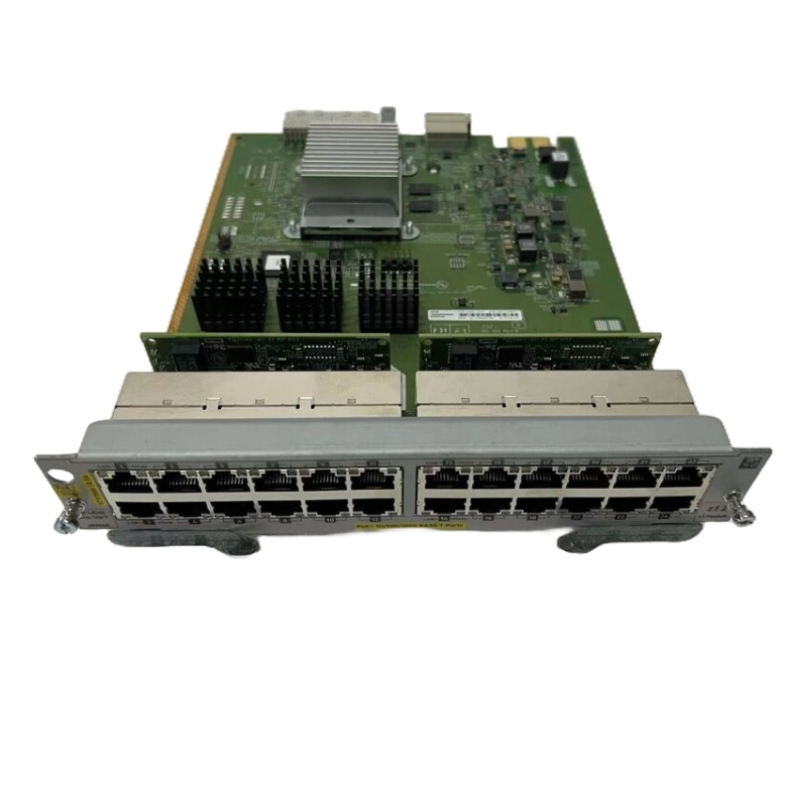


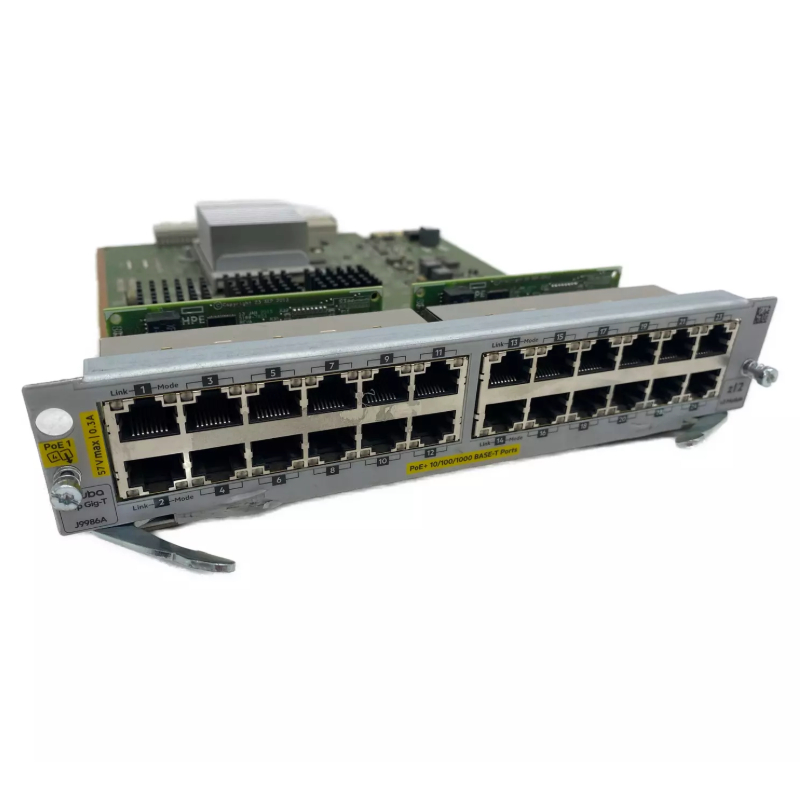
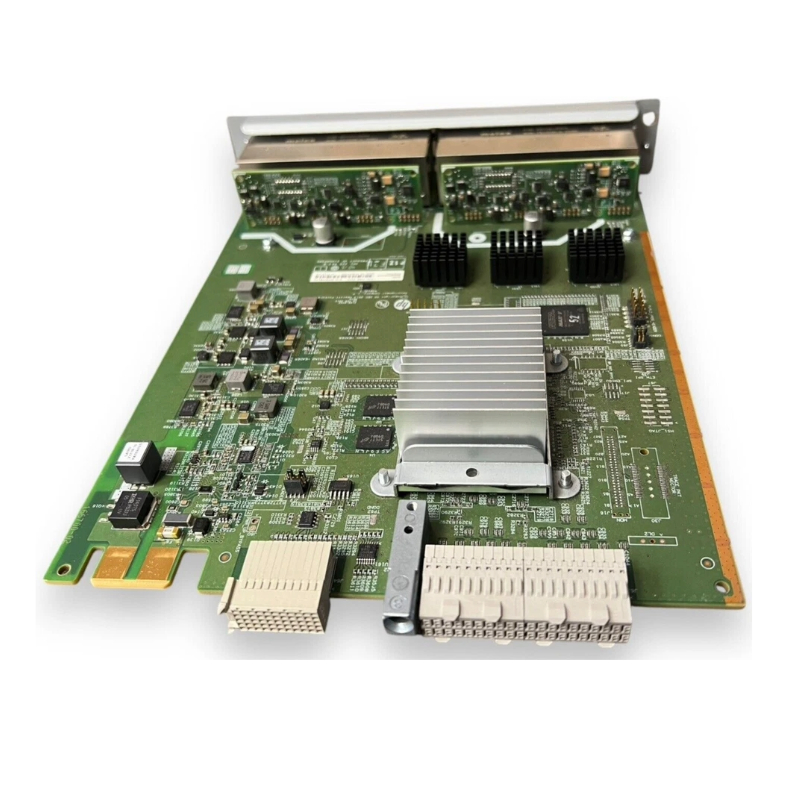
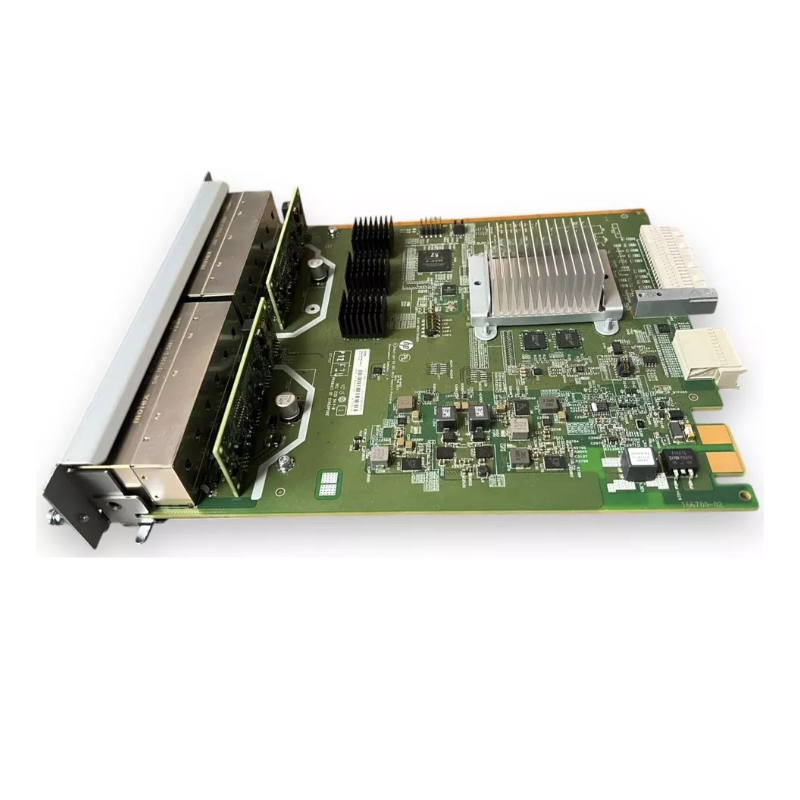
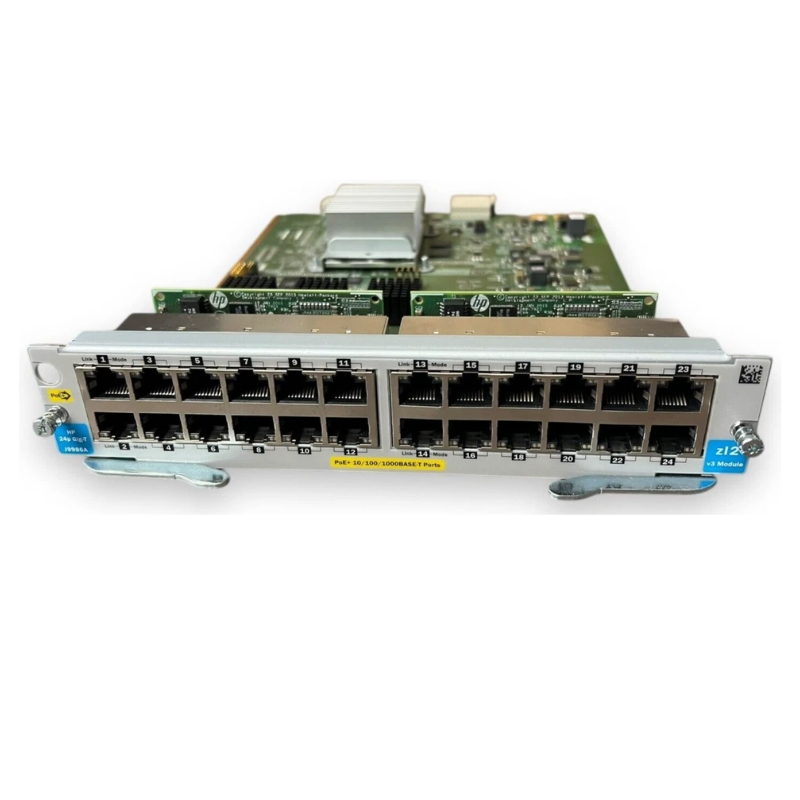
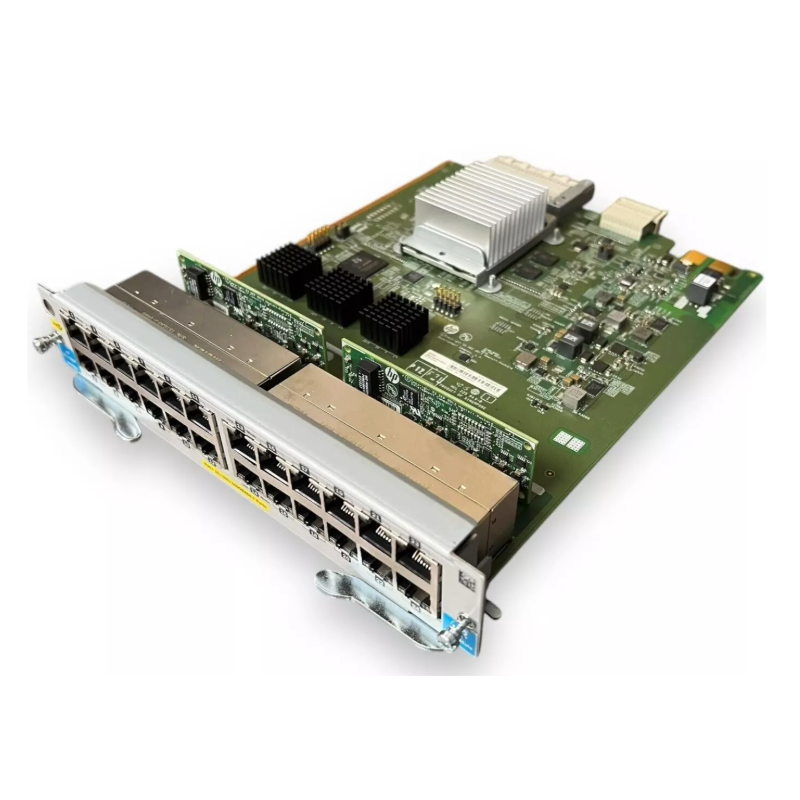
HPE J9987A Expansion Module V3 Zl2 24 Port Expansion 10/100/1000 Base-T Module. New Sealed with 1 year replacement warranty
The HPE J9987A Expansion Plug‑In Module is a high‑performance 10/100/1000 Base‑T network interface solution designed to extend switching capacity with reliable wired connectivity. With 24 Gigabit Ethernet ports and advanced security features, this V3 Zl2 expansion module is ideal for modern enterprise infrastructures requiring stable, high‑speed data transmission.
The HPE J9987A Expansion Plug-In Module 10/100/1000 Base-T Module 1GBPS 24 Ports V3 Zl2 Expansion Module represents a highly versatile and scalable networking component designed for modern enterprise environments. As part of the HPE Aruba and ProCurve switching ecosystem, this expansion module is engineered to extend port density, enhance performance, and deliver flexible copper connectivity for a wide range of applications. In demanding data centers, campus networks, and branch offices, organizations rely on expansion modules like the HPE J9987A to optimize their infrastructure, support evolving workloads, and maintain consistent network reliability. This category focuses on 10/100/1000 Base-T plug-in modules that provide Gigabit Ethernet over copper, enabling seamless integration with existing cabling while offering advanced management and security features.
The HPE J9987A Expansion Plug-In Module is tailored for switches that support the V3 Zl2 architecture, giving IT teams the ability to scale their networks without replacing core hardware. With 24 ports of 10/100/1000 Base-T connectivity, it delivers high-density Gigabit access for users, servers, and edge devices. This category is ideal for organizations seeking to expand their switching capacity, improve bandwidth availability, and maintain a consistent management experience across their infrastructure. By leveraging the HPE J9987A module, businesses can address growing traffic demands, support bandwidth-intensive applications, and ensure that their network remains agile and future-ready.
Within the broader category of HPE expansion modules, the J9987A stands out for its combination of performance, reliability, and compatibility. It is designed to integrate seamlessly into supported chassis-based switches, offering hot-swappable installation and simplified deployment. The 10/100/1000 Base-T ports allow automatic negotiation of speed, ensuring that legacy devices and modern Gigabit endpoints can coexist on the same network. This flexibility makes the module suitable for mixed environments where different generations of hardware must operate together. As organizations modernize their infrastructure, the HPE J9987A Expansion Plug-In Module provides a cost-effective path to higher port density and improved throughput without requiring a complete overhaul of existing systems.
The category of 10/100/1000 Base-T expansion modules, including the HPE J9987A, is defined by several core characteristics that make these components essential in enterprise networking. First, they provide copper-based Gigabit Ethernet connectivity, which is widely used in office environments and data centers due to the prevalence of twisted-pair cabling. This allows organizations to leverage existing infrastructure while upgrading performance. Second, these modules are designed for modular switches, enabling IT teams to add or replace ports as needed, rather than investing in entirely new devices. Third, they support auto-negotiation across 10 Mbps, 100 Mbps, and 1000 Mbps speeds, ensuring compatibility with a broad range of endpoints.
The HPE J9987A Expansion Plug-In Module exemplifies these characteristics by offering 24 ports of flexible copper connectivity. Each port can dynamically adjust to the connected device’s capabilities, providing optimal speed and duplex settings. This is particularly valuable in environments where older devices still operate at 10 or 100 Mbps, while newer workstations and servers require full Gigabit throughput. The module’s design also emphasizes reliability, with robust hardware components and firmware that support continuous operation in mission-critical networks. As part of the V3 Zl2 expansion family, it integrates with advanced switching features such as Quality of Service, VLAN segmentation, and security policies, ensuring that expanded port capacity does not compromise network control.
Another defining characteristic of this category is scalability. Expansion modules like the HPE J9987A allow organizations to grow their networks incrementally. Instead of deploying additional standalone switches, IT teams can populate existing chassis with new modules, increasing port density while maintaining centralized management. This approach reduces complexity, simplifies cabling, and helps maintain a consistent configuration across the network. The 1GBPS per port capability ensures that each connection can handle modern application traffic, including cloud services, unified communications, and high-definition media. As a result, the category of 10/100/1000 Base-T expansion modules is closely associated with future-proofing strategies in enterprise networking.
The architecture of the HPE J9987A V3 Zl2 Expansion Module is designed to align with HPE’s modular switching platforms, providing a robust foundation for high-performance networking. The V3 Zl2 architecture supports advanced features such as enhanced resiliency, improved throughput, and optimized power efficiency. Within this framework, the J9987A module operates as a line card that adds 24 copper Gigabit ports to the host switch. This architecture allows the module to benefit from the switch’s control plane, management interface, and backplane bandwidth, ensuring that expanded connectivity does not create bottlenecks.
The module’s hardware design includes high-quality transceivers, integrated circuitry for auto-negotiation, and support for full-duplex communication. These elements work together to deliver stable and consistent performance across all ports. The V3 Zl2 architecture also emphasizes modularity, enabling IT teams to mix and match different types of expansion modules within the same chassis. For example, organizations can deploy a combination of copper and fiber modules, PoE-enabled cards, and specialized uplink modules to create a tailored solution that meets their specific requirements. The HPE J9987A fits into this ecosystem as a versatile copper connectivity option that complements other modules.
From a management perspective, the architecture ensures that the J9987A module can be configured and monitored using the same tools and interfaces as the host switch. This includes command-line interfaces, web-based management, and centralized network management platforms. Administrators can assign VLANs, configure QoS policies, and apply security rules to the ports on the module just as they would for any other interface on the switch. This unified approach simplifies operations and reduces the learning curve for IT staff. The architecture also supports firmware updates and diagnostics, allowing organizations to maintain the module’s performance and security posture over time.
The HPE J9987A Expansion Plug-In Module is specifically designed to integrate with compatible HPE switch chassis that support the V3 Zl2 architecture. This integration is seamless, with the module slotting into designated expansion bays and automatically recognized by the system. Once installed, the module becomes part of the switch’s overall interface set, contributing additional ports that can be used for access, aggregation, or specialized connectivity. The integration process is straightforward, often requiring minimal downtime, which is crucial for organizations that need to maintain continuous network availability.
The physical design of the module ensures secure and stable installation, with connectors and locking mechanisms that prevent accidental dislodging. The chassis provides power and cooling, allowing the module to operate within optimal temperature ranges. This integration also means that the module benefits from the switch’s redundancy features, such as dual power supplies and failover mechanisms. In high-availability environments, this is particularly important, as it ensures that expanded port capacity does not introduce new points of failure. The HPE J9987A module thus becomes a natural extension of the switch, enhancing its capabilities while maintaining the same reliability standards.
From a configuration standpoint, integration with the chassis allows administrators to treat the module’s ports as native interfaces. They can be grouped into link aggregations, assigned to specific VLANs, or configured for specialized roles such as voice or video traffic. This level of integration supports sophisticated network designs, where different modules within the chassis serve distinct functions. The J9987A’s copper ports can be used for user access, while other modules provide fiber uplinks to core switches or data centers. This modular approach enables organizations to build flexible and scalable networks that can adapt to changing requirements.
Performance is a critical factor in the category of expansion modules, and the HPE J9987A is engineered to deliver consistent throughput across all 24 ports. Each port supports 1GBPS speeds, ensuring that devices connected to the module can take full advantage of Gigabit Ethernet. In environments with high traffic volumes, such as campus networks and data centers, this capability is essential for maintaining responsive applications and minimizing latency. The module’s internal architecture is optimized to handle concurrent traffic flows, leveraging the switch’s backplane bandwidth to avoid congestion.
The auto-negotiation feature allows the module to adapt to different device capabilities, ensuring that each connection operates at the highest supported speed. This is particularly useful in mixed environments where some endpoints may still rely on 10 or 100 Mbps connections. The module can accommodate these devices without compromising overall performance, allowing organizations to modernize their infrastructure gradually. Additionally, the HPE J9987A supports full-duplex communication, which effectively doubles the potential throughput by allowing simultaneous send and receive operations. This is important for applications that generate bidirectional traffic, such as collaboration tools and cloud services.
Quality of Service features available on the host switch can be applied to the module’s ports, enabling administrators to prioritize critical traffic. For example, voice and video streams can be given higher priority to ensure smooth communication, while bulk data transfers are managed to prevent them from overwhelming the network. This level of control helps maintain performance even under heavy load. The module’s design also takes into account power efficiency, ensuring that it operates within acceptable consumption levels while delivering high throughput. As a result, the HPE J9987A Expansion Plug-In Module is well-suited for organizations that require both performance and efficiency in their networking components.
The category of HPE J9987A Expansion Plug-In Module 10/100/1000 Base-T Module 1GBPS 24 Ports V3 Zl2 Expansion Module encompasses a variety of use cases in enterprise networking. One of the most common scenarios is expanding access layer connectivity in campus networks. As organizations grow, they often need to support more users, devices, and applications. By installing the J9987A module in existing switches, IT teams can add 24 additional Gigabit ports, providing the capacity needed to connect new workstations, IP phones, wireless access points, and other endpoints. This approach avoids the need for additional standalone switches, simplifying management and reducing hardware costs.
Another key use case is in branch office environments, where space and budget constraints may limit the deployment of large numbers of switches. The HPE J9987A module allows organizations to maximize the capabilities of a single chassis-based switch, providing sufficient port density to support all local devices. This is particularly valuable in remote locations where IT resources are limited, as it reduces the complexity of the network and makes it easier to manage remotely. The module’s reliability and performance ensure that branch offices can access central resources and cloud services without experiencing bottlenecks.
In data center environments, the J9987A module can be used to provide dedicated connectivity for specific server racks or application clusters. For example, a set of servers running a particular application can be connected to the module’s ports, allowing administrators to apply tailored policies and monitoring. The module’s Gigabit speeds are sufficient for many workloads, and its integration with the switch’s management tools makes it easy to track performance and troubleshoot issues. This use case highlights the flexibility of the category, as expansion modules can be deployed in different parts of the network to meet specific needs.
Modern enterprise applications place significant demands on network infrastructure, and the HPE J9987A Expansion Plug-In Module is designed to support these workloads effectively. Applications such as unified communications, video conferencing, cloud-based productivity suites, and real-time collaboration tools require consistent bandwidth and low latency. The module’s 1GBPS per port capability ensures that endpoints have sufficient connectivity to handle these applications without degradation. In addition, the ability to apply QoS policies to the module’s ports allows administrators to prioritize traffic from critical applications, ensuring that they receive the necessary resources.
The category also supports applications that involve large data transfers, such as backups, file synchronization, and data replication. While these operations can generate substantial traffic, the module’s design and the switch’s backplane bandwidth help manage these flows efficiently. Administrators can schedule or throttle bulk transfers to avoid impacting interactive applications, using the module’s ports as part of a broader traffic management strategy. This flexibility is essential in environments where multiple applications compete for network resources.
As organizations adopt more cloud services, the role of access layer connectivity becomes even more important. Endpoints must maintain reliable connections to cloud platforms, and any disruption can affect productivity. The HPE J9987A module contributes to a stable and resilient access layer by providing high-quality copper connections that are easy to deploy and manage. Its compatibility with existing cabling infrastructure simplifies cloud migration projects, as organizations can focus on application and service configuration rather than extensive physical upgrades. This makes the category particularly relevant for businesses undergoing digital transformation.
Scalability is a central theme in the category of HPE J9987A Expansion Plug-In Module 10/100/1000 Base-T Module 1GBPS 24 Ports V3 Zl2 Expansion Module. Organizations need networking solutions that can grow with them, and expansion modules provide a practical way to achieve this. By adding modules to existing chassis, IT teams can increase port density and bandwidth capacity without replacing core hardware. This incremental approach to scaling reduces capital expenditure and allows organizations to align network growth with business needs. The HPE J9987A module, with its 24 Gigabit ports, offers a substantial boost in connectivity that can support new projects, departments, or services.
Future-proofing is also a key consideration. While the module focuses on 10/100/1000 Base-T connectivity, its integration with modern switch architectures ensures that it can coexist with higher-speed uplinks and advanced features. For example, a chassis may include 10GbE or 40GbE uplink modules that connect to core switches or data centers, while the J9987A module provides Gigabit access for endpoints. This layered approach allows organizations to build networks that can handle current workloads while remaining adaptable to future demands. The module’s support for standard Ethernet protocols and management interfaces ensures that it will remain compatible with evolving technologies.
The category’s emphasis on scalability and future-proofing makes it particularly attractive for organizations that anticipate growth or change. Whether expanding into new locations, adopting new applications, or increasing the number of connected devices, the HPE J9987A Expansion Plug-In Module provides a reliable foundation for network expansion. Its role within the broader ecosystem of HPE modules and switches ensures that it can be part of long-term infrastructure strategies, supporting the organization’s evolution over time.
Network segmentation is a key strategy for improving security and performance, and the HPE J9987A Expansion Plug-In Module plays an important role in this area. By assigning different VLANs to the module’s ports, administrators can create logical separation between departments, applications, or device types. For example, user workstations can be placed in one VLAN, IP phones in another, and IoT devices in a third. This segmentation helps contain potential security incidents and reduces broadcast traffic, improving overall efficiency. The module’s integration with the switch’s VLAN capabilities makes it straightforward to implement these designs.
Policy enforcement is closely related to segmentation. Once different segments are defined, administrators can apply specific policies to each. This might include restricting access between VLANs, prioritizing certain types of traffic, or applying firewall rules. The HPE J9987A module supports these policies by providing the physical interfaces through which devices connect to the network. As a result, it becomes a key component in the enforcement of security and performance policies. This is particularly important in environments with diverse device types and usage patterns, where granular control is necessary to maintain order.
The category’s focus on management, security, and control reflects the realities of modern networking, where simply providing connectivity is not enough. Organizations must ensure that their networks are secure, efficient, and aligned with business objectives. The HPE J9987A Expansion Plug-In Module contributes to these goals by offering ports that can be fully integrated into sophisticated management and policy frameworks. Its role in segmentation and policy enforcement underscores its importance in enterprise infrastructure.
Reliability and durability are essential qualities in the category of HPE J9987A Expansion Plug-In Module 10/100/1000 Base-T Module 1GBPS 24 Ports V3 Zl2 Expansion Module. Organizations depend on their networks to support critical operations, and any failure can have significant consequences. The HPE J9987A module is built to meet these demands, with robust hardware components and rigorous testing to ensure consistent performance. Its design takes into account factors such as heat dissipation, power consumption, and physical stability, all of which contribute to long-term reliability.
Operational efficiency is another key consideration. The module’s ability to integrate with existing chassis and management tools reduces the time and effort required to deploy and maintain it. Installation is straightforward, and configuration can be handled using familiar interfaces. This efficiency extends to ongoing operations, where the module’s reliability minimizes the need for frequent troubleshooting or replacement. In environments with limited IT staff, this can be particularly valuable, as it allows teams to focus on strategic initiatives rather than constant maintenance.
The category’s emphasis on reliability and efficiency aligns with broader trends in enterprise networking, where organizations seek solutions that deliver long-term value. The HPE J9987A Expansion Plug-In Module fits this profile by providing dependable connectivity that supports critical applications and services. Its durability ensures that it can operate in demanding environments, while its integration with modern switch architectures ensures that it remains relevant as technology evolves. For organizations looking to build resilient and efficient networks, this module represents a strong option within the expansion module category.
Environmental and power considerations are increasingly important in networking, and the HPE J9987A Expansion Plug-In Module is designed with these factors in mind. The module operates within defined temperature and humidity ranges, ensuring stable performance in typical data center and office environments. Its power consumption is optimized to balance performance with efficiency, helping organizations manage energy costs. When installed in a chassis with efficient cooling and power distribution, the module contributes to an overall sustainable infrastructure.
The category also reflects broader efforts to reduce the environmental impact of IT operations. By enabling organizations to expand existing chassis rather than deploying additional standalone switches, expansion modules can help reduce hardware footprint and associated energy use. This incremental approach to scaling supports sustainability goals while still providing the necessary connectivity. The HPE J9987A module’s design aligns with these objectives, offering a way to increase port density without significantly increasing power consumption or cooling requirements.
As organizations place greater emphasis on environmental responsibility, the role of efficient networking components becomes more prominent. The HPE J9987A Expansion Plug-In Module contributes to this effort by providing a balance of performance and efficiency that supports both operational and sustainability goals. Its place within the category of 10/100/1000 Base-T expansion modules highlights the importance of considering environmental factors alongside technical specifications when selecting networking hardware.


 Contact Us
 Information
 Catalog
 Solid State Drives (SSD)
 Network Switches
 Hard Disk Drives
 HBA & Controllers
 PC & Servers
 PC & Server Memory
 CPU & Processors
 Network Routers
 Power Supplies
 Tape Drives & Libraries
 Network Devices
 Computer & Network Cables