(7% discount is applied at checkout)
Cart is empty
Your go-to destination for cutting-edge server products
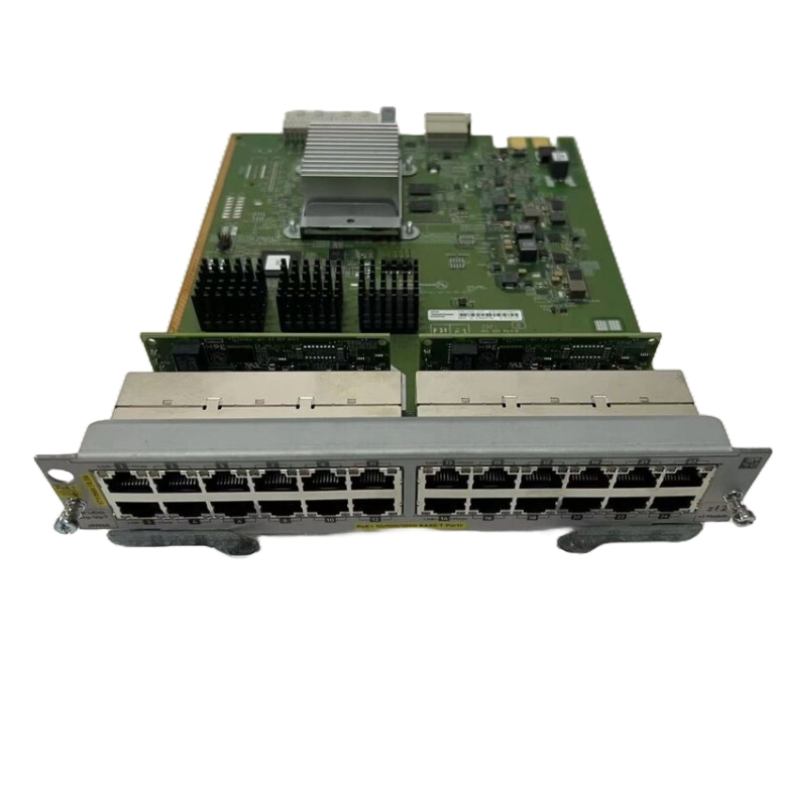


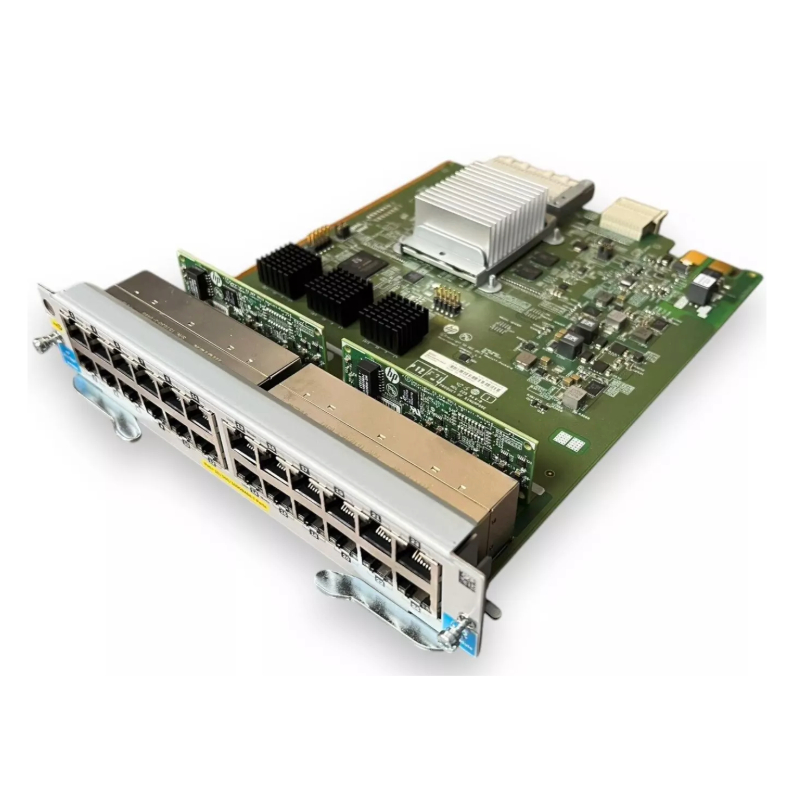
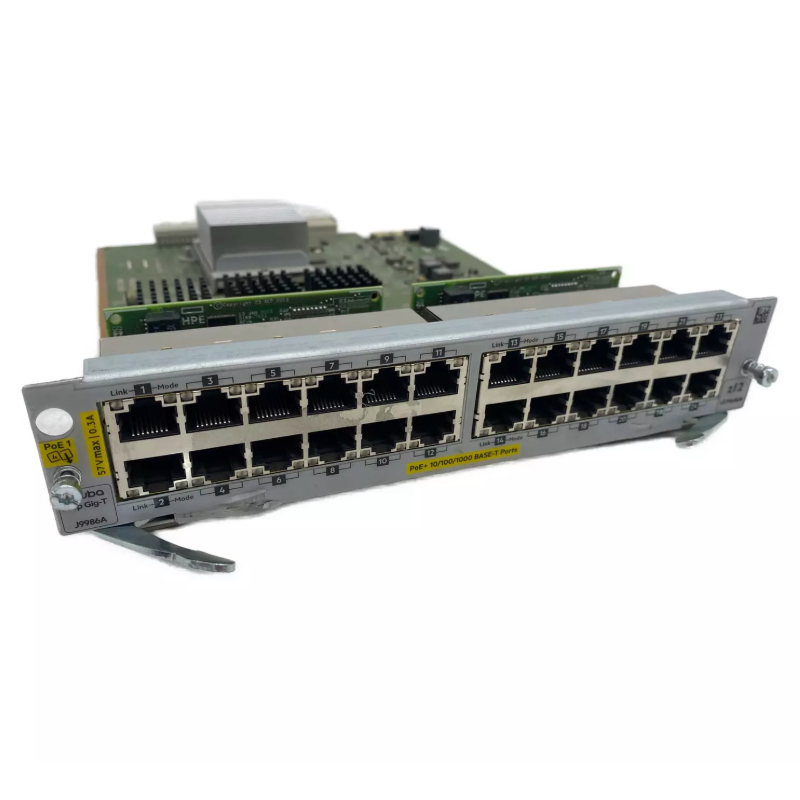
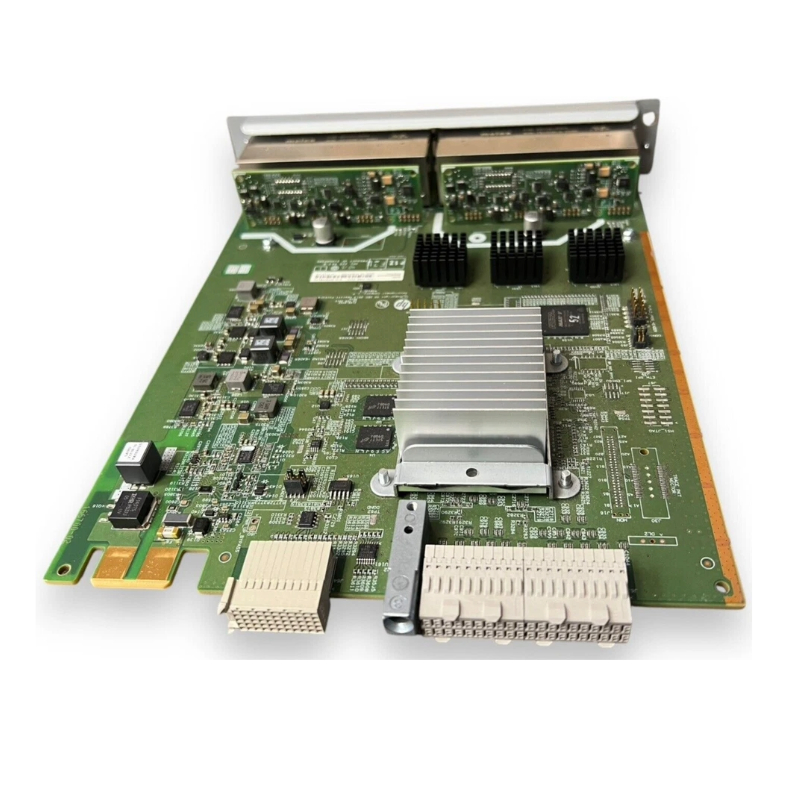
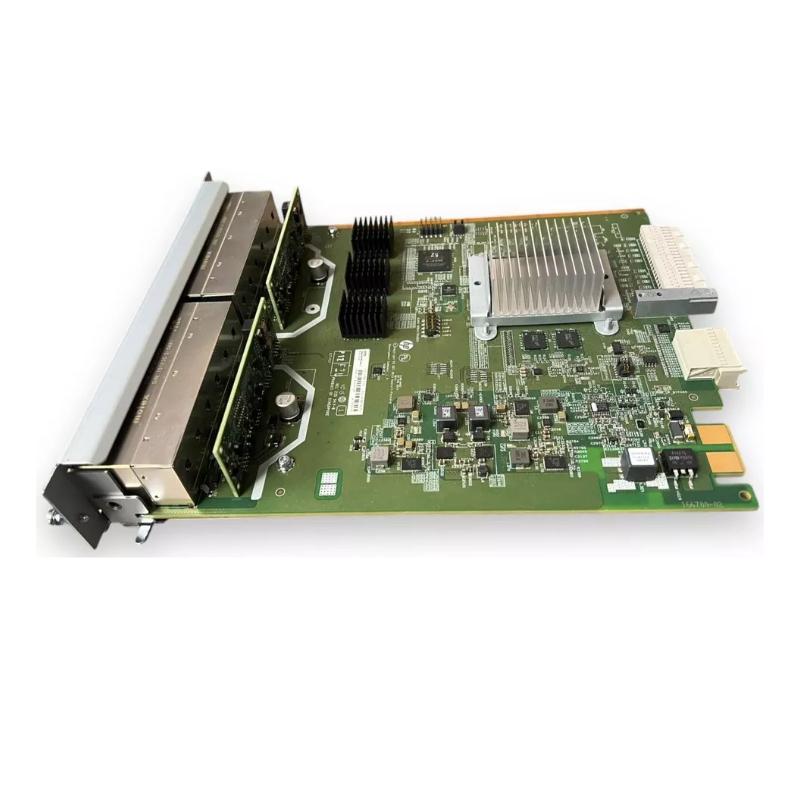
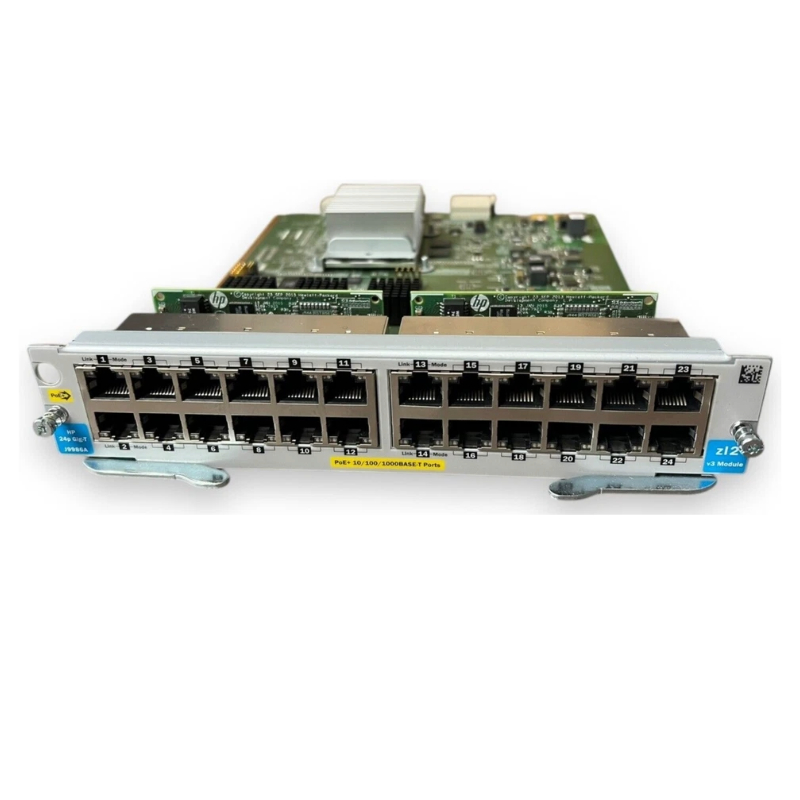
HPE J9987A Expansion Plug-In Module 10/100/1000 Base-T Module 1GBPS 24 Ports V3 Zl2 Expansion Module. Factory-Sealed New in Original Box (FSB) with 3 Years Warranty
HPE 24-Port Gigabit Ethernet Expansion Module
Designed for seamless network expansion, the HPE J9987A plug-in module provides 24 RJ-45 Gigabit Ethernet ports, allowing organizations to increase network capacity without replacing their existing switching infrastructure. Its compatibility with multiple Ethernet standards makes it a versatile choice for modern networking environments.
The HPE J9987A Expansion Plug-In Module 10/100/1000 Base-T Module 1GBPS 24 Ports V3 Zl2 Expansion Module belongs to a highly specialized category of enterprise networking hardware designed to extend the capabilities of modular switches. This expansion module is engineered for organizations that require flexible, scalable, and high-performance copper connectivity across multiple segments of their network. As part of the HPE Aruba and Pro Curve switching ecosystem, the J9987A module integrates seamlessly into compatible chassis, delivering twenty-four additional 10/100/1000 Base-T ports that support gigabit Ethernet speeds while maintaining backward compatibility with legacy devices. In the continuous category of expansion plug-in modules, this model stands out for its combination of port density, performance, and advanced feature support, making it ideal for data centers, campus networks, and high-demand enterprise environments.
The category of 10/100/1000 Base-T expansion modules is defined by its focus on copper-based Ethernet connectivity, offering RJ-45 interfaces that support auto-negotiation across three major speed tiers. The HPE J9987A module exemplifies this category by providing a robust platform for aggregating user devices, servers, and access points into a unified switching fabric. Its 1Gbps per-port capability ensures that modern applications, including unified communications, video collaboration, and cloud access, can operate without bottlenecks at the edge. At the same time, the module is designed to be energy-efficient and reliable, supporting advanced management and monitoring features that align with contemporary IT governance and security requirements. Within the broader ecosystem of HPE networking products, the J9987A expansion module serves as a critical building block for organizations seeking to optimize their copper-based infrastructure while preparing for future growth.
The HPE J9987A Expansion Plug-In Module occupies a strategic position within the category of modular switch expansion components. Modular switches are designed with chassis-based architectures that allow administrators to customize port types, speeds, and functionalities by inserting different expansion modules. In this context, the J9987A module functions as a high-density copper interface card that extends the reach of the core or distribution switch into access-layer environments. Its twenty-four 10/100/1000 Base-T ports enable organizations to consolidate multiple edge connections into a single, manageable platform, reducing complexity and improving overall network visibility. This category is particularly relevant for enterprises that prefer the flexibility of modular systems over fixed-configuration switches, as it allows them to adapt to evolving connectivity requirements without replacing entire devices.
Within the modular ecosystem, the J9987A module is often deployed alongside fiber-based expansion modules, PoE modules, and specialized uplink cards. This combination allows network architects to design hybrid infrastructures that balance copper and fiber connectivity according to specific application needs. The category of V3 Zl2 expansion modules, to which the J9987A belongs, is optimized for HPE chassis that support advanced Layer 2 and Layer 3 features, including VLANs, QoS, link aggregation, and routing protocols. As a result, the module is not merely a passive port extender but an active participant in the switching fabric, capable of supporting sophisticated traffic management and security policies. This positioning makes the J9987A module a key component for organizations that require granular control over their network segments while maintaining high levels of performance and reliability.
At the heart of the HPE J9987A category is its support for 10/100/1000 Base-T connectivity, which provides flexible Ethernet speeds over standard twisted-pair copper cabling. This tri-speed capability allows the module to accommodate a wide range of devices, from legacy 10 Mbps endpoints to modern gigabit-enabled workstations and servers. Auto-negotiation ensures that each port dynamically adjusts to the highest supported speed of the connected device, optimizing performance without requiring manual configuration. For organizations with mixed environments, this feature is particularly valuable, as it enables gradual upgrades to gigabit infrastructure while maintaining compatibility with older hardware. The 1Gbps per-port throughput is well-suited for bandwidth-intensive applications such as high-definition video streaming, large file transfers, and real-time collaboration tools.
The performance characteristics of the J9987A module are further enhanced by its integration with the switch backplane, which is designed to handle high aggregate throughput across multiple modules. This ensures that the addition of twenty-four gigabit ports does not create congestion within the chassis, allowing traffic to flow smoothly between access, distribution, and core layers. The category of gigabit expansion modules emphasizes low latency, high reliability, and consistent performance under load, and the J9987A is engineered to meet these expectations. Its hardware design incorporates advanced buffering and queuing mechanisms that help maintain quality of service for critical applications, even during peak usage periods. For enterprises that rely on stable and predictable network performance, these capabilities make the module a compelling choice within the broader category of copper-based gigabit solutions.
The designation of the HPE J9987A as a V3 Zl2 Expansion Module reflects its compatibility with specific HPE switch chassis that support the Zl2 architecture. This architecture is characterized by high-performance backplanes, modular slot designs, and advanced software feature sets that enable comprehensive network control. Within this category, the J9987A module is designed to fit seamlessly into available slots, providing plug-and-play expansion that can be recognized and managed by the switch operating system. The V3 Zl2 architecture supports a wide range of modules, including copper, fiber, PoE, and service-oriented cards, allowing organizations to tailor their chassis to meet diverse connectivity and functionality requirements. The J9987A module contributes to this flexibility by offering a dense array of copper ports that can be used for user access, server aggregation, or specialized device connectivity.
The architecture of V3 Zl2 modules emphasizes reliability and resilience, with features such as redundant power supplies, hot-swappable components, and robust firmware management. The J9987A module is designed to operate within this environment, benefiting from the chassis-level protections and monitoring capabilities that help ensure continuous uptime. In the category of expansion modules, this architectural integration is a key differentiator, as it allows the module to participate in system-wide features such as centralized logging, configuration management, and security enforcement. For network administrators, the ability to manage the J9987A module through familiar interfaces and tools simplifies operations and reduces the learning curve associated with deploying new hardware. This alignment with the V3 Zl2 architecture underscores the module’s role as a core component in modern HPE switching solutions.
The category of HPE J9987A Expansion Plug-In Modules is closely associated with a variety of practical use cases in enterprise and institutional networks. One common scenario involves extending the port capacity of a core or distribution switch to accommodate a growing number of access-layer connections. As organizations add more workstations, IP phones, wireless access points, and IoT devices, the demand for copper Ethernet ports increases. The J9987A module addresses this need by providing twenty-four additional 10/100/1000 Base-T interfaces within the existing chassis, eliminating the need for separate edge switches in some deployments. This consolidation can simplify cabling, reduce rack space requirements, and centralize management, making it easier to maintain consistent policies across the network.
Another key use case for this category involves server and storage aggregation in small to mid-sized data centers. Many servers and storage arrays still rely on copper-based gigabit connections, particularly in environments where cost and simplicity are prioritized over ultra-high-speed fiber links. The J9987A module can be used to connect these devices directly to a modular switch, creating a high-performance aggregation layer that feeds into the core network. This approach allows administrators to leverage the advanced features of the chassis, such as VLAN segmentation, QoS prioritization, and link aggregation, to optimize traffic flows between servers, storage, and users. In campus networks, the module can also serve as a central point for connecting departmental switches or specialized equipment, providing a flexible and scalable platform for growth.
Within the category of campus and enterprise networking, the HPE J9987A module is often deployed to enhance edge connectivity. Edge segments typically include user workstations, IP phones, printers, and wireless access points, all of which require reliable Ethernet connections. By installing the J9987A module in a central chassis located in a wiring closet or equipment room, organizations can run structured cabling from the module’s ports to individual wall outlets or patch panels. This centralized approach allows for easier troubleshooting, monitoring, and reconfiguration compared to distributed edge switches. The module’s support for 10/100/1000 Base-T speeds ensures that both legacy and modern devices can be accommodated, making it suitable for environments undergoing gradual upgrades.
The category of edge connectivity solutions emphasizes not only performance but also manageability and security. The J9987A module, when integrated into an HPE chassis, benefits from centralized management tools that allow administrators to configure port-level settings, apply access control lists, and monitor traffic patterns. This level of control is essential for enforcing security policies, such as restricting unauthorized devices, segmenting guest networks, and prioritizing critical applications. In addition, the module can participate in network access control frameworks that authenticate users and devices before granting access, further enhancing the security posture of the edge. For enterprises that require a robust and manageable edge infrastructure, the J9987A category offers a compelling combination of features and scalability.
In data center and server room environments, the HPE J9987A Expansion Plug-In Module plays a significant role in connecting servers, storage systems, and infrastructure devices to the switching fabric. Many organizations maintain racks of servers that rely on copper gigabit connections for management interfaces, backup networks, or production traffic. The J9987A module provides a dense array of ports that can be used to aggregate these connections into a single chassis, simplifying cabling and reducing the number of individual switches required. This category of expansion modules is particularly attractive for small to mid-sized data centers that seek to balance performance, cost, and manageability without investing in more complex fiber-based solutions for every connection.
The module’s integration with the V3 Zl2 architecture allows data center administrators to leverage advanced features such as link aggregation, which can be used to create higher-bandwidth connections between servers and the switch. By bonding multiple 1Gbps ports, organizations can achieve greater throughput and redundancy, supporting applications that require more bandwidth or higher availability. The category also supports features such as VLAN tagging and QoS, which are essential for segmenting traffic and ensuring that critical workloads receive appropriate priority. In server room deployments, the J9987A module can be part of a broader strategy that includes redundant chassis, dual-homed connections, and comprehensive monitoring, all of which contribute to a resilient and efficient infrastructure.
Reliability and resilience are central themes in the category of HPE expansion modules, and the J9987A is designed to meet stringent uptime requirements. When installed in a compatible chassis, the module benefits from redundant power supplies, cooling systems, and management controllers that help ensure continuous operation. The hardware is built to withstand typical environmental conditions found in equipment rooms and data centers, including temperature variations and electrical fluctuations. In addition, the module supports diagnostic and monitoring features that allow administrators to detect and address issues before they impact service. These capabilities contribute to a high level of resilience, making the J9987A module suitable for mission-critical networks where downtime is not acceptable.
The category also emphasizes firmware stability and update mechanisms that minimize disruption. The J9987A module can receive firmware updates through the chassis management interface, allowing administrators to apply patches and enhancements in a controlled manner. Features such as hitless upgrades and rolling updates may be supported at the chassis level, enabling organizations to maintain security and performance without taking the entire system offline. For enterprises that prioritize uptime and reliability, the combination of robust hardware, redundant systems, and advanced management tools makes the J9987A module a dependable choice within the expansion module category.
Security and management capabilities are critical aspects of the HPE J9987A category, as expansion modules must integrate seamlessly into broader network governance frameworks. When installed in an HPE chassis, the J9987A module participates in centralized management systems that provide visibility into port status, traffic patterns, and configuration settings. Administrators can use these tools to apply security policies at the port level, such as enabling 802.1X authentication, configuring access control lists, and restricting unauthorized devices. These features help protect the network from threats originating at the edge, including rogue devices, malware, and unauthorized access attempts. The module’s ability to support such policies is essential for maintaining a secure and compliant infrastructure.
The category also includes advanced monitoring and logging capabilities that allow organizations to track events and performance metrics over time. Port statistics, error counters, and traffic flows can be analyzed to identify potential issues, optimize configurations, and plan capacity upgrades. Integration with network management platforms enables automated alerts and reporting, helping administrators respond quickly to anomalies or failures. For enterprises that require detailed oversight of their network, the J9987A module’s management features provide the necessary tools to maintain control and ensure that the expansion of port capacity does not compromise security or stability.
Scalability and future-proofing are important considerations in the category of expansion modules, and the HPE J9987A is designed to support long-term growth. By providing twenty-four gigabit ports in a single module, organizations can significantly increase their port capacity without replacing existing chassis or core infrastructure. This modular approach allows for incremental expansion as needs evolve, enabling organizations to add additional modules or upgrade specific components rather than undertaking wholesale replacements. The support for 10/100/1000 Base-T ensures that the module can accommodate both current and future devices, including those that may require gigabit speeds for emerging applications.
Future-proofing also involves ensuring that the module can support new features and standards as they become relevant. Through firmware updates and integration with evolving HPE software platforms, the J9987A module can receive enhancements that improve performance, security, and manageability. This capability allows organizations to extend the useful life of their hardware investments, reducing total cost of ownership and minimizing disruption. In the broader category of scalable networking solutions, the J9987A module represents a flexible and adaptable option that can grow alongside the organization’s needs.
Many modern networks employ hybrid infrastructures that combine copper and fiber connectivity to balance cost, performance, and distance requirements. Within this category, the HPE J9987A module plays a crucial role by providing high-density copper ports that complement fiber uplink modules and backbone connections. Copper is typically used for shorter runs, such as connections within a wiring closet or between nearby racks, while fiber is used for longer distances or higher-speed links. The J9987A module allows organizations to maximize the utility of their copper cabling by providing reliable gigabit connections for edge devices, servers, and local equipment.
The integration of copper and fiber modules within the same chassis enables network architects to design flexible topologies that can adapt to changing requirements. For example, a chassis might use fiber modules to connect to other buildings or data centers, while the J9987A module provides local connectivity within the same facility. This hybrid approach allows organizations to optimize their investments in cabling and hardware, ensuring that each segment of the network uses the most appropriate technology. In the category of hybrid infrastructures, the J9987A module is a key component that supports efficient and cost-effective designs.
Structured cabling systems and patch panel deployments are common in enterprise and campus networks, and the HPE J9987A module is well-suited to these environments. The twenty-four RJ-45 ports can be connected to patch panels that distribute connections to individual work areas, equipment rooms, or server racks. This arrangement allows for organized and manageable cabling, with clear labeling and documentation that simplifies troubleshooting and changes. The category of structured cabling solutions emphasizes reliability, flexibility, and ease of maintenance, and the J9987A module aligns with these goals by providing consistent and standards-compliant Ethernet interfaces.
In patch panel deployments, the module’s support for auto-negotiation and auto-MDI/MDI-X reduces the complexity of cabling, as administrators do not need to worry about crossover cables or manual speed settings. This simplifies installation and reduces the risk of errors, particularly in large-scale environments where many connections must be managed. The combination of the J9987A module and structured cabling systems provides a robust foundation for enterprise networks, ensuring that physical connectivity is reliable and scalable.


 Contact Us
 Information
 Catalog
 Solid State Drives (SSD)
 Network Switches
 Hard Disk Drives
 HBA & Controllers
 PC & Servers
 PC & Server Memory
 CPU & Processors
 Network Routers
 Power Supplies
 Tape Drives & Libraries
 Network Devices
 Computer & Network Cables