(7% discount is applied at checkout)
Cart is empty
Your go-to destination for cutting-edge server products
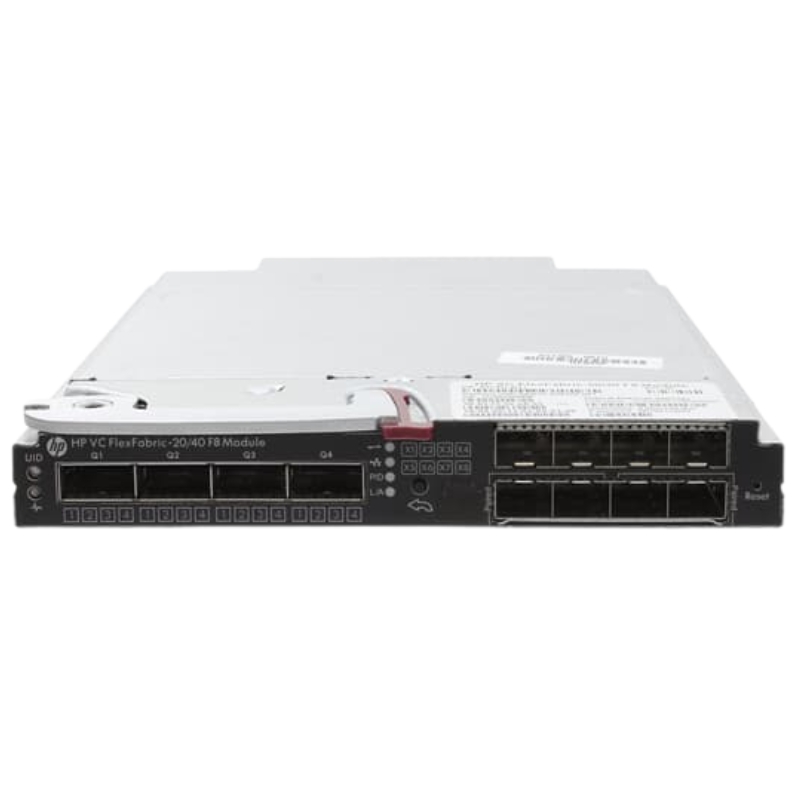


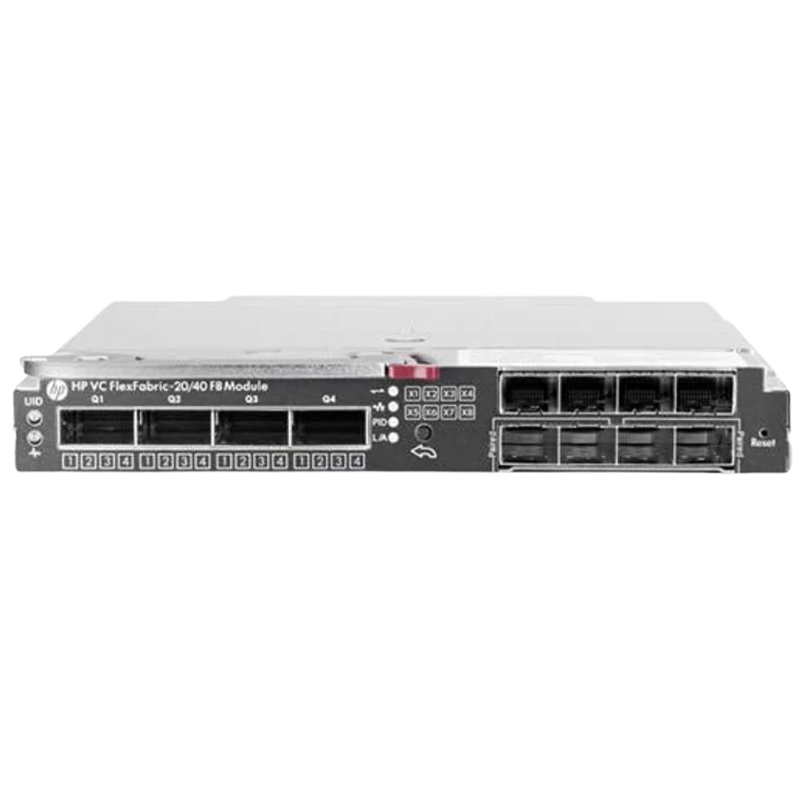
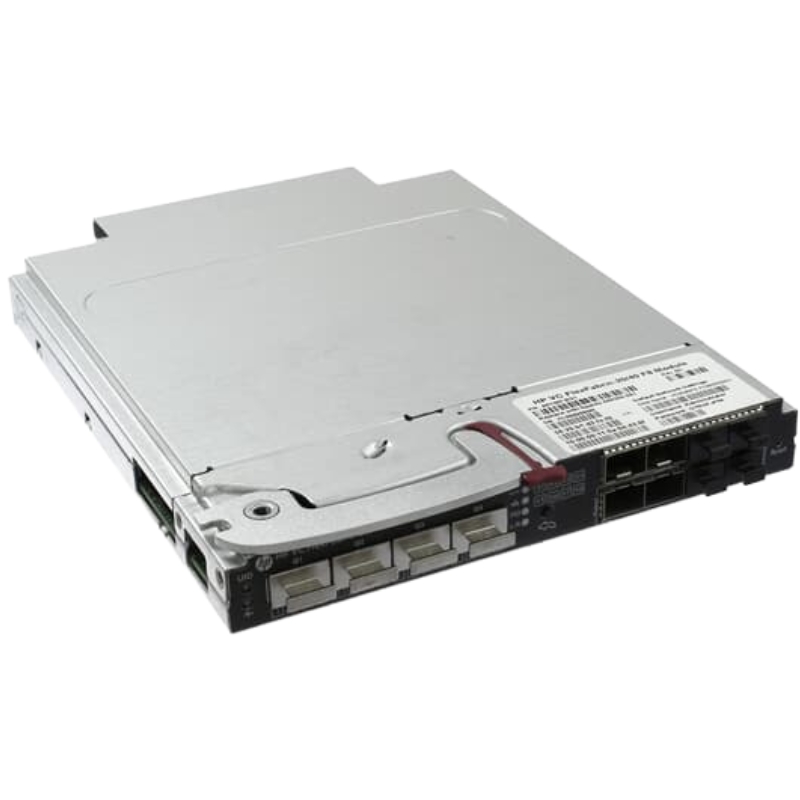
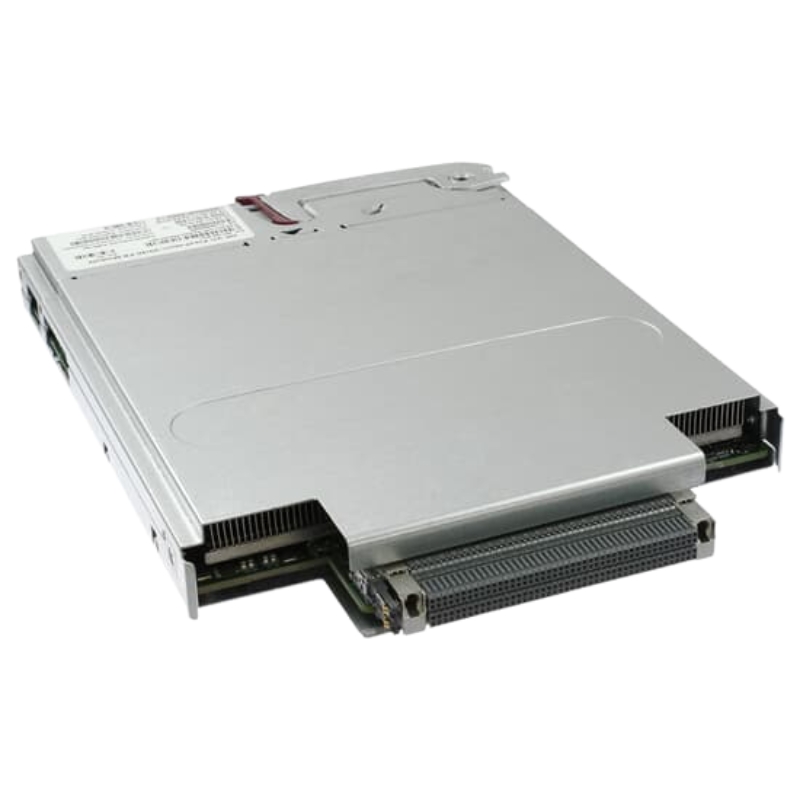
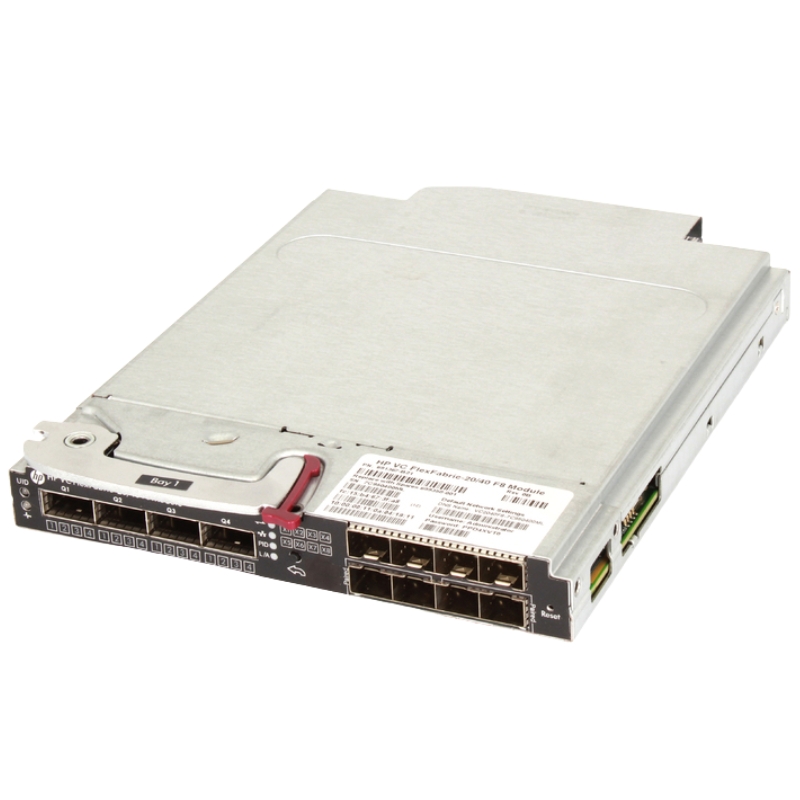
HPE 691367-B21 Virtual Connect Flex Fabric 20/40 F8 Module C Class Blade System for Data Networking. Factory-Sealed New in Original Box (FSB) with 3 Years Warranty
| SKU/MPN | Warranty | Price | Condition | You save |
|---|---|---|---|---|
| 691367-B21 | 1 Year Warranty | $85.00 | Excellent Refurbished | You save: $29.75 (26%) |
| 691367-B21 | 1 Year Warranty | $190.00 | Factory-Sealed New in Original Box (FSB) | You save: $66.50 (26%) |
The HPE 691367-B21 Virtual Connect FlexFabric-20/40 F8 Module is a high-capacity expansion solution engineered for enterprise blade systems. This advanced module delivers powerful throughput, flexible connectivity, and intelligent management features for modern data centers.
The HPE 691367-B21 Virtual Connect FlexFabric-20/40 F8 Module is a high-performance interconnect solution designed for the HPE C-Class BladeSystem infrastructure. It plays a critical role in simplifying network architecture within converged data center environments by integrating Ethernet and Fibre Channel over Ethernet (FCoE) capabilities into a single, unified fabric. This module is engineered to reduce network complexity, improve scalability, and deliver enhanced flexibility for enterprise workloads that demand high bandwidth, low latency, and optimized server-to-network communication.
This FlexFabric module is part of the HPE Virtual Connect ecosystem, which abstracts server connections from the physical network infrastructure, enabling administrators to manage server profiles without requiring constant reconfiguration of upstream switches. It is widely adopted in enterprise-grade blade environments where agility, virtualization, and convergence are key operational requirements.
The architecture of the HPE Virtual Connect FlexFabric 20/40 F8 Module is built on a unified fabric model that supports both Ethernet and Fibre Channel traffic through a single interconnect framework. This convergence eliminates the need for separate network adapters and reduces the overall number of cables and switch ports required in the data center.
By combining multiple network protocols into a single infrastructure layer, the module enhances bandwidth utilization and reduces latency between compute nodes and storage systems. This is especially important in virtualization-heavy environments where workload density and traffic patterns are highly dynamic.
The module supports both 20Gb and 40Gb Ethernet uplinks, allowing seamless scalability depending on workload requirements. The flexible uplink architecture ensures that organizations can scale network throughput without replacing existing infrastructure components.
High-speed data transfer is essential for modern workloads such as virtualization clusters, cloud-native applications, database replication, and big data analytics. The FlexFabric module is engineered to handle these demands efficiently while maintaining predictable performance under heavy load conditions.
One of the defining features of Virtual Connect technology is server profile abstraction. This capability allows administrators to define network identities, MAC addresses, World Wide Names (WWNs), and boot parameters independently from the physical hardware. As a result, servers can be replaced or upgraded without impacting network configuration.
This abstraction layer significantly reduces downtime and operational complexity in large-scale environments. It also enhances disaster recovery capabilities by enabling rapid redeployment of server profiles across different blade chassis.
Traditional blade environments often require multiple top-of-rack switches and extensive cabling, which increases management overhead and points of failure. The HPE 691367-B21 module reduces this complexity by consolidating network connections at the enclosure level.
This consolidation not only improves airflow and physical rack organization but also lowers power consumption and operational costs. Data center administrators benefit from a more streamlined infrastructure that is easier to monitor and maintain.
The FlexFabric module is designed to support both traditional Ethernet traffic and storage traffic via FCoE. This dual-protocol support eliminates the need for separate storage networks, allowing organizations to converge storage and data traffic onto a single high-performance fabric.
FCoE integration improves storage access efficiency and reduces latency between compute nodes and storage arrays. It also simplifies storage provisioning in environments that rely heavily on SAN architectures.
In addition to FCoE, the module also provides optimized support for iSCSI traffic. This makes it suitable for organizations that utilize IP-based storage systems. The optimized data path ensures consistent throughput and reduced packet loss even under high utilization scenarios.
The ability to handle multiple storage protocols simultaneously makes the FlexFabric module a versatile solution for hybrid storage environments that combine SAN, NAS, and cloud storage integration.
The internal switching architecture of the module is optimized for low-latency packet forwarding. This is critical for applications that require real-time data processing such as financial trading systems, high-performance computing clusters, and large-scale virtualization deployments.
By minimizing packet traversal delays within the blade enclosure, the module ensures that server-to-server communication remains fast and predictable even during peak traffic periods.
The uplink architecture of the FlexFabric module is designed to scale horizontally, allowing multiple uplink connections to be aggregated for increased bandwidth. This enables organizations to expand their network capacity without redesigning the entire infrastructure.
Scalability is particularly important in cloud computing environments where workloads can grow rapidly and unpredictably. The module supports dynamic scaling strategies that align with evolving business requirements.
Automated provisioning is a key advantage of the FlexFabric module. Once server profiles are defined, new blades can be deployed quickly without manual network configuration. This significantly accelerates server deployment cycles in enterprise environments.
Automation also ensures consistency across deployments, reducing the likelihood of configuration drift and improving overall infrastructure reliability.
By consolidating multiple networking functions into a single module, the HPE 691367-B21 reduces the number of active networking devices required within the rack. This leads to lower power consumption and reduced cooling requirements.
Efficient thermal design within blade environments is essential for maintaining optimal performance and extending hardware lifespan. The FlexFabric module contributes to a more energy-efficient data center footprint.
The compact design of the module allows it to fit seamlessly within HPE C-Class BladeSystem enclosures without occupying excessive physical space. This enables higher compute density within the same rack footprint.
Space optimization is particularly valuable for enterprises operating in constrained data center environments where maximizing compute per rack unit is a priority.
HPC workloads require extremely low latency and high throughput between compute nodes. The FlexFabric module’s optimized switching fabric ensures efficient inter-node communication, making it suitable for scientific computing, simulations, and engineering workloads.
Its ability to handle both storage and data traffic efficiently contributes to improved overall system performance in HPC clusters.
The HPE 691367-B21 Virtual Connect FlexFabric-20/40 F8 Module is specifically engineered for integration with HPE C-Class BladeSystem enclosures. This tight integration ensures optimal performance and compatibility with existing blade server configurations.
It works in conjunction with other enclosure components such as interconnect bays, blade servers, and management modules to deliver a fully unified infrastructure solution.
The module occupies designated interconnect bays within the enclosure, enabling structured and organized cabling architecture. This reduces clutter and simplifies maintenance operations.
Efficient use of interconnect bays ensures that administrators can maximize available resources while maintaining clear separation between data, storage, and management traffic.
The FlexFabric module supports advanced traffic segmentation features that allow multiple isolated network environments to coexist within the same physical infrastructure. This is essential for multi-tenant environments and secure enterprise deployments.
Segmentation ensures that sensitive workloads remain isolated from general traffic, enhancing both performance and security.
Quality of Service (QoS) mechanisms within the module allow prioritization of critical workloads. This ensures that latency-sensitive applications receive sufficient bandwidth even during periods of network congestion.
QoS optimization is particularly important in environments running mixed workloads with varying performance requirements.


 Contact Us
 Information
 Catalog
 Solid State Drives (SSD)
 Network Switches
 Hard Disk Drives
 HBA & Controllers
 PC & Servers
 PC & Server Memory
 CPU & Processors
 Network Routers
 Power Supplies
 Tape Drives & Libraries
 Network Devices
 Computer & Network Cables