(7% discount is applied at checkout)
Cart is empty
Your go-to destination for cutting-edge server products
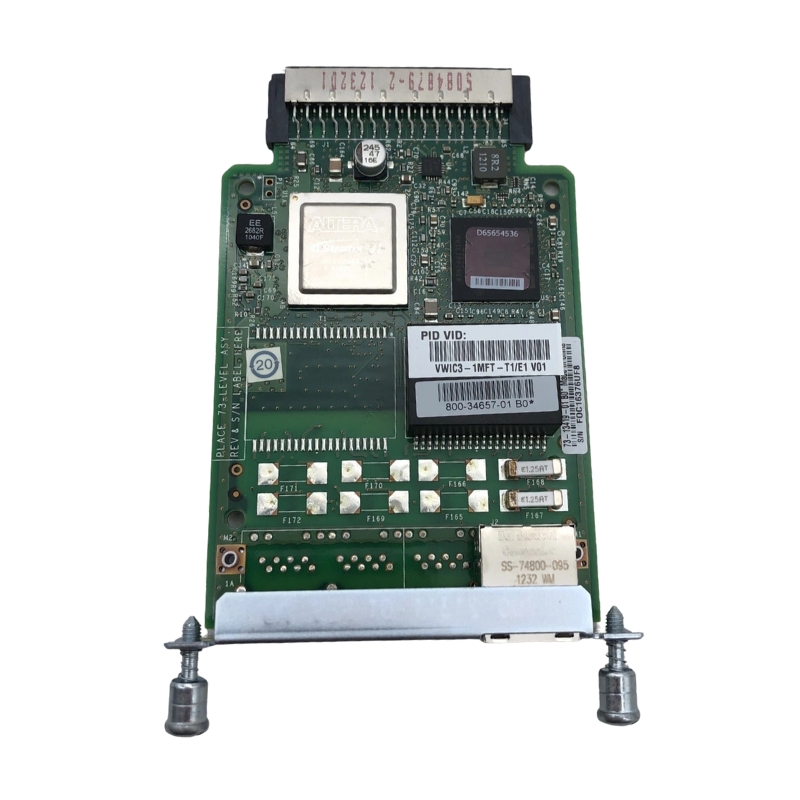


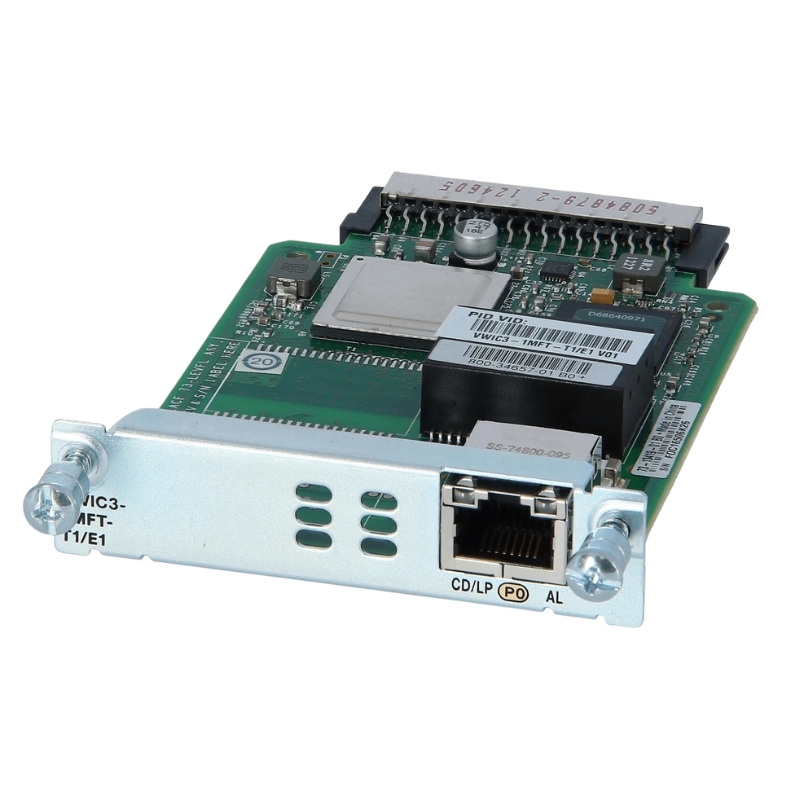
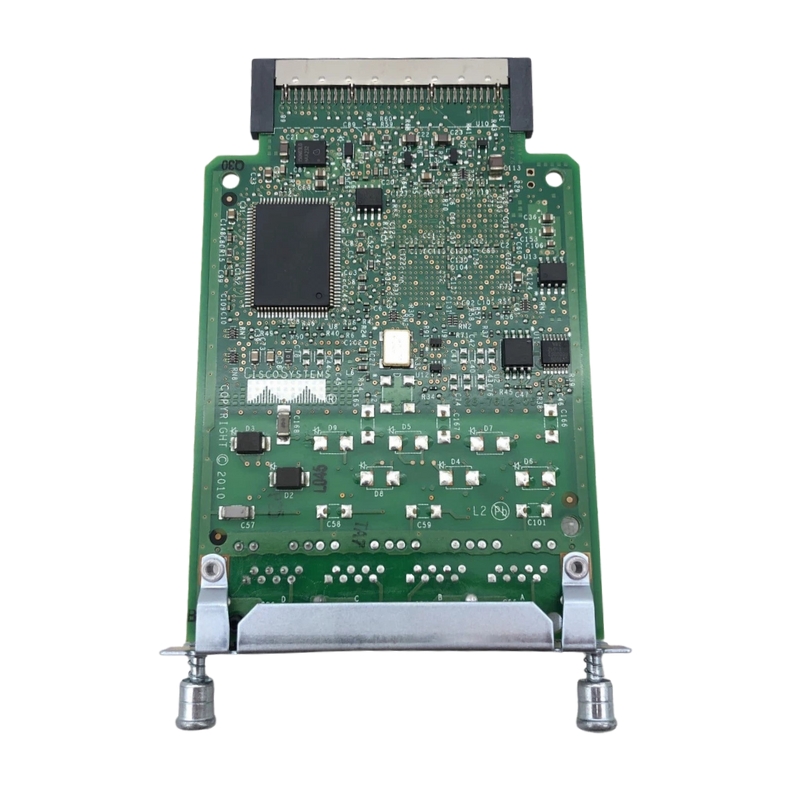
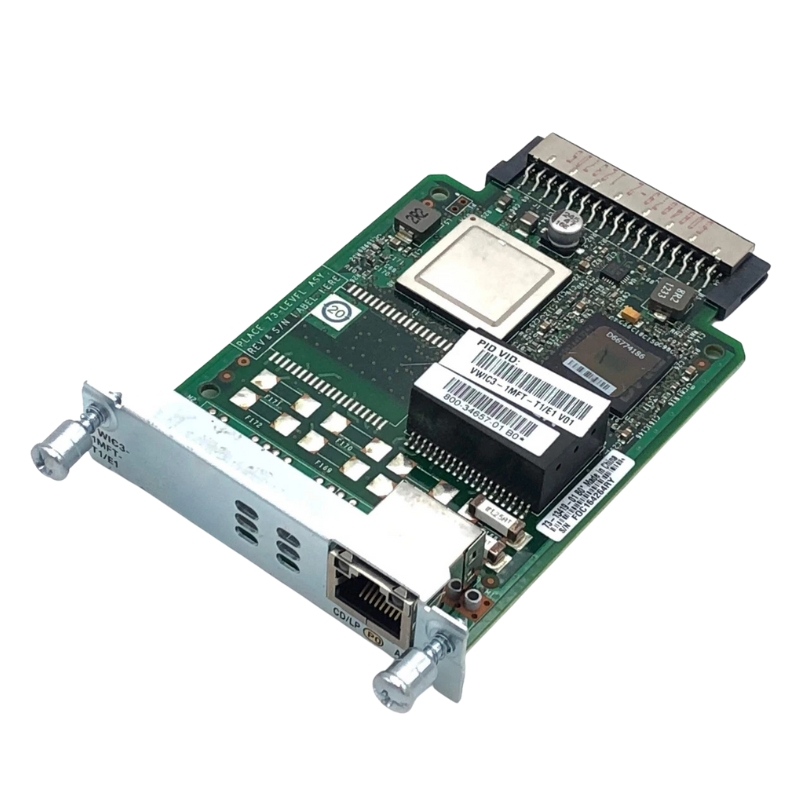
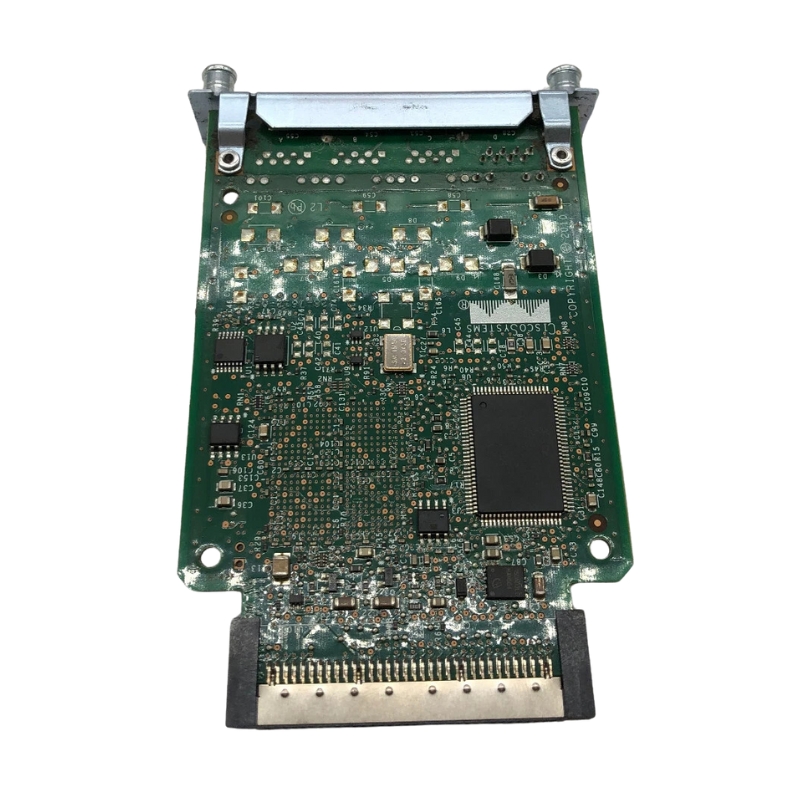
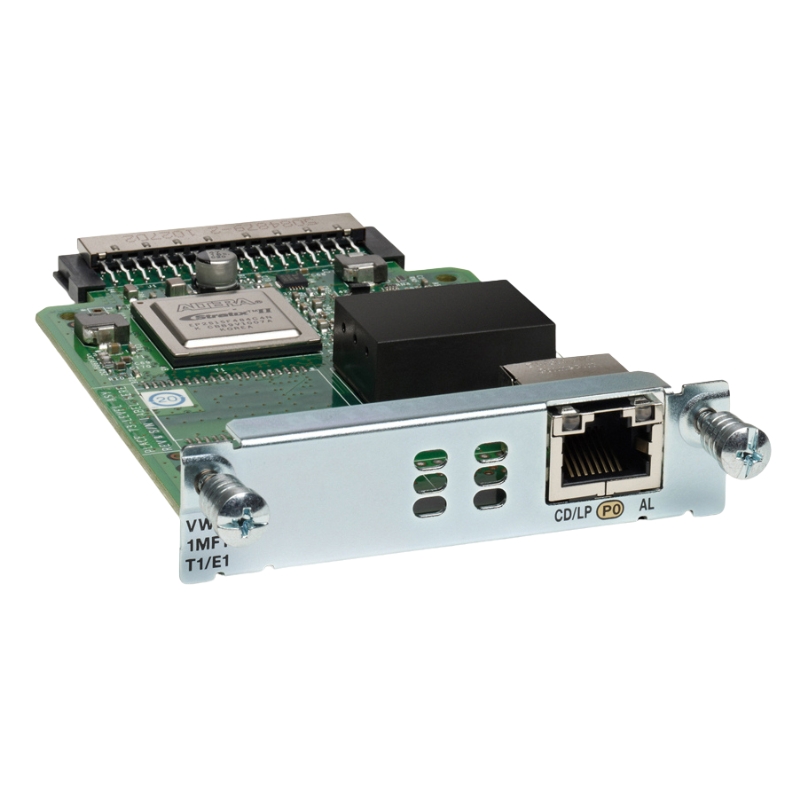
Cisco VWIC3-1MFT-T1/E1= 1 Port WAN Interface Card. Factory-Sealed New in Original Box (FSB) with 1 year replacement warranty
| SKU/MPN | Warranty | Price | Condition | You save |
|---|---|---|---|---|
| VWIC3-1MFT-T1/E1= | 1 Year Warranty | $52.00 | Excellent Refurbished | You save: $18.20 (26%) |
| VWIC3-1MFT-T1/E1= | 1 Year Warranty | $145.00 | Factory-Sealed New Retail in Original Box (FSB) | You save: $50.75 (26%) |
The Cisco VWIC3-1MFT-T1/E1= is a high-performance single-port Voice/WAN interface module designed to enhance connectivity for enterprise-grade Cisco router systems. It supports both voice communication and wide area network (WAN) applications, delivering flexible integration for modern networking environments.
This interface card is engineered to support dual-purpose networking tasks, making it suitable for both voice transmission and WAN connectivity across enterprise infrastructures.
The Cisco VWIC3-1MFT-T1/E1= 1 Port Voice/WAN Interface Card is a high-performance modular network interface solution designed to deliver integrated voice and data connectivity over T1 and E1 digital circuits. This interface card belongs to Cisco’s third-generation WAN interface card family and is widely deployed in enterprise branch routers where converged communication services are required. It enables organizations to optimize infrastructure by combining voice, fax, and WAN data traffic over a single physical interface, reducing operational complexity while enhancing communication efficiency.
Built for scalability and flexibility, this card supports both T1 (commonly used in North America and Japan) and E1 (widely used in Europe, Asia, and other global regions) standards, making it a versatile solution for multinational network deployments. It is designed to integrate seamlessly with compatible Cisco Integrated Services Routers (ISRs), ensuring reliable performance in mission-critical environments.
One of the defining features of the Cisco VWIC3-1MFT-T1/E1= is its ability to operate on both T1 and E1 circuits. This dual compatibility eliminates the need for separate hardware variants in different geographic regions. T1 circuits provide 1.544 Mbps bandwidth divided into 24 channels, while E1 circuits offer 2.048 Mbps with 32 channels. The interface card automatically adapts to the configured line type, allowing administrators to deploy a unified hardware strategy across global infrastructures.
The VWIC3 series is engineered to support integrated voice and WAN services. This means that voice traffic, including PSTN connectivity and VoIP gateway functions, can be transmitted alongside data traffic over the same physical interface. This convergence significantly reduces hardware overhead and simplifies network architecture, making it particularly valuable for branch office deployments.
Although the VWIC3-1MFT-T1/E1= itself does not perform DSP functions, it works in conjunction with Cisco router DSP resources to enable high-quality voice encoding, echo cancellation, and compression. This ensures that voice communications maintain clarity and reliability even under heavy network utilization conditions.
The Cisco VWIC3-1MFT-T1/E1= is designed as a single-port modular card that fits into Cisco network modules and routers supporting Voice/WAN Interface Cards. Its compact design allows network administrators to expand router capabilities without replacing entire hardware systems. This modular approach is a key advantage in enterprise network lifecycle management.
The card uses a standard RJ-48C interface for T1/E1 connectivity, ensuring compatibility with widely deployed telecom infrastructure. The electrical signaling conforms to industry standards, enabling stable and interference-resistant transmission over copper-based leased lines.
Accurate timing is essential in digital telephony networks. The VWIC3-1MFT-T1/E1= supports multiple clocking modes, including line timing and internal timing, ensuring synchronization with carrier networks. Proper clocking configuration helps avoid jitter, latency, and packet loss in voice applications.
The most common application of the Cisco VWIC3-1MFT-T1/E1= is in branch office routers that require reliable connectivity to headquarters or data centers. It provides a stable WAN link for business-critical applications such as ERP systems, CRM platforms, and cloud-based services while simultaneously supporting voice communications.
Organizations transitioning from traditional telephony systems to VoIP often use this interface card as part of a hybrid deployment strategy. It enables connectivity between legacy PSTN networks and modern IP-based communication systems, ensuring a smooth migration path without service disruption.
Service providers also utilize VWIC3-1MFT-T1/E1= cards in edge routers to terminate leased lines from business customers. This allows providers to aggregate multiple customer connections while maintaining high service reliability and predictable bandwidth allocation.
In disaster recovery scenarios, organizations often rely on T1/E1 circuits as backup communication channels. The Cisco VWIC3-1MFT-T1/E1= provides a dependable fallback connectivity option when primary fiber or broadband links fail, ensuring business continuity.
The card supports T1 and E1 framing structures with configurable channelization. T1 provides 24 channels of 64 kbps each, while E1 supports 32 channels with additional signaling channels. This flexibility allows administrators to allocate bandwidth based on voice or data prioritization requirements.
The VWIC3-1MFT-T1/E1= supports multiple framing formats including ESF (Extended Super Frame) and SF (Super Frame) for T1, as well as CRC-4 framing for E1 networks. Line encoding options include AMI and B8ZS, ensuring compatibility with a wide range of carrier infrastructures.
The interface card is optimized for low-latency transmission, making it suitable for real-time voice applications. By leveraging Cisco router processing capabilities, it helps maintain consistent throughput even under high traffic conditions.
The VWIC3-1MFT-T1/E1= is compatible with various Cisco ISR platforms, including routers in the 1900, 2900, and 3900 series, depending on network module support. These routers provide the necessary architecture to host voice-enabled interface cards and deliver unified communication services.
The card is typically installed in network modules such as NM-HDV2 or other voice-enabled slots, where it interacts with onboard processing resources. Proper module selection ensures optimal performance and feature support.
Cisco IOS software plays a crucial role in enabling full functionality of the VWIC3-1MFT-T1/E1=. Advanced features such as call routing, QoS, and signaling protocols require appropriate IOS versions and licensing configurations.
Deployment begins with physical installation of the card into the router module slot, followed by configuration of the controller interface. Administrators must define T1 or E1 mode depending on carrier requirements and configure framing and line coding parameters accordingly.
Once WAN connectivity is established, voice ports can be configured to route calls between PSTN and VoIP networks. Dial peers, voice translation rules, and signaling protocols such as SIP or H.323 may be implemented depending on system architecture.
QoS configuration is essential for prioritizing voice traffic over data traffic. By implementing traffic shaping and classification policies, network administrators ensure minimal packet loss and jitter in voice communications.


 Contact Us
 Information
 Catalog
 Solid State Drives (SSD)
 Network Switches
 Hard Disk Drives
 HBA & Controllers
 PC & Servers
 PC & Server Memory
 CPU & Processors
 Network Routers
 Power Supplies
 Tape Drives & Libraries
 Network Devices
 Computer & Network Cables