(7% discount is applied at checkout)
Cart is empty
Your go-to destination for cutting-edge server products
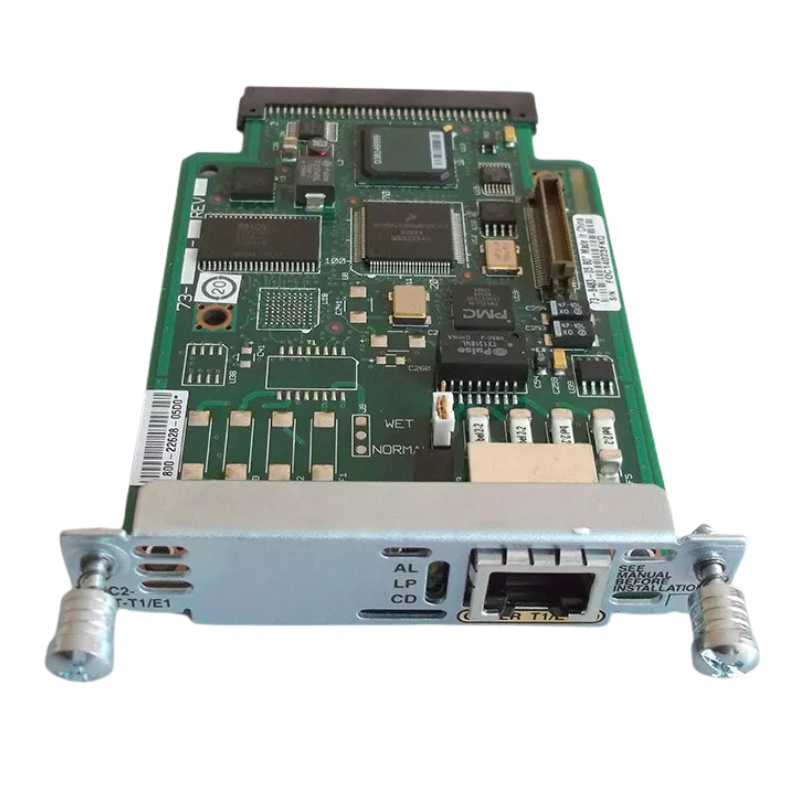


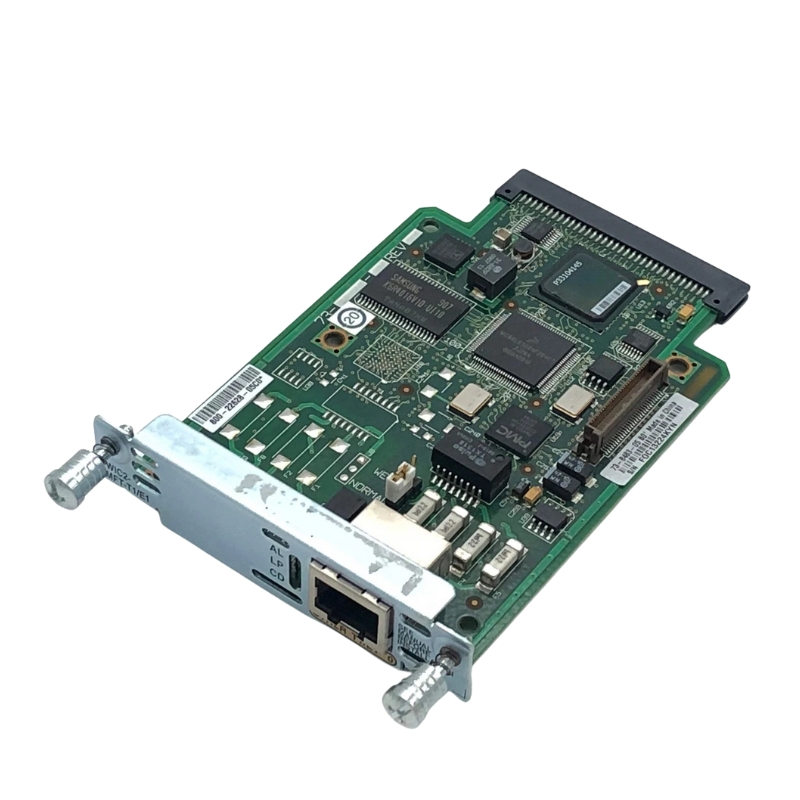
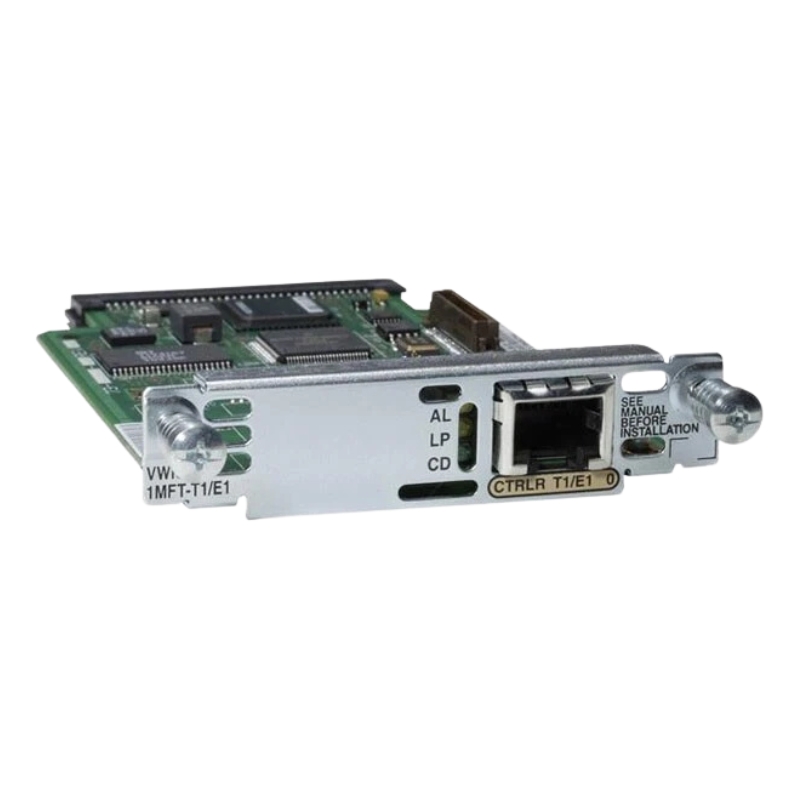
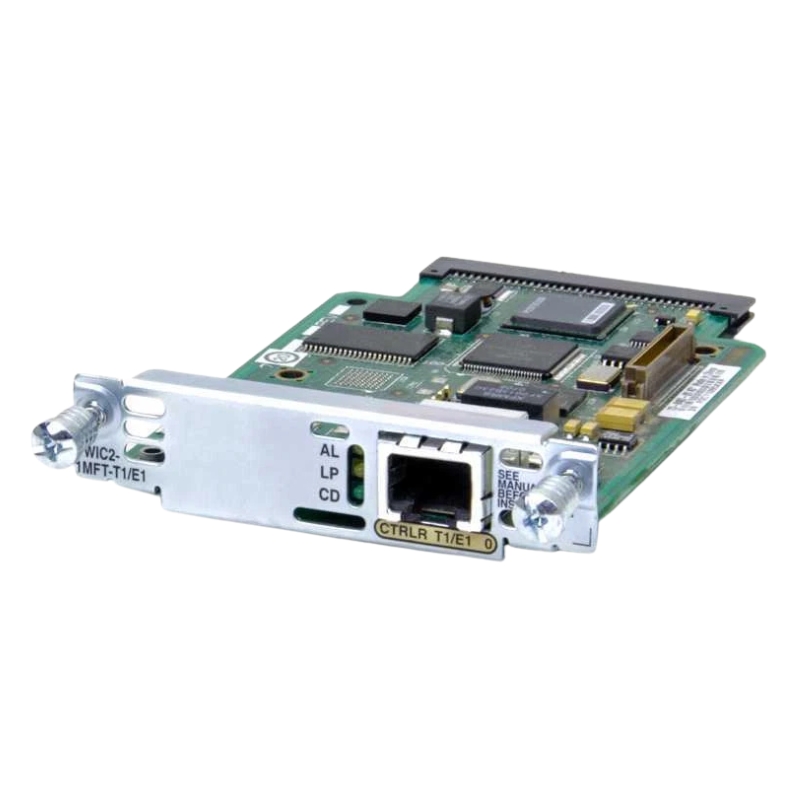
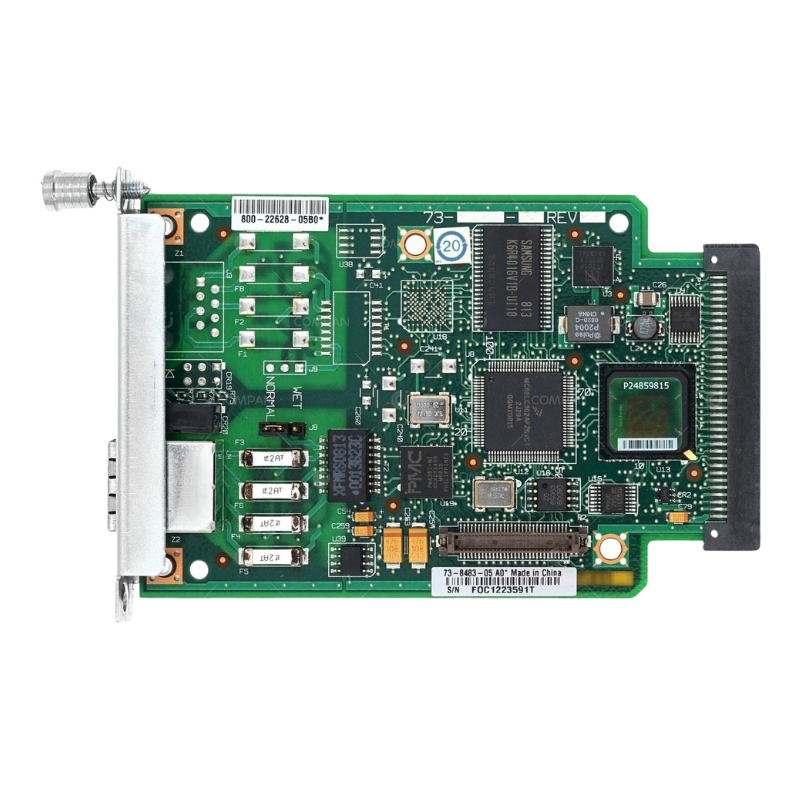
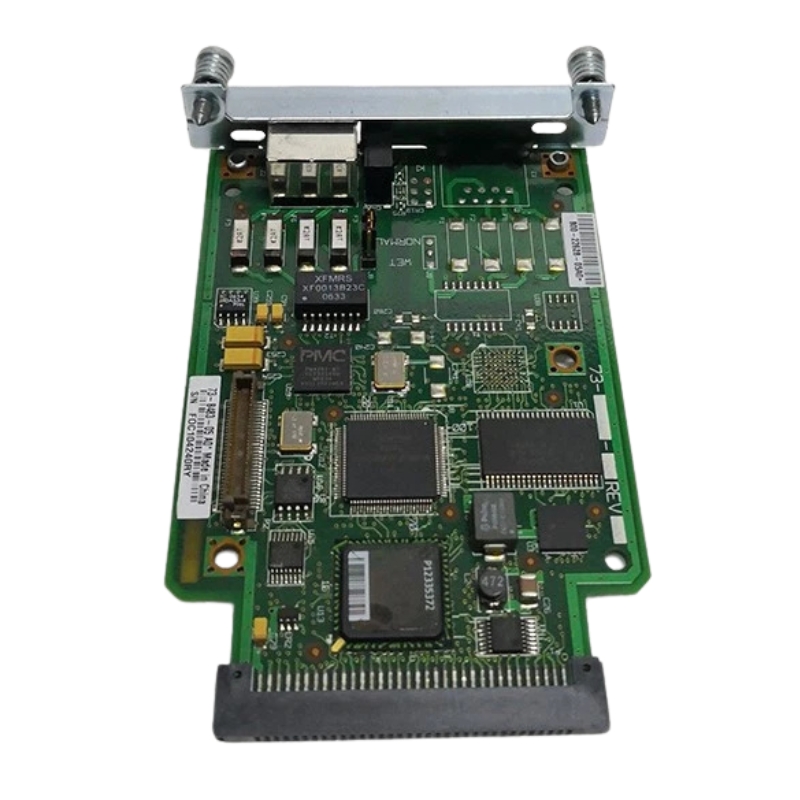
Cisco VWIC2-1MFT-T1/E1= Voice/WAN Interface Card. Excellent Refurbished with 1 year replacement warranty
| SKU/MPN | Warranty | Price | Condition | You save |
|---|---|---|---|---|
| VWIC2-1MFT-T1/E1= | 1 Year Warranty | $50.00 | Excellent Refurbished | You save: $17.50 (26%) |
| VWIC2-1MFT-T1/E1= | 1 Year Warranty | $220.00 | Factory-Sealed New Retail in Original Box (FSB) | You save: $77.00 (26%) |
The Cisco VWIC2-1MFT-T1/E1= is a high-performance 1-port Voice/WAN Interface Card engineered to provide dependable voice and data connectivity for Cisco integrated services routers. Supporting both T1 and E1 WAN circuits, this plug-in module offers organizations a flexible networking solution for voice gateway deployments, WAN expansion, and unified communications environments. Designed for seamless compatibility with Cisco IOS, it delivers reliable performance, simplified deployment, and excellent network scalability.
The Cisco VWIC2-1MFT-T1/E1= supports several industry-standard line coding methods to ensure compatibility with diverse carrier networks.
With support for transfer speeds up to 2.048 Mbps and multiple line coding standards, the Cisco VWIC2-1MFT-T1/E1= delivers stable, secure, and efficient WAN communication for mission-critical business operations.
The Cisco VWIC2-1MFT-T1/E1= 1 Port Voice/WAN Interface Card is a high-performance integrated networking module designed to provide flexible voice and data connectivity over T1 and E1 circuit-switched networks. It is widely used in enterprise branch deployments, service provider environments, and legacy telecommunication infrastructures where hybrid voice and WAN integration is required. This interface card supports both voice and data applications, making it a critical component in converged network architectures where reliability, scalability, and interoperability are essential.
Voice/WAN Interface Cards (VWICs) serve as modular expansion components that enable routers to connect to traditional telephony and WAN circuits. The Cisco VWIC2-1MFT-T1/E1= is part of the second-generation VWIC family, offering enhanced performance, improved flexibility, and broader compatibility with Cisco Integrated Services Routers (ISRs). It bridges legacy telephony systems with modern IP-based infrastructures, allowing businesses to transition gradually to VoIP without disrupting existing communication services.
In hybrid environments where both analog/digital voice and packet-based data coexist, this card plays a vital role in ensuring seamless communication. Enterprises with distributed branches often rely on T1/E1 circuits for voice trunks and WAN connectivity, and this module enables both functions through a single interface.
One of the defining features of the Cisco VWIC2-1MFT-T1/E1= is its ability to support both T1 (1.544 Mbps) and E1 (2.048 Mbps) standards. This dual-mode capability makes it suitable for global deployments where telecommunication standards vary by region. Administrators can configure the interface depending on the required mode, providing flexibility in multinational enterprise environments.
T1 mode is commonly used in North America and Japan. It supports 24 channels with 64 Kbps per channel, often used for voice trunks, data circuits, or integrated services digital network (ISDN) PRI configurations.
E1 mode, used primarily in Europe, Asia, and Africa, supports 32 channels with higher framing flexibility, allowing more signaling channels and enhanced multiplexing capabilities for complex telecom setups.
The VWIC2-1MFT-T1/E1= is designed to handle both voice and WAN data traffic efficiently. It supports Time Division Multiplexing (TDM) for voice traffic while simultaneously enabling packet-based routing for data services. This integration reduces hardware complexity and operational costs for enterprises.
Unlike software-based solutions, this card offloads processing to dedicated hardware, reducing CPU utilization on the host router and improving overall system performance in high-traffic environments.
The Cisco VWIC2-1MFT-T1/E1= is compatible with a wide range of Cisco Integrated Services Routers, particularly those in the Cisco 2800, 2900, 3800, and 3900 series. It is also used in certain modular network devices that support voice-enabled service modules.
The module is designed for installation into WIC or VWIC slots, allowing network engineers to expand router capabilities without replacing the entire system. This modular approach significantly reduces capital expenditure.
Although installation is typically performed during maintenance windows, the card is designed for minimal downtime scenarios, depending on router model and configuration.
To fully utilize the capabilities of the VWIC2-1MFT-T1/E1=, Cisco IOS software must support voice and WAN integration features. Proper licensing is required for voice services, especially in VoIP deployments and PRI configurations.
The interface card is commonly deployed in PBX integration scenarios, where it connects legacy telephony systems to modern IP-based communication networks. It supports ISDN PRI, CAS signaling, and other telephony protocols that ensure smooth voice transmission.
Enterprises use the VWIC2-1MFT-T1/E1= to connect private branch exchange systems to carrier networks, allowing centralized voice management and cost-effective long-distance communication.
For WAN applications, the module enables reliable point-to-point or point-to-multipoint connections between remote offices and headquarters. T1/E1 leased lines are still widely used in industries requiring predictable bandwidth and low latency.
Unlike broadband internet connections, T1/E1 circuits provide consistent performance and guaranteed bandwidth, making them ideal for mission-critical applications.
Many enterprises still rely on legacy telecom systems. The VWIC2-1MFT-T1/E1= allows these systems to remain operational while gradually transitioning to IP-based infrastructure, ensuring investment protection.
Deployment of the Cisco VWIC2-1MFT-T1/E1= requires proper configuration within Cisco IOS. Network administrators must define controller settings, encapsulation types, and clocking configurations depending on the deployment environment.
Clocking is critical in T1/E1 networks to ensure synchronization between carrier and customer equipment. The card can be configured for line timing or internal timing based on network design.
Common encapsulation methods include PPP, HDLC, and Frame Relay, depending on the type of WAN architecture being implemented.
When used for voice applications, the interface must be configured with dial peers, voice service parameters, and signaling protocols. Proper configuration ensures high-quality voice transmission with minimal latency and jitter.
Dial peers define how calls are routed across the network, enabling seamless integration between VoIP and PSTN systems.
The Cisco VWIC2-1MFT-T1/E1= is designed for enterprise-grade reliability. It supports redundancy when deployed in dual-router configurations, ensuring continuous service availability in case of hardware failure.
In redundant setups, failover mechanisms ensure uninterrupted voice and data transmission by automatically rerouting traffic.
The card optimizes bandwidth usage through efficient channel allocation and multiplexing techniques. This ensures that both voice and data traffic share resources without degradation in performance.
Service providers utilize this card for delivering leased line services and voice trunking solutions to enterprise customers.
Banks rely on T1/E1 circuits for secure, low-latency communication between branches, data centers, and ATMs.
Government agencies deploy these interfaces for secure communication networks and legacy system integration.
Hospitals and healthcare providers use reliable WAN connectivity for patient data transmission and emergency communication systems.
The integration of voice and WAN capabilities into a single module reduces hardware requirements and simplifies network architecture.
By supporting both voice and data over a single interface, organizations can reduce infrastructure costs while maintaining high performance.
The modular design allows businesses to scale their network capabilities without replacing existing routers.
This interface card supports gradual migration from traditional telephony systems to modern VoIP infrastructures, ensuring long-term investment protection.


 Contact Us
 Information
 Catalog
 Solid State Drives (SSD)
 Network Switches
 Hard Disk Drives
 HBA & Controllers
 PC & Servers
 PC & Server Memory
 CPU & Processors
 Network Routers
 Power Supplies
 Tape Drives & Libraries
 Network Devices
 Computer & Network Cables