(7% discount is applied at checkout)
Cart is empty
Your go-to destination for cutting-edge server products
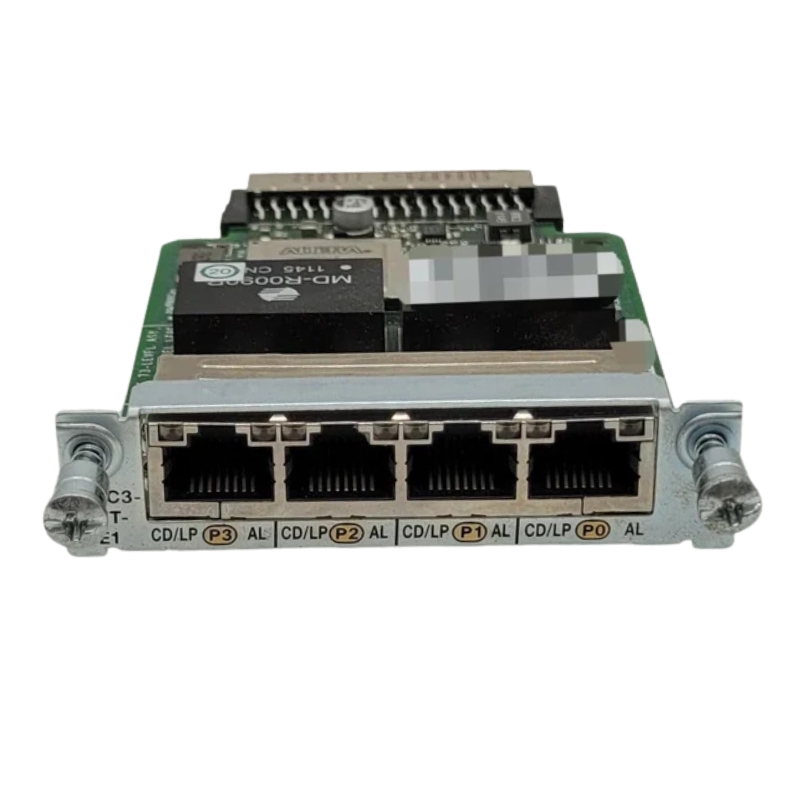


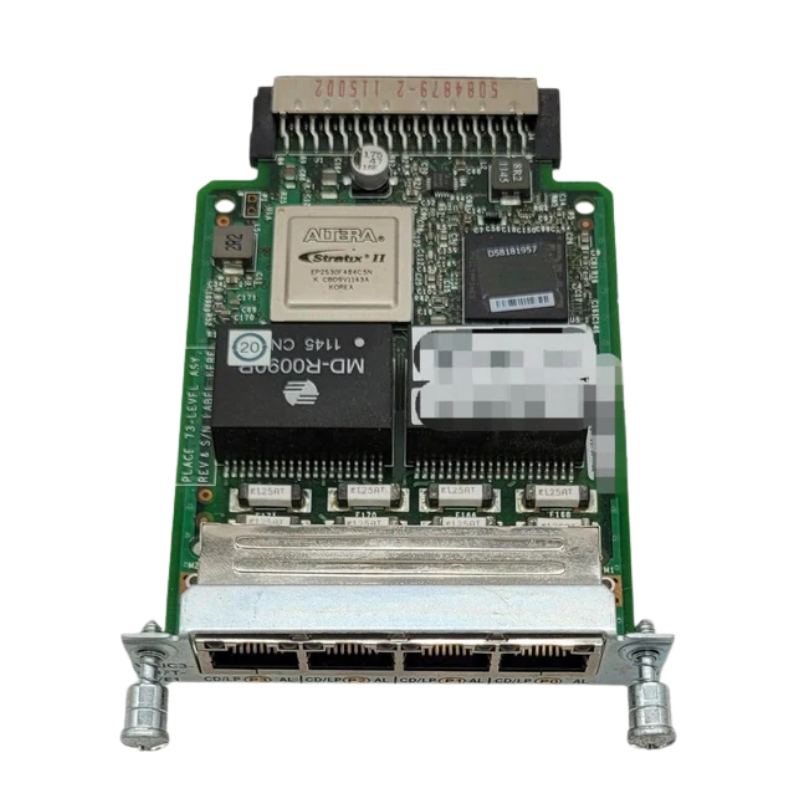
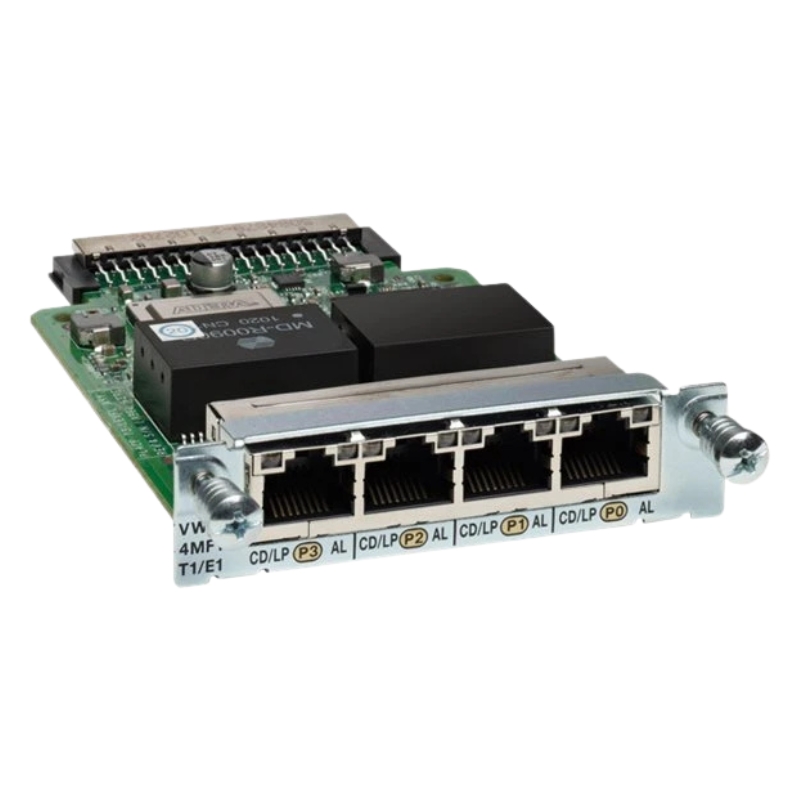
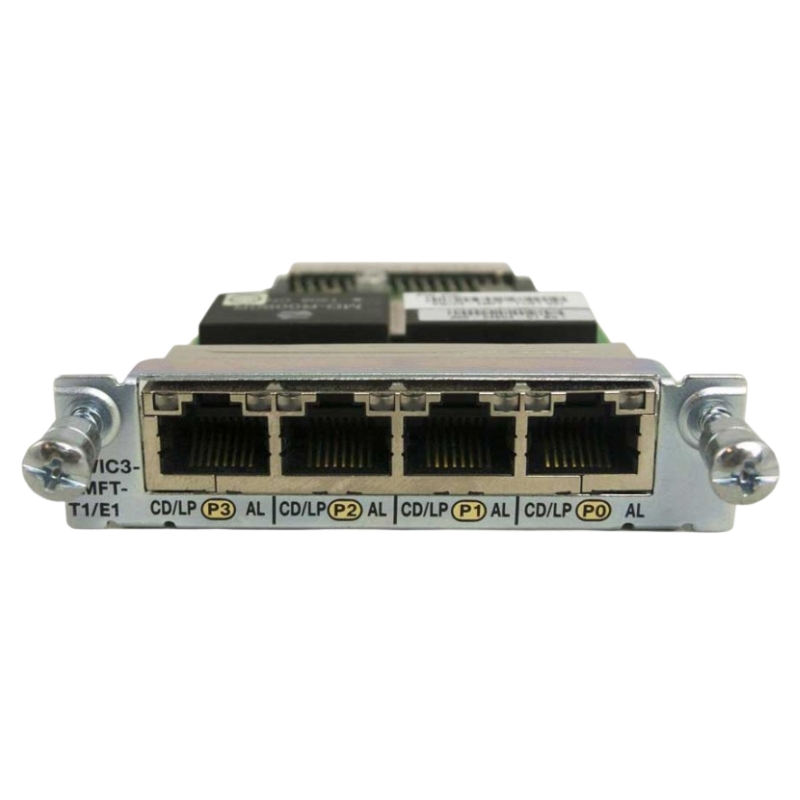
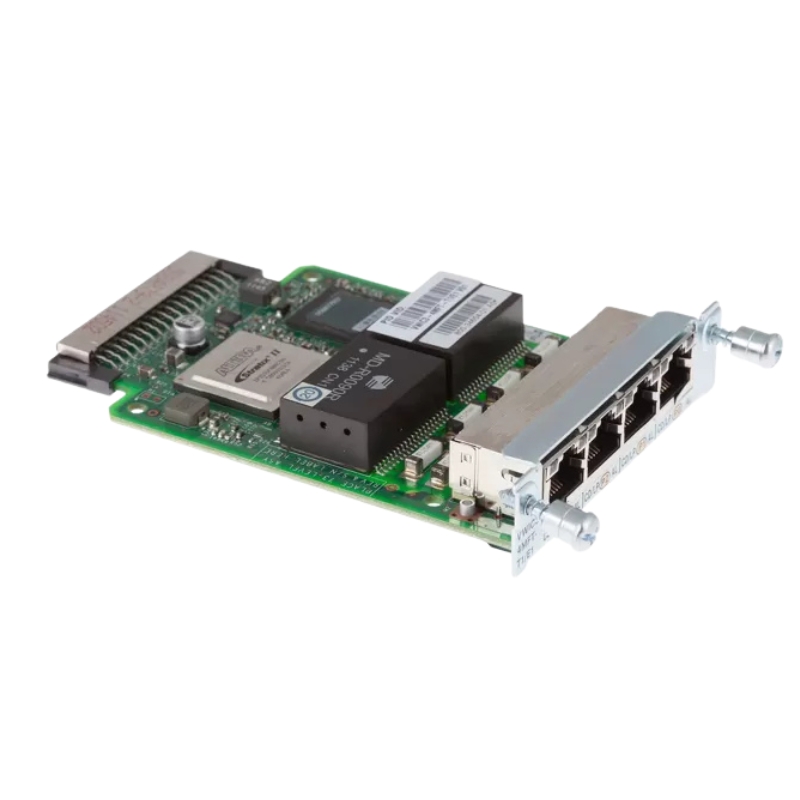
Cisco VWIC3-4MFT-T1/E1= Multiflex Network Module Trunk Voice Interface Card. Factory-Sealed New in Original Box (FSB) with 1 year replacement warranty
| SKU/MPN | Warranty | Price | Condition | You save |
|---|---|---|---|---|
| VWIC3-4MFT-T1/E1= | 1 Year Warranty | $50.00 | Excellent Refurbished | You save: $17.50 (26%) |
| VWIC3-4MFT-T1/E1= | 1 Year Warranty | $770.00 | Factory-Sealed New in Original Box (FSB) | You save: $269.50 (26%) |
The Cisco VWIC3-4MFT-T1/E1= is a high-performance third-generation Voice/WAN Interface Card engineered to expand the WAN and voice connectivity of compatible Cisco Integrated Services Routers (ISR). Featuring four configurable T1/E1 interfaces, this network module provides reliable voice and data transmission, making it an ideal solution for enterprise branch offices, service providers, and business communication infrastructures.
The Cisco VWIC3-4MFT-T1/E1= is designed to integrate seamlessly with several Cisco ISR platforms, including:
The Cisco VWIC3-4MFT-T1/E1= is a third-generation WAN Interface Card designed to provide versatile, high-performance voice and data integration across enterprise-grade networking environments. As part of Cisco’s advanced modular networking architecture, this interface card is engineered to support multiple T1 and E1 connections, making it a critical component in scalable WAN deployments where reliability, bandwidth efficiency, and legacy compatibility are essential.
This 4-port WAN Interface Card (VWIC3) is widely utilized in Cisco Integrated Services Routers (ISRs), enabling organizations to connect traditional telephony systems and digital WAN circuits into a unified infrastructure. It is particularly valuable in environments requiring flexible voice, data, and video transmission over TDM-based circuits while maintaining backward compatibility with existing telecom infrastructures.
The VWIC3 series represents the evolution of Cisco’s WAN interface technology, improving upon earlier VWIC and VWIC2 modules. The third-generation architecture focuses on higher efficiency, improved signal processing, and enhanced support for mixed T1/E1 environments. This hybrid compatibility allows network engineers to deploy a single module across different regional telecom standards without requiring hardware replacement.
The design prioritizes modular flexibility, allowing the card to function in both voice and data configurations. This dual-purpose capability reduces infrastructure complexity and minimizes total cost of ownership for enterprise networks.
The VWIC3-4MFT-T1/E1= is engineered for integration with Cisco ISR platforms, typically installed in EHWIC or network module slots depending on router architecture. Once installed, the module communicates directly with the router’s backplane, ensuring low-latency data transfer and efficient packet handling for WAN traffic.
Its compact design ensures that multiple WAN interface cards can be deployed in a single router chassis, enabling high-density WAN aggregation without compromising performance or scalability.
The primary feature of the VWIC3-4MFT-T1/E1= is its four-port configuration, supporting simultaneous T1 or E1 connections. T1 circuits are commonly used in North America and Japan, while E1 circuits are widely deployed across Europe, Asia, and other global regions. This dual compatibility makes the module highly versatile in multinational enterprise environments.
Each port operates independently, allowing for separate WAN links, load balancing, or redundant failover configurations. This flexibility enhances network resilience and ensures continuous service availability even in the event of circuit failure.
One of the most significant advantages of this WAN Interface Card is its ability to support both voice and data transmission over the same infrastructure. It can be configured for channelized voice, packetized voice (VoIP), or traditional data WAN connectivity, depending on organizational requirements.
This integration enables enterprises to converge legacy PBX systems with modern IP-based communication systems, ensuring seamless transition toward unified communications architectures.
The module supports channelized voice applications, allowing individual time slots within T1/E1 circuits to be assigned to specific voice channels. This ensures optimal utilization of bandwidth and efficient management of voice traffic across distributed networks.
In addition to traditional TDM voice handling, the VWIC3-4MFT-T1/E1= can be used in packet-based environments where voice traffic is encapsulated into IP packets and transmitted across data networks. This capability is essential for VoIP deployments and SIP trunking architectures.
Accurate timing is essential in TDM-based networks, and the VWIC3-4MFT-T1/E1= provides advanced clocking mechanisms to ensure synchronization across WAN links. It supports internal, line, and loop timing modes, allowing administrators to align network timing with carrier-provided clock sources.
Proper synchronization reduces jitter, prevents data loss, and ensures high-quality voice transmission, particularly in multi-site enterprise deployments.
Large organizations frequently deploy the VWIC3-4MFT-T1/E1= in WAN aggregation scenarios where multiple branch offices are connected to a central data center. Each port can be dedicated to a separate branch connection, enabling structured and scalable network topology designs.
This approach enhances bandwidth utilization and provides redundancy paths that improve overall network uptime and resilience.
Many enterprises still rely on legacy PBX systems that operate over T1 or E1 circuits. The VWIC3-4MFT-T1/E1= allows these systems to integrate seamlessly with modern IP-based networks, enabling gradual migration without disrupting existing communication infrastructure.
Internet Service Providers (ISPs) and telecommunications providers utilize this module at the network edge to terminate customer T1/E1 circuits. Its multi-port capability makes it ideal for high-density circuit termination and service aggregation.
In disaster recovery environments, the module is often used to establish redundant WAN links between primary and backup sites. Its ability to support multiple independent circuits ensures that organizations can maintain connectivity even during infrastructure failures.
The VWIC3-4MFT-T1/E1= allows network administrators to optimize bandwidth utilization by distributing traffic across multiple T1/E1 channels. This load balancing approach ensures that no single link becomes a bottleneck, improving overall network efficiency.
When deployed in voice and data networks, Quality of Service (QoS) policies can be applied to prioritize latency-sensitive traffic such as VoIP calls. The module supports integration with Cisco QoS frameworks, enabling granular control over traffic prioritization and congestion management.
Designed for enterprise-grade performance, the module minimizes latency by directly interfacing with the router’s hardware switching architecture. This ensures rapid packet forwarding and reduced processing delays, which is critical for real-time communication systems.
Although the VWIC3-4MFT-T1/E1= operates at the physical and data link layers, it integrates with higher-layer security protocols provided by Cisco routers. This includes encryption technologies, VPN tunneling, and access control mechanisms.
The multi-port architecture enhances fault tolerance by allowing automatic rerouting of traffic in case of circuit failure. This redundancy ensures continuous network availability, which is essential for mission-critical applications.
Built for enterprise and carrier environments, the module is designed to maintain high uptime under continuous operation. Its robust hardware architecture ensures stable performance even in demanding network conditions.
The VWIC3-4MFT-T1/E1= supports scalable network design by allowing multiple modules to be deployed across router platforms. This modularity enables organizations to expand WAN capacity without replacing existing infrastructure.
As enterprises transition from TDM-based networks to fully IP-based architectures, this module serves as a bridge technology, ensuring compatibility between legacy systems and modern digital communication frameworks.
By supporting both T1 and E1 standards, the module protects network investments by eliminating the need for region-specific hardware. This reduces procurement complexity and extends the lifecycle of deployed networking equipment.


 Contact Us
 Information
 Catalog
 Solid State Drives (SSD)
 Network Switches
 Hard Disk Drives
 HBA & Controllers
 PC & Servers
 PC & Server Memory
 CPU & Processors
 Network Routers
 Power Supplies
 Tape Drives & Libraries
 Network Devices
 Computer & Network Cables