(7% discount is applied at checkout)
Cart is empty
Your go-to destination for cutting-edge server products
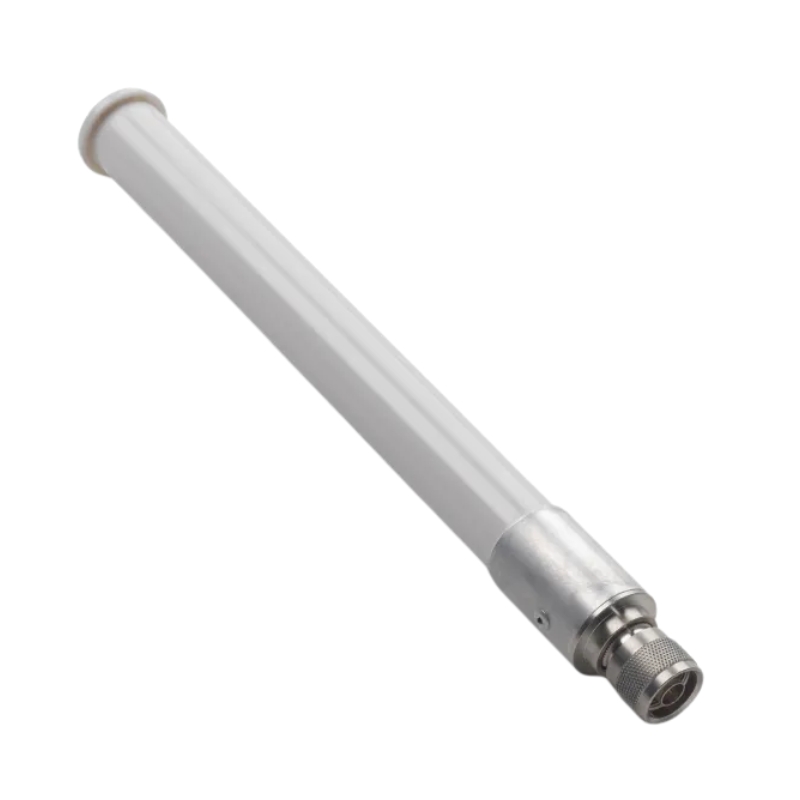


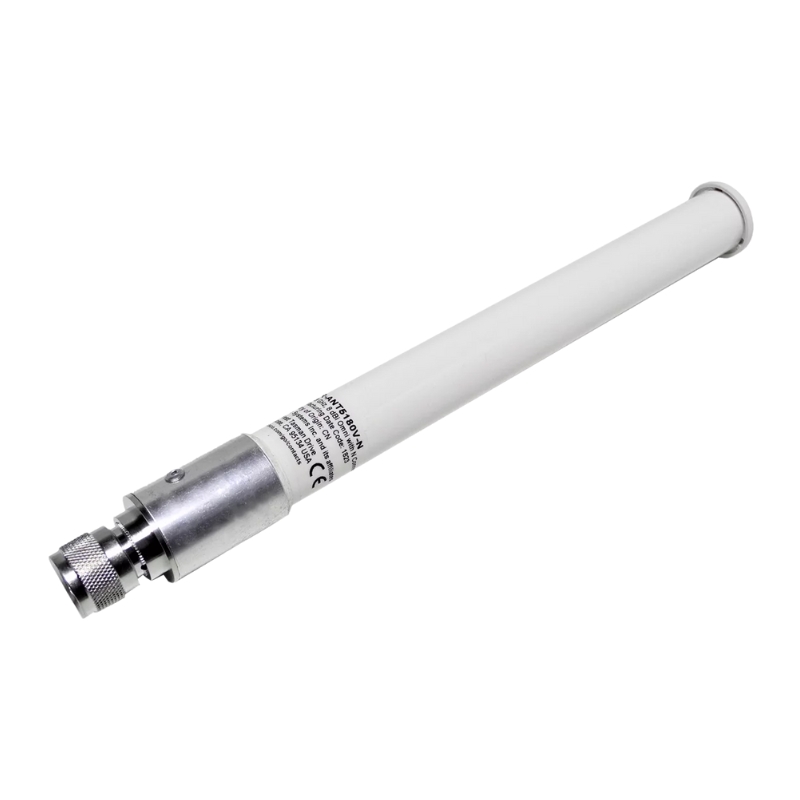
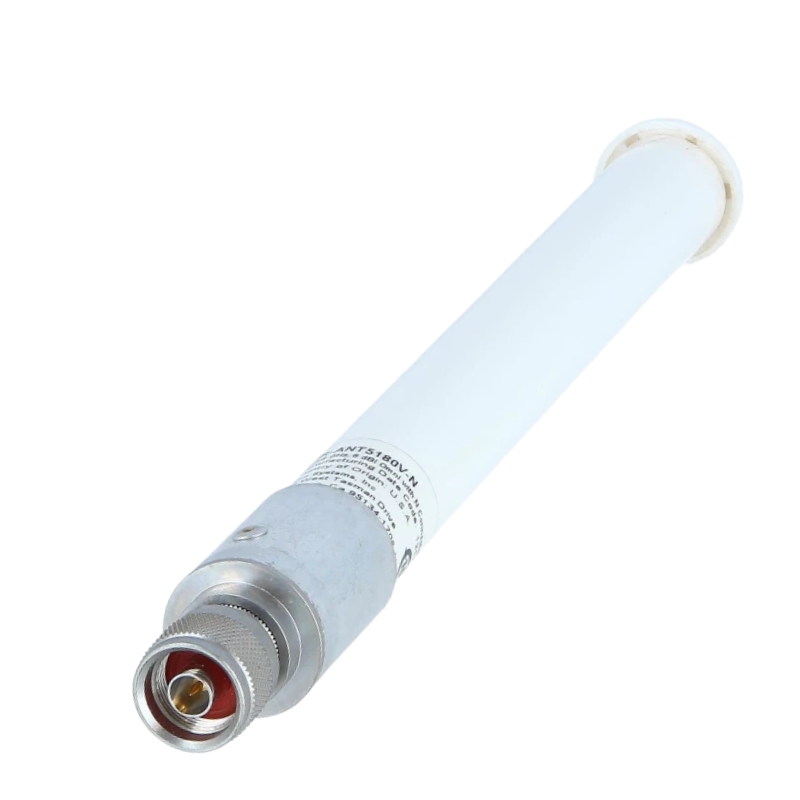
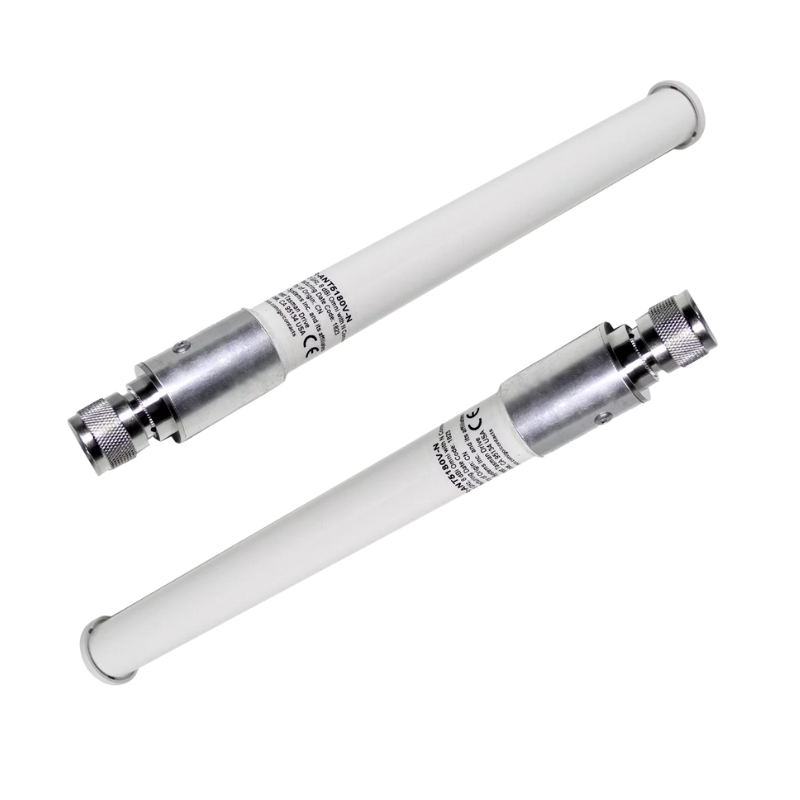
Cisco AIR-ANT5180V-N= Aironet Omni Directional Antenna for Aironet 1500 and 2000 Series. Factory-Sealed New in Original Box (FSB) with 1 year replacement warranty
The Cisco AIR‑ANT5180V‑N= is an omni‑directional 5 GHz antenna engineered to deliver broad, uniform wireless coverage for enterprise environments. Designed for seamless integration with Cisco Aironet 1500 and 2000 Series platforms, it enhances signal consistency, improves network reliability, and supports stable connectivity across indoor and outdoor deployments requiring wide‑area RF distribution.
The Cisco AIR-ANT5180V-N= Aironet Omni Directional Antenna is positioned within the high-performance wireless networking antenna ecosystem designed for Cisco Aironet 1500 Series and Cisco Aironet 2000 Series infrastructure deployments. This antenna category focuses on enhancing outdoor and semi-outdoor wireless coverage by delivering consistent omnidirectional signal propagation across the 5 GHz frequency band. It is engineered to support enterprise-grade wireless mesh architectures, point-to-multipoint connectivity, and extended coverage scenarios where stable RF performance and reliable signal distribution are essential for mission-critical communication environments.
This antenna category is widely adopted in wireless network expansion projects that require robust signal uniformity in all horizontal directions. By integrating with Cisco Aironet access points, it enables seamless network extension in environments such as campuses, industrial zones, public infrastructure networks, transportation hubs, and large-scale enterprise deployments. The design emphasizes durability, RF efficiency, and compatibility with Cisco’s established wireless architecture standards.
The Cisco AIR-ANT5180V-N= antenna is built around a precision-engineered radiating element tuned for optimal performance in the 5 GHz spectrum, specifically centered around the 5180 MHz band. This frequency alignment ensures compatibility with modern wireless networking standards where higher throughput and reduced interference are prioritized. The antenna structure is designed to maintain consistent gain distribution across a full 360-degree horizontal plane, making it suitable for omni coverage deployments.
The internal RF architecture incorporates controlled impedance pathways and optimized radiating geometry to minimize signal loss and maintain stable transmission quality. The antenna housing is constructed to reduce environmental RF distortion while preserving signal integrity in variable weather conditions. This ensures that wireless signals remain stable even when deployed in high-interference outdoor environments or densely populated RF zones.
Operating within the 5 GHz band, the Cisco AIR-ANT5180V-N= antenna delivers enhanced throughput potential and reduced congestion compared to legacy 2.4 GHz systems. The antenna is optimized to handle high-density wireless traffic while maintaining consistent signal clarity across its coverage radius. The frequency response is tuned to reduce noise susceptibility and improve spatial reuse efficiency in enterprise wireless environments.
The omnidirectional radiation pattern ensures that signal propagation is evenly distributed, allowing network administrators to deploy fewer access points while maintaining broad coverage areas. This is particularly useful in campus-wide deployments, where consistent coverage across multiple buildings, open spaces, and transitional zones is required without directional limitations.
The Cisco AIR-ANT5180V-N= antenna is specifically engineered for integration with Cisco Aironet 1500 Series and Cisco Aironet 2000 Series wireless platforms. These access points are commonly deployed in mesh networking and outdoor wireless infrastructure scenarios, where extended range and reliability are critical.
The compatibility ensures seamless integration with Cisco wireless controllers and mesh node architectures, enabling centralized management of antenna performance and network behavior. When paired with Aironet mesh access points, the antenna contributes to improved backhaul stability and client connectivity performance across distributed wireless networks.
This compatibility extends to enterprise environments requiring scalable wireless expansion, including smart city deployments, industrial IoT networks, and large campus connectivity frameworks. The antenna’s standardized interface design ensures straightforward installation and interoperability within Cisco-certified wireless ecosystems.
One of the defining features of the Cisco AIR-ANT5180V-N= antenna is its omnidirectional radiation pattern. This allows the antenna to transmit and receive signals uniformly in all horizontal directions, making it ideal for central placement in network topologies requiring symmetrical coverage distribution.
The radiation pattern reduces the need for multiple directional antennas in many deployment scenarios, simplifying infrastructure design and reducing overall installation complexity. It ensures that wireless clients located at varying angles relative to the antenna receive consistent signal strength, improving user experience and network reliability.
In real-world deployments, this characteristic supports uninterrupted roaming between access points and minimizes dead zones, particularly in outdoor environments where physical obstructions and variable terrain can affect signal propagation.
The Cisco AIR-ANT5180V-N= antenna category is widely used in enterprise wireless deployments requiring extended outdoor coverage and stable connectivity. Typical applications include university campuses, business parks, industrial complexes, logistics hubs, and municipal wireless networks. Its design supports mesh networking architectures where multiple access points interconnect to extend wireless coverage over large geographical areas.
In transportation environments, the antenna is often used to support connectivity across terminals, platforms, and service areas. In industrial environments, it facilitates communication between IoT devices, sensors, and centralized monitoring systems. Its omnidirectional nature makes it particularly effective in environments where user or device movement is unpredictable.
The antenna also supports temporary deployment scenarios such as event venues, emergency response communication systems, and outdoor temporary infrastructure setups where rapid deployment and reliable coverage are required.
The Cisco AIR-ANT5180V-N= antenna relies on precision RF connectors designed to maintain low-loss signal transmission between the antenna and the access point. Connector integrity is critical in preserving signal strength, especially in outdoor environments where exposure to weather conditions can impact physical connections.
Proper grounding and shielding techniques are recommended to prevent electromagnetic interference and ensure stable network operation. Cable length should be optimized to reduce attenuation while maintaining installation flexibility. High-quality coaxial cables are commonly used to preserve signal fidelity across extended distances.
The antenna category is designed for outdoor deployment and incorporates materials engineered to withstand harsh environmental conditions. It is resistant to temperature variations, moisture exposure, wind stress, and ultraviolet radiation. This ensures long-term operational stability in diverse geographic regions and climates.
The enclosure is typically sealed to prevent water ingress and protect internal RF components from corrosion and environmental degradation. This durability makes it suitable for long-term infrastructure deployments where maintenance access may be limited or costly.
The Cisco AIR-ANT5180V-N= antenna plays a significant role in optimizing wireless network performance by improving signal distribution and reducing coverage gaps. Its omnidirectional design supports balanced network load distribution, enabling efficient communication between access points and connected devices.
In mesh network configurations, the antenna enhances backhaul stability, ensuring consistent data transmission between nodes. This contributes to reduced latency, improved throughput, and better overall network efficiency. It is particularly beneficial in high-density environments where multiple devices compete for bandwidth.
Network administrators often use this antenna category to improve coverage consistency in challenging environments where directional antennas may not provide adequate uniformity.
The antenna is a critical component in Cisco mesh networking solutions, supporting scalable wireless infrastructure expansion. It enables seamless integration with distributed access point systems that dynamically adjust routing paths based on network conditions.
Scalability is achieved through the antenna’s ability to maintain consistent signal coverage as additional nodes are added to the network. This allows organizations to expand wireless coverage without significant redesign of existing infrastructure.
The design supports dynamic network topologies, making it suitable for environments that evolve over time, such as expanding campuses or growing industrial facilities.
Operating in the 5 GHz spectrum, the Cisco AIR-ANT5180V-N= antenna benefits from reduced interference compared to lower frequency bands. However, proper deployment is still essential to minimize co-channel and adjacent-channel interference in dense wireless environments.
Strategic placement and spacing of antennas help ensure optimal signal separation and improved channel efficiency. This contributes to stable wireless performance even in environments with multiple overlapping networks or high RF activity.
The antenna requires minimal maintenance once properly installed, making it suitable for long-term deployments. Periodic inspections are recommended to ensure structural integrity, secure mounting, and proper cable connections. Environmental exposure over time may necessitate checks for wear or degradation.
Maintaining clean and secure connectors is essential to prevent signal loss. Routine network performance monitoring can help identify any degradation in signal quality that may be related to physical antenna conditions or environmental factors.


 Contact Us
 Information
 Catalog
 Solid State Drives (SSD)
 Network Switches
 Hard Disk Drives
 HBA & Controllers
 PC & Servers
 PC & Server Memory
 CPU & Processors
 Network Routers
 Power Supplies
 Tape Drives & Libraries
 Network Devices
 Computer & Network Cables