(7% discount is applied at checkout)
Cart is empty
Your go-to destination for cutting-edge server products
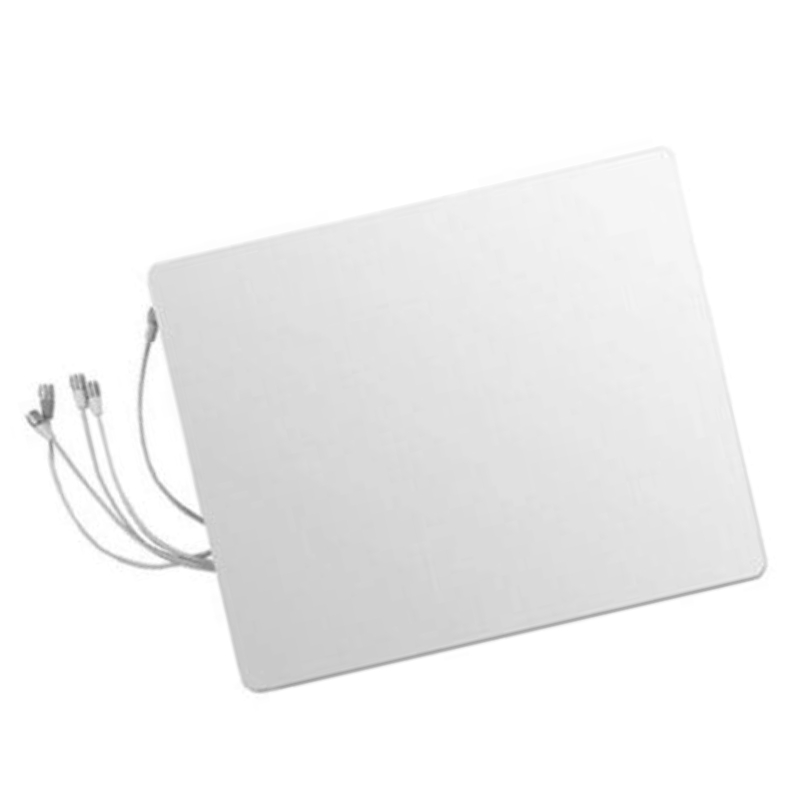


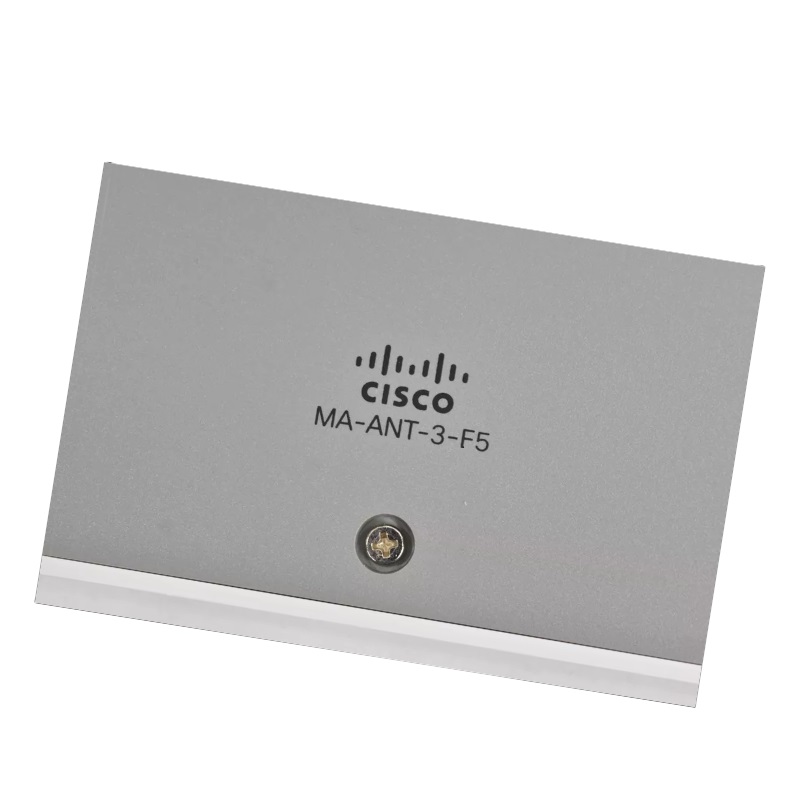
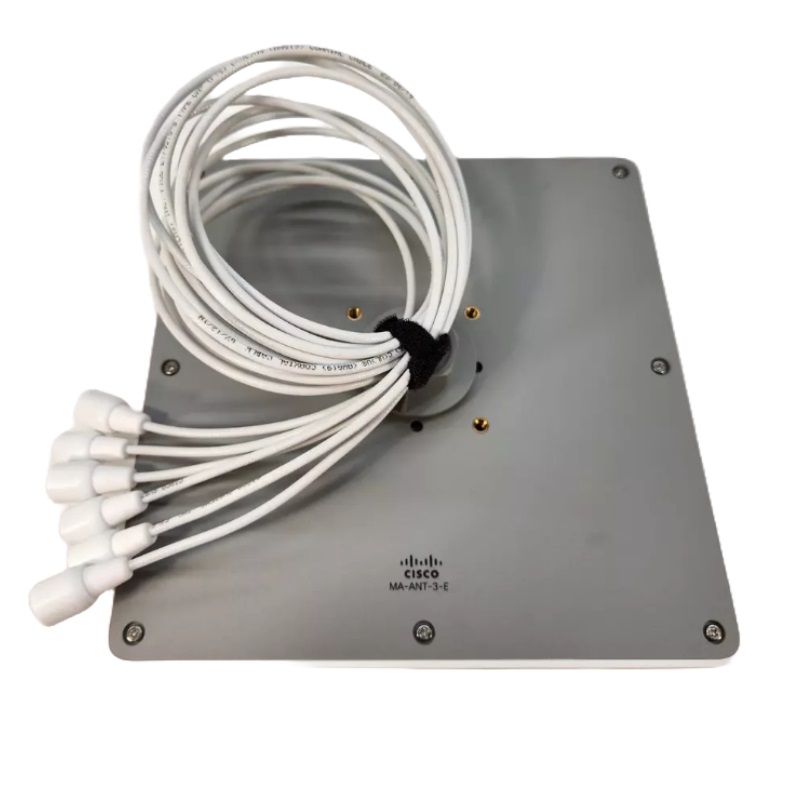
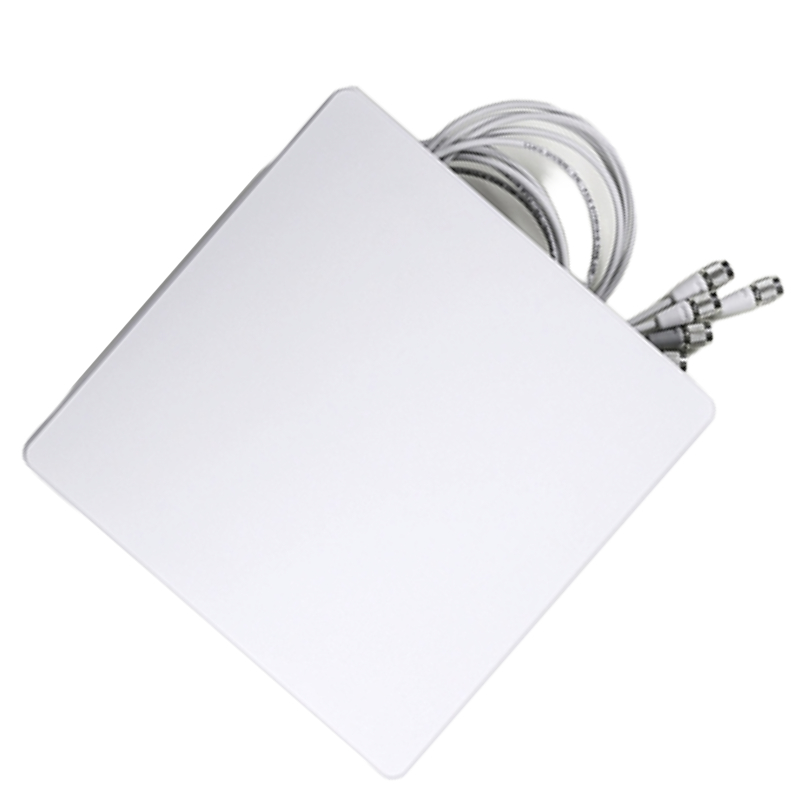
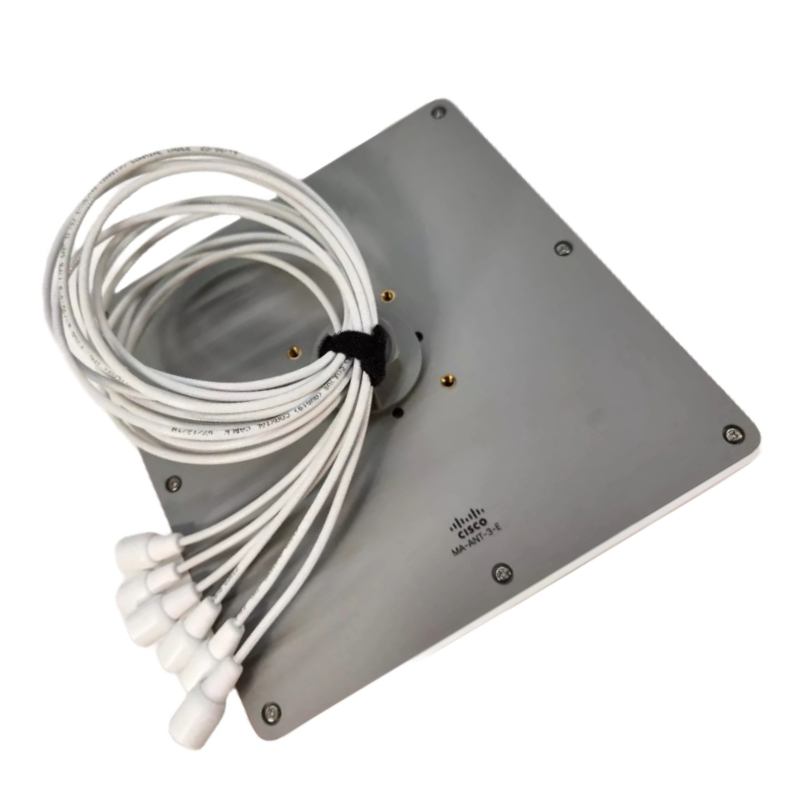
Meraki MA-ANT-3-F5 Cisco Indoor Dual-Band Narrow Patch Antenna, 5-Port. Factory-Sealed New in Original Box (FSB) with 1 year replacement warranty
The Cisco Meraki MA-ANT-3-F5 is a professionally engineered indoor dual-band narrow patch antenna designed to enhance wireless coverage and optimize signal distribution. Built by Cisco, this high-gain network accessory is ideal for demanding enterprise connectivity requirements where stability, directionality, and performance matter.
Engineered for modern wireless infrastructures, this antenna supports both commonly used Wi-Fi spectrums, ensuring flexible deployment in various environments.
The MA-ANT-3-F5 delivers strong directional performance, improving wireless reach and reducing interference in targeted coverage areas.
The Meraki MA-ANT-3-F5 Cisco Indoor Dual-Band Narrow Patch Antenna, 5-Port, represents a specialized category of enterprise-grade wireless networking components designed to enhance signal directionality, improve coverage precision, and optimize wireless network performance in controlled indoor environments. As organizations increasingly depend on stable and high-performance wireless connectivity, the demand for advanced antenna solutions has grown significantly. This category of antennas is engineered to work seamlessly with compatible access points, enabling businesses to fine-tune wireless signal distribution according to spatial requirements, architectural layouts, and user density.
This antenna belongs to a niche yet critical segment within wireless infrastructure, focusing on directional signal propagation rather than omnidirectional broadcasting. By concentrating RF energy into a targeted beam, it minimizes interference, enhances signal strength in specific areas, and supports high-density deployments such as offices, conference centers, educational institutions, healthcare facilities, and retail environments. The inclusion of dual-band functionality ensures compatibility with both 2.4 GHz and 5 GHz frequency ranges, providing flexibility and performance optimization for modern Wi-Fi standards.
The defining characteristic of the MA-ANT-3-F5 antenna is its narrow patch design, which allows for precise signal targeting. Unlike omnidirectional antennas that disperse signals in all directions, patch antennas focus the signal into a specific coverage zone. This targeted approach is especially beneficial in environments where signal containment is necessary, such as multi-room office spaces or areas requiring minimal signal leakage.
The antenna’s directional nature contributes to improved signal-to-noise ratio, reduced interference from neighboring networks, and enhanced client performance. This is particularly valuable in dense deployments where multiple access points operate simultaneously. By controlling signal spread, network administrators can design more efficient wireless architectures.
The integration of dual-band support allows the antenna to operate across both 2.4 GHz and 5 GHz spectrums. This ensures compatibility with a wide range of devices, from legacy systems to modern high-speed clients. The 2.4 GHz band provides broader coverage and better wall penetration, while the 5 GHz band delivers higher data rates and reduced congestion.
By supporting both bands, the antenna enables load balancing and efficient spectrum utilization. Network administrators can allocate devices based on performance requirements, ensuring optimal throughput and minimal latency across the network.
The 5-port configuration is a critical feature that enhances the antenna’s versatility and compatibility with advanced access points. Each port corresponds to a specific radio chain, allowing for multiple-input multiple-output (MIMO) functionality. This setup supports spatial multiplexing, beamforming, and improved signal diversity, all of which contribute to enhanced wireless performance.
The multi-port design ensures that the antenna can fully leverage the capabilities of modern enterprise access points, providing robust connectivity and consistent performance even in challenging environments.
In corporate settings, the need for reliable and high-speed wireless connectivity is paramount. The MA-ANT-3-F5 antenna is ideal for conference rooms, executive offices, and collaborative workspaces where targeted coverage is required. By directing signals to specific areas, it ensures consistent performance for critical applications such as video conferencing, cloud computing, and real-time collaboration tools.
Additionally, the antenna’s ability to minimize interference makes it suitable for open-plan offices with high device density. It enables network administrators to design efficient wireless layouts that support seamless connectivity across departments.
Hospitals and healthcare centers require precise wireless coverage to support medical devices, patient monitoring systems, and administrative operations. The directional capabilities of this antenna allow for controlled signal distribution, ensuring that critical areas receive strong and reliable connectivity.
By reducing signal overlap and interference, the antenna contributes to a stable network environment, which is essential for maintaining the integrity of healthcare applications. Its dual-band support further enhances performance by accommodating a wide range of devices and applications.
Schools, colleges, and universities benefit from targeted wireless coverage in classrooms, lecture halls, and libraries. The MA-ANT-3-F5 antenna enables administrators to focus signals on specific areas, ensuring that students and faculty have access to high-speed internet for learning and research activities.
In large campuses, the antenna can be used to complement existing wireless infrastructure, providing additional coverage in areas with high user density or challenging layouts. Its directional design helps in managing network traffic and optimizing performance.
Retail environments often require reliable wireless connectivity for point-of-sale systems, inventory management, and customer engagement applications. The antenna’s ability to direct signals to specific zones ensures consistent performance in critical areas such as checkout counters and product displays.
In shopping malls and commercial complexes, the antenna can be used to create targeted coverage zones, enhancing the overall customer experience. Its dual-band capability supports a wide range of devices, from staff terminals to customer smartphones.
The directional nature of the MA-ANT-3-F5 antenna allows for improved signal strength in targeted areas. By focusing RF energy, it ensures that clients receive a strong and stable connection, even in environments with physical obstructions or high interference levels.
This precision in coverage also reduces the need for additional access points, resulting in cost savings and simplified network management. It enables administrators to design efficient wireless layouts that maximize performance while minimizing infrastructure requirements.
Interference is a common challenge in wireless networks, particularly in densely populated areas. The narrow beam design of this antenna helps in minimizing interference from neighboring networks and devices. By containing the signal within a specific area, it reduces the likelihood of overlap and contention.
This leads to improved network stability, lower latency, and higher throughput. It also enhances the performance of applications that require consistent connectivity, such as voice over IP and video streaming.
The antenna is designed to support modern wireless technologies, including MIMO and beamforming. These technologies enhance signal quality and enable higher data rates, making the antenna suitable for high-performance networks.
Beamforming allows the antenna to direct signals towards connected devices, improving efficiency and reducing power consumption. MIMO technology enables multiple data streams, increasing network capacity and performance.
The MA-ANT-3-F5 antenna is engineered to integrate seamlessly with compatible access points, ensuring optimal performance and ease of deployment. Its multi-port design aligns with advanced access point architectures, allowing for full utilization of radio capabilities.
This compatibility simplifies installation and configuration, enabling network administrators to quickly deploy and optimize wireless networks. It also ensures that the antenna can adapt to evolving network requirements.
The antenna is designed for indoor use, with flexible mounting options that allow for optimal placement. Proper positioning is crucial for achieving the desired coverage and performance. By strategically placing the antenna, administrators can direct signals to specific areas and avoid interference.
Its compact design makes it suitable for various environments, from office ceilings to wall installations. This flexibility ensures that the antenna can be deployed in diverse settings without compromising aesthetics or functionality.
Effective deployment of directional antennas requires thorough site surveys and planning. Understanding the physical layout, user density, and potential sources of interference is essential for optimizing performance. The MA-ANT-3-F5 antenna provides the flexibility needed to adapt to different environments.
By conducting detailed site assessments, administrators can determine the optimal placement and orientation of the antenna, ensuring maximum coverage and efficiency.
Proper frequency management is critical for maximizing the benefits of dual-band antennas. By strategically allocating channels and balancing loads between 2.4 GHz and 5 GHz bands, administrators can minimize congestion and enhance performance.
The antenna’s dual-band capability supports dynamic frequency management, allowing networks to adapt to changing conditions and user demands.
Calibrating transmission power and signal strength is essential for achieving optimal performance. The directional nature of the antenna allows for precise control over signal propagation, enabling administrators to fine-tune network settings.
This level of control ensures that coverage is focused where needed, reducing waste and improving overall efficiency.
The MA-ANT-3-F5 antenna is designed to support evolving network requirements. Its compatibility with advanced wireless technologies ensures that it can adapt to future standards and applications. This scalability makes it a valuable investment for organizations looking to build robust and future-proof networks.
As wireless demands continue to grow, the antenna provides the flexibility and performance needed to support new devices and applications.
By delivering strong and reliable connectivity, the antenna enhances the overall user experience. Whether in a corporate office, educational institution, or retail environment, users benefit from faster speeds, lower latency, and consistent performance.
This improved experience translates into increased productivity, better customer satisfaction, and more efficient operations.
The targeted coverage provided by the antenna reduces the need for additional infrastructure, resulting in cost savings. By optimizing signal distribution, organizations can achieve better performance with fewer resources.
This efficiency extends to maintenance and management, as fewer devices and simpler configurations reduce operational complexity.


 Contact Us
 Information
 Catalog
 Solid State Drives (SSD)
 Network Switches
 Hard Disk Drives
 HBA & Controllers
 PC & Servers
 PC & Server Memory
 CPU & Processors
 Network Routers
 Power Supplies
 Tape Drives & Libraries
 Network Devices
 Computer & Network Cables