(7% discount is applied at checkout)
Cart is empty
Your go-to destination for cutting-edge server products
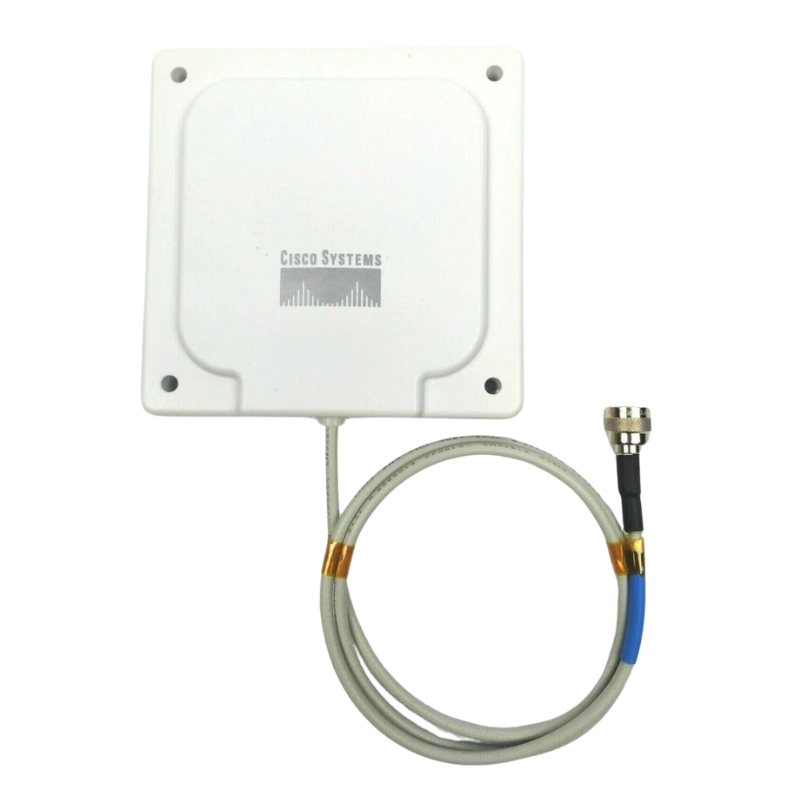


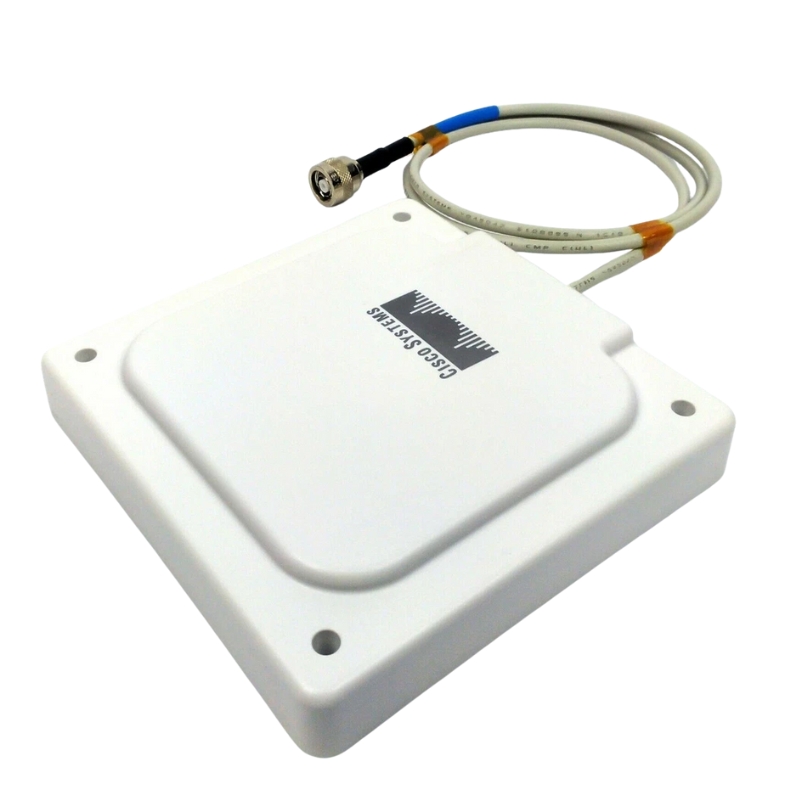
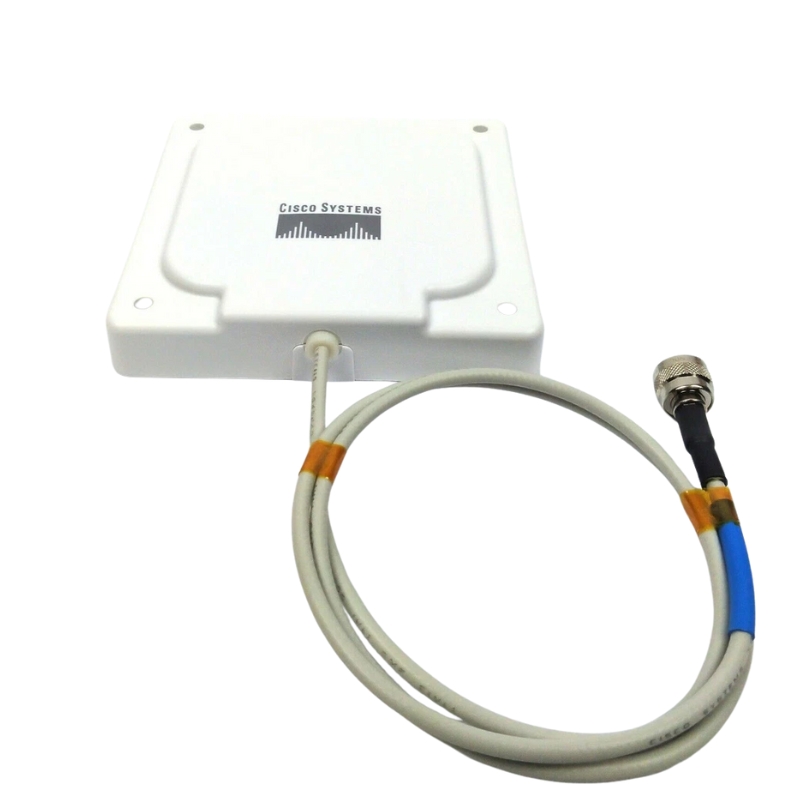
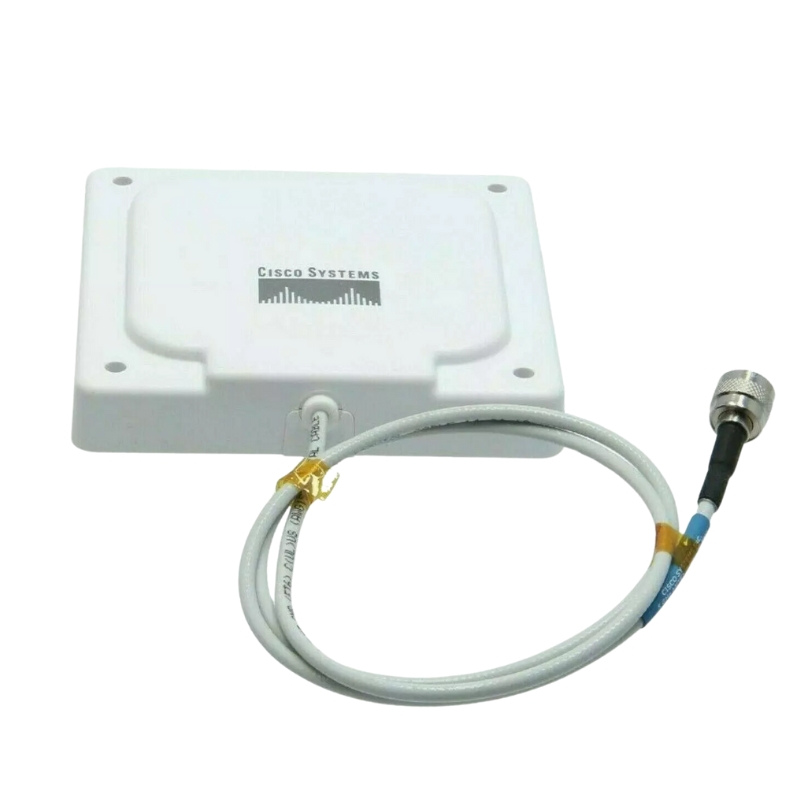
Cisco AIR-ANT5195P-R 5GHz 9.5dBi Patch Antenna Connector. Excellent Refurbished with 1 year replacement warranty
| SKU/MPN | Warranty | Price | Condition | You save |
|---|---|---|---|---|
| AIR-ANT5195P-R | 1 Year Warranty | $75.00 | New (System) Pull | You save: $26.25 (26%) |
| AIR-ANT5195P-R | 1 Year Warranty | $145.00 | Factory-Sealed New Retail in Original Box (FSB) | You save: $50.75 (26%) |
The Cisco AIR-ANT5195P-R is a high-performance 5GHz directional patch antenna engineered to enhance wireless signal reach and stability in demanding networking environments. Designed with a 9.5dBi gain rating, this advanced antenna supports optimized transmission quality for enterprise-grade Wi-Fi deployments. It operates within the 5.15 GHz to 5.85 GHz frequency spectrum, ensuring reliable performance across modern high-speed wireless data communication systems. Built with a compact form factor and equipped with an RP-TNC connector, it delivers flexible deployment options for both indoor and outdoor wireless infrastructure setups.
The
Built with precision RF engineering principles, this antenna is commonly deployed in enterprise campuses, industrial facilities, warehouses, educational institutions, and dense office environments where wireless performance consistency is a priority. Its directional design allows network architects to shape wireless coverage more accurately, improving throughput stability and reducing unnecessary signal dispersion.
The antenna operates within the 5 GHz band, a frequency range widely adopted in modern wireless networking due to its ability to support high-speed data transmission and reduced congestion compared to legacy 2.4 GHz systems. This band is particularly beneficial in environments where multiple wireless devices operate simultaneously, as it provides improved channel availability and reduced interference from non-WiFi devices.
By focusing on the 5 GHz spectrum, the antenna supports higher throughput capabilities, making it suitable for applications such as video streaming, enterprise cloud applications, VoIP communications, and real-time data processing systems. The directional gain of 9.5 dBi further enhances its ability to transmit and receive signals over extended distances with improved clarity and reduced packet loss.
The patch antenna design used in this model is engineered to concentrate radio frequency energy in a specific direction rather than dispersing it uniformly in all directions. This directional behavior allows network administrators to target specific coverage zones, such as long corridors, open warehouse aisles, or defined office sections, while minimizing coverage spillover into unwanted areas.
The planar structure of the patch antenna enables a compact form factor while still maintaining strong performance characteristics. This makes it suitable for wall mounting or ceiling installation where space efficiency and aesthetic integration are important considerations. The controlled radiation pattern ensures that wireless signals are delivered with consistent strength within the intended coverage zone.
A key feature of this antenna is its 9.5 dBi gain rating, which indicates its ability to focus energy more efficiently than lower-gain omnidirectional antennas. This increased gain results in extended range, improved signal penetration, and enhanced communication reliability across larger physical environments.
Higher gain antennas such as this model are particularly effective in reducing dead zones and improving connectivity in challenging architectural layouts. By directing energy toward a specific direction, the antenna improves signal-to-noise ratio, which is essential for maintaining stable wireless performance in environments with physical obstructions such as walls, shelving units, and machinery.
The
In large-scale deployments, network engineers use directional antennas like this model to create focused coverage zones, allowing for better frequency reuse and reduced co-channel interference. This is particularly important in high-density environments such as conference centers, university campuses, healthcare facilities, and manufacturing plants where wireless demand is high and continuous.
This antenna supports flexible installation configurations, enabling deployment on walls, ceilings, or structured mounting systems depending on the coverage design requirements. Its compact and lightweight structure allows for discreet installation while maintaining strong RF performance.
In corridor-based deployments, the antenna can be oriented to extend signal propagation along linear paths, ensuring uninterrupted connectivity across long distances. In warehouse environments, it can be positioned to cover specific aisles or zones, improving handheld device performance for inventory tracking systems and logistics operations.
In office environments, the antenna can be used to create segmented wireless coverage areas, helping reduce interference between departments while maintaining consistent access to network resources.
Wireless coverage engineering is a critical aspect of enterprise network design, and directional antennas such as this model play a central role in shaping RF propagation. The antenna’s focused beam allows for controlled signal distribution, which helps reduce unnecessary overlap between adjacent access point coverage zones.
This controlled propagation pattern helps optimize channel utilization and reduces the likelihood of interference in multi-access point environments. As a result, network performance becomes more predictable, especially in environments with high device density or complex structural layouts.
High-density environments present significant challenges for wireless networking due to overlapping signals and bandwidth competition among connected devices. The directional characteristics of this antenna help mitigate these challenges by providing focused coverage where it is needed most.
In conference halls, educational lecture spaces, and enterprise meeting rooms, the antenna helps maintain stable connections even when multiple devices are simultaneously accessing network resources. This improves user experience by reducing latency, buffering, and intermittent connectivity issues.
Industrial environments benefit significantly from directional antenna deployment due to the presence of metal structures, machinery, and long operational spaces. The 5 GHz performance capability of this antenna ensures high-speed data transfer required for automation systems, barcode scanning devices, and real-time inventory tracking systems.
Warehouses often rely on wireless connectivity for logistics coordination and mobile workforce communication. By deploying directional patch antennas, coverage can be extended along aisles and storage zones, ensuring that handheld devices maintain stable connections throughout operational workflows.
One of the key advantages of directional antenna technology is improved RF efficiency. By concentrating signal energy in a targeted direction, this antenna reduces wasted transmission power and enhances communication clarity.
Interference reduction is another critical benefit, particularly in environments where multiple wireless systems operate simultaneously. The antenna’s directional design minimizes exposure to unwanted signal paths, reducing the likelihood of cross-channel interference and improving overall network stability.
This antenna is designed to integrate smoothly within the broader Cisco wireless ecosystem, supporting deployment with compatible access points and networking hardware. Its standardized connector interface ensures reliable attachment and stable signal transmission without performance degradation.
Network administrators leveraging Cisco infrastructure benefit from consistent performance optimization, centralized management capabilities, and scalable deployment options that align with enterprise networking requirements.
When deploying directional antennas in structured environments, careful planning is essential to ensure optimal coverage alignment. Factors such as mounting height, orientation angle, and surrounding material composition significantly influence signal propagation outcomes.
In open-plan office environments, antennas are typically positioned to create segmented coverage zones that reduce overlap while maintaining seamless roaming capabilities for connected devices. In contrast, enclosed environments such as storage rooms or corridors require precise directional alignment to maximize signal reach.
Designed for enterprise use, this antenna supports long-term operational stability under continuous network load conditions. Its robust construction ensures consistent performance over time, even in environments with fluctuating temperature conditions or high device density.
The stability of signal output contributes to reduced maintenance requirements and improved lifecycle performance of wireless infrastructure deployments, making it a reliable component in long-term network planning strategies.


 Contact Us
 Information
 Catalog
 Solid State Drives (SSD)
 Network Switches
 Hard Disk Drives
 HBA & Controllers
 PC & Servers
 PC & Server Memory
 CPU & Processors
 Network Routers
 Power Supplies
 Tape Drives & Libraries
 Network Devices
 Computer & Network Cables