(7% discount is applied at checkout)
Cart is empty
Your go-to destination for cutting-edge server products
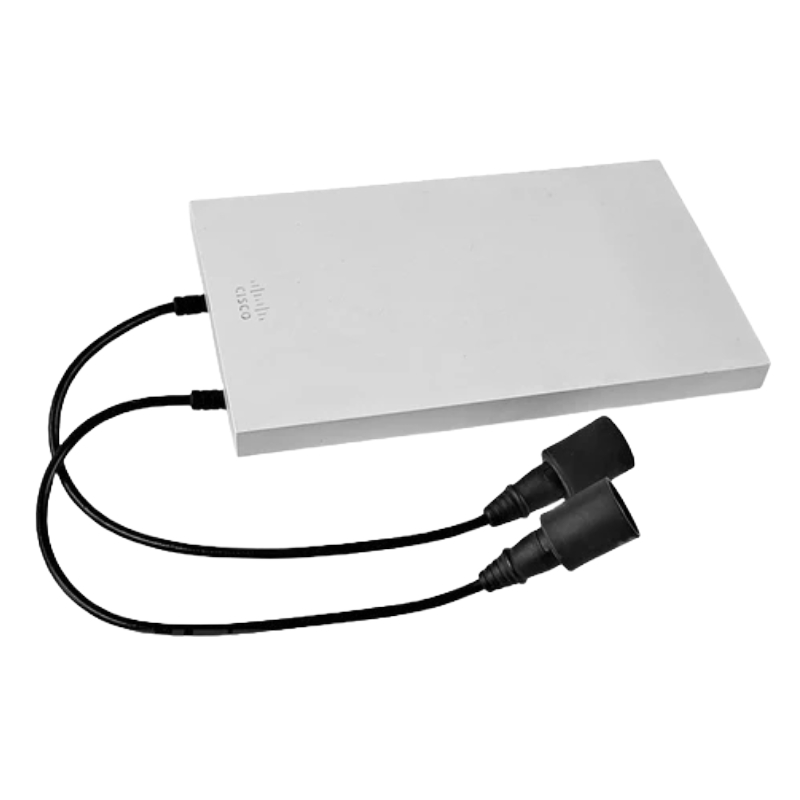


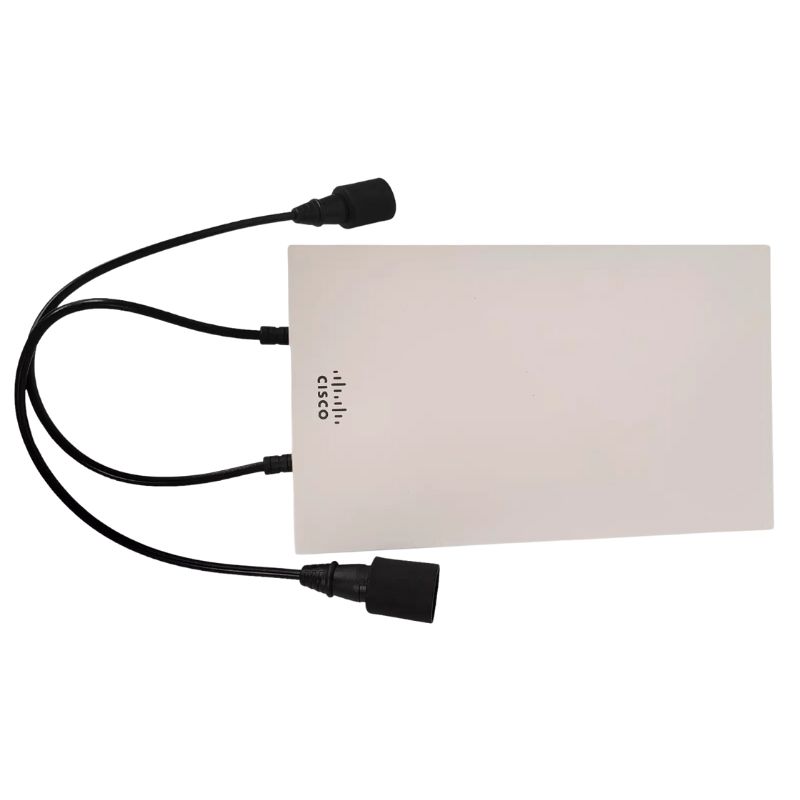
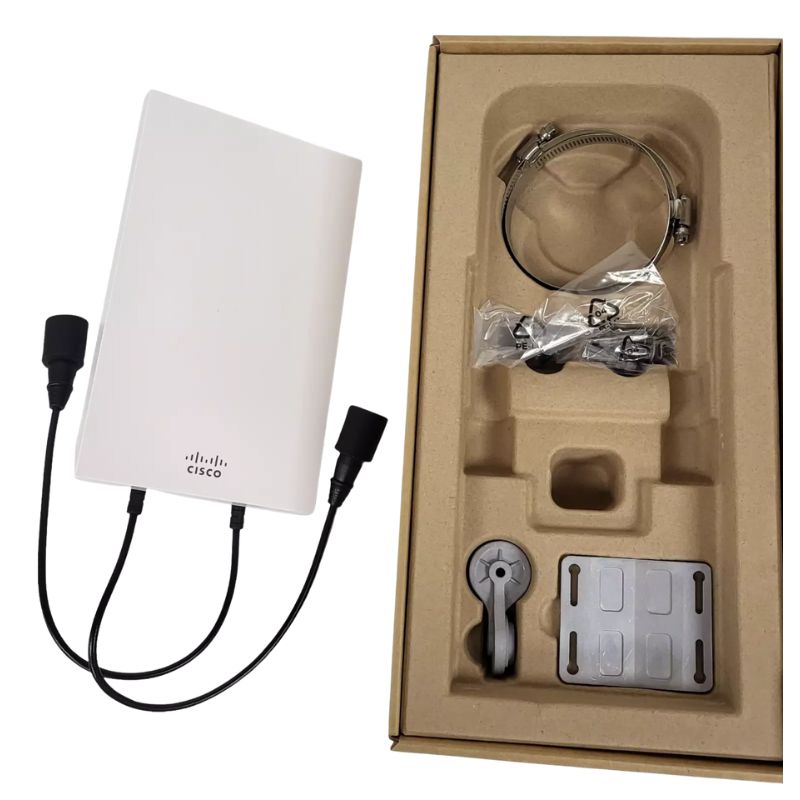
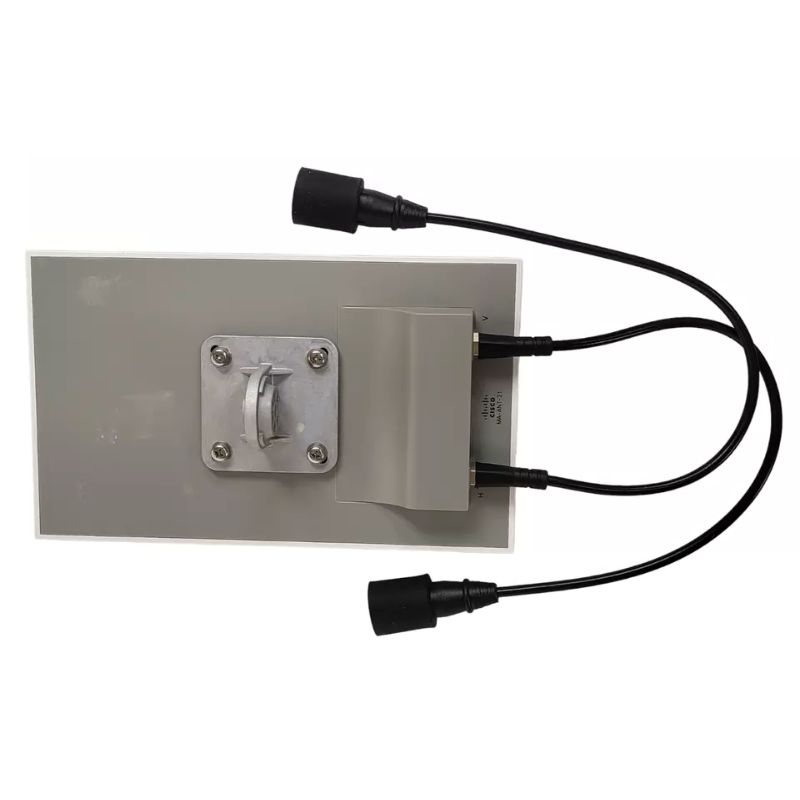
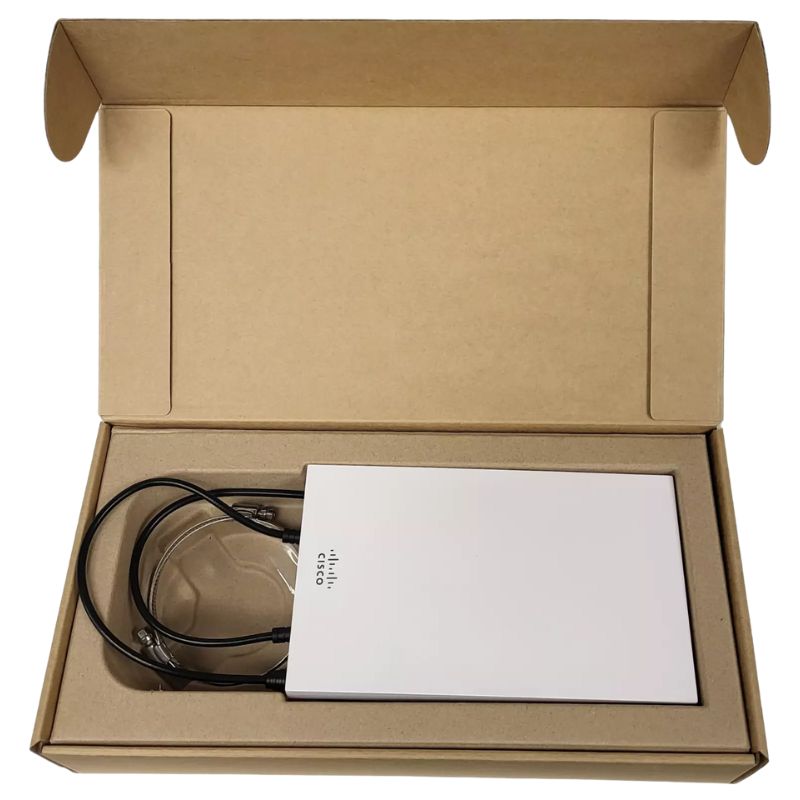
Cisco MA-ANT-21 Meraki 5 GHz 13 dBi Wireless AP Sector Antenna. Factory-Sealed New in Original Box (FSB) with 1 year replacement warranty
| SKU/MPN | Warranty | Price | Condition | You save |
|---|---|---|---|---|
| MA-ANT-21 | 1 Year Warranty | $110.00 | Excellent Refurbished | You save: $38.50 (26%) |
| MA-ANT-21 | 1 Year Warranty | $230.00 | Factory-Sealed New in Original Box (FSB) | You save: $80.50 (26%) |
The Cisco MA-ANT-21 is a professionally engineered Meraki sector antenna designed to extend and enhance wireless connectivity in demanding network environments. Built for reliability and efficiency, it supports high-capacity deployments where stable 5 GHz coverage is essential.
The Cisco MA-ANT-21 Meraki 5 GHz 13 dBi Wireless AP Sector Antenna represents a specialized category of high-performance directional antennas engineered to enhance wireless network coverage in targeted outdoor and semi-outdoor environments. This category encompasses sector antennas specifically optimized for 5 GHz frequency bands, delivering focused signal propagation, improved throughput, and efficient spectrum utilization. Designed to work seamlessly with enterprise-grade wireless access points, particularly within the Cisco Meraki ecosystem, these antennas play a critical role in extending connectivity to large-scale deployments where omnidirectional antennas may fall short.
Sector antennas like the MA-ANT-21 are built to provide a defined coverage area, typically spanning a horizontal beamwidth that enables administrators to design predictable wireless zones. This characteristic is especially beneficial in environments such as campuses, stadiums, industrial facilities, and outdoor public spaces where consistent and reliable coverage is essential. By concentrating RF energy into a specific direction, these antennas reduce interference, enhance signal strength, and support higher client density compared to standard omnidirectional solutions.
The 5 GHz spectrum offers significant advantages in modern wireless networking, including wider channel availability, reduced interference, and higher data throughput. The Cisco MA-ANT-21 antenna is specifically engineered to operate within this band, ensuring compatibility with advanced wireless standards such as IEEE 802.11ac and 802.11ax. Its design allows for efficient signal transmission across the designated frequency range, minimizing loss and maximizing performance in high-density deployments.
Operating in the 5 GHz band also enables better performance in environments where the 2.4 GHz spectrum is congested. With more non-overlapping channels available, network administrators can design scalable wireless architectures that support increased client connections without compromising speed or reliability. The antenna’s precise tuning ensures optimal performance across these channels, maintaining consistent connectivity even in challenging RF conditions.
A defining feature of the MA-ANT-21 category is its 13 dBi gain, which signifies its ability to focus energy into a narrower beam compared to lower-gain antennas. This high gain translates into extended coverage distances and improved signal penetration within the defined sector. By directing RF energy efficiently, the antenna enhances the signal-to-noise ratio, resulting in better data rates and reduced packet loss.
The directional nature of the antenna allows network designers to strategically position multiple units to create overlapping coverage zones. This approach ensures seamless roaming for wireless clients while maintaining strong signal quality throughout the deployment area. The 13 dBi gain also supports long-range communication, making it ideal for outdoor environments where access points must cover large distances.
The sector antenna design provides a controlled horizontal beamwidth, typically around 120 degrees, allowing for precise coverage planning. This feature is essential for minimizing interference between adjacent access points and ensuring efficient use of available spectrum. Vertical beamwidth is also carefully engineered to maintain consistent coverage across varying elevations, making the antenna suitable for installations on poles, walls, and rooftops.
Beam shaping technology incorporated into the antenna ensures uniform signal distribution within the coverage area. This reduces dead zones and provides a consistent user experience across the entire sector. The ability to control both horizontal and vertical radiation patterns enables network engineers to fine-tune deployments based on specific environmental requirements.
The Cisco MA-ANT-21 antenna is designed to integrate seamlessly with compatible Meraki access points, providing a plug-and-play solution for extending wireless coverage. This compatibility ensures that network administrators can leverage the full capabilities of Meraki hardware and cloud-based management tools without additional configuration complexity.
Meraki access points equipped with external antenna connectors can utilize the MA-ANT-21 to replace or supplement built-in antennas, enabling customized coverage patterns. This flexibility is particularly valuable in outdoor deployments where standard omnidirectional antennas may not provide sufficient range or directionality.
One of the key advantages of deploying the MA-ANT-21 within a Meraki environment is the ability to manage and monitor performance through the Meraki cloud dashboard. This centralized platform allows administrators to visualize coverage, analyze client connectivity, and optimize network performance in real time. The integration of hardware and software simplifies troubleshooting and ensures consistent operation across large deployments.
Advanced analytics provided by the Meraki dashboard enable data-driven decision-making, allowing administrators to adjust antenna placement, channel allocation, and power settings to achieve optimal performance. This level of control is essential for maintaining high-quality wireless connectivity in dynamic environments.
Sector antennas such as the MA-ANT-21 are widely used in outdoor campus environments where reliable wireless coverage is required across expansive areas. Universities, corporate campuses, and research facilities benefit from the ability to deploy directional antennas that provide consistent connectivity across open spaces, walkways, and outdoor seating areas.
The high gain and focused coverage pattern of the antenna ensure that users experience strong signal strength even at the edges of the coverage area. This capability is particularly important for applications such as video streaming, VoIP communication, and cloud-based services that require stable and high-speed connectivity.
In public venues such as stadiums, concert halls, and transportation hubs, the demand for wireless connectivity is exceptionally high. The MA-ANT-21 antenna enables network designers to create targeted coverage zones that support large numbers of concurrent users. By reducing interference and optimizing signal distribution, these antennas help maintain performance even during peak usage periods.
High-density deployments require careful planning to ensure that each access point operates efficiently without causing co-channel interference. The directional characteristics of sector antennas make them ideal for segmenting coverage areas and maximizing network capacity.
Industrial environments, including manufacturing facilities, warehouses, and logistics centers, often require robust wireless connectivity for operational efficiency. The MA-ANT-21 antenna provides the durability and performance needed to support applications such as asset tracking, automated systems, and real-time data communication.
Outdoor infrastructure projects, such as smart cities and surveillance systems, also benefit from the use of sector antennas. These deployments require reliable connectivity across large areas, and the directional capabilities of the MA-ANT-21 ensure consistent performance in challenging conditions.
The Cisco MA-ANT-21 antenna is designed for outdoor use, featuring a robust enclosure that protects internal components from environmental factors such as rain, dust, and temperature fluctuations. This durability ensures long-term reliability and reduces maintenance requirements, making it suitable for deployments in diverse climates.
Materials used in the construction of the antenna are selected for their مقاومت to corrosion and UV exposure, ensuring that performance remains consistent over time. The rugged design also allows for secure mounting on various structures, providing flexibility in installation.
Ease of installation is a critical factor in large-scale deployments, and the MA-ANT-21 antenna is designed with mounting flexibility in mind. It can be installed on poles, walls, or other structures, allowing network engineers to position the antenna for optimal coverage. Adjustable mounting brackets enable precise alignment, ensuring that the antenna’s beam is directed exactly where it is needed.
The ability to quickly and securely install the antenna reduces deployment time and costs, making it an efficient solution for expanding wireless networks. Proper alignment and positioning are essential for achieving the desired coverage pattern and maximizing performance.
Achieving optimal performance with the MA-ANT-21 antenna requires careful planning and strategic placement. Factors such as elevation, orientation, and surrounding obstacles must be considered to ensure effective coverage. Positioning the antenna at an appropriate height can help minimize obstructions and improve signal propagation.
Network designers often use site surveys and RF planning tools to determine the ideal placement of sector antennas. These tools provide insights into signal strength, interference levels, and coverage gaps, enabling precise deployment decisions.
Interference is a common challenge in wireless networking, particularly in environments with multiple access points and devices. The directional nature of the MA-ANT-21 antenna helps mitigate interference by focusing the signal within a defined area. This reduces overlap with neighboring coverage zones and improves overall network efficiency.
Proper channel planning and power adjustment further enhance performance by ensuring that each access point operates within optimal parameters. By combining these strategies with the capabilities of the MA-ANT-21 antenna, organizations can achieve high throughput and reliable connectivity.
As organizations continue to expand their digital infrastructure, the demand for reliable wireless connectivity grows. The MA-ANT-21 antenna category supports scalable network designs that can accommodate increasing numbers of devices and higher data usage. Its compatibility with advanced wireless standards ensures that it remains relevant as technology evolves.
Scalable deployments often involve the addition of new access points and antennas to extend coverage and capacity. The modular nature of the MA-ANT-21 allows it to be integrated into existing networks without significant modifications, providing a cost-effective solution for expansion.
The evolution of wireless technology, including the adoption of Wi-Fi 6 and beyond, requires infrastructure that can support higher speeds and greater efficiency. The MA-ANT-21 antenna is designed to complement these advancements, providing the directional performance needed to fully utilize modern wireless capabilities.
By investing in high-quality sector antennas, organizations can ensure that their networks are prepared for future demands, reducing the need for frequent upgrades and maintaining a competitive edge in connectivity.
While omnidirectional antennas provide 360-degree coverage, they often lack the focused performance needed for large or high-density environments. The MA-ANT-21 sector antenna offers a more targeted approach, delivering higher gain and improved signal quality within a محدد area. This makes it a preferred choice for deployments where precision and efficiency are critical.
The ability to control coverage patterns allows network designers to optimize performance and reduce interference, resulting in a more reliable and scalable wireless network.
Reliability is a key consideration in any wireless deployment, and the MA-ANT-21 antenna is engineered to deliver consistent performance under varying conditions. Its robust design and advanced RF characteristics ensure that users experience stable connectivity, even in challenging environments.
Performance consistency is particularly important for applications that require uninterrupted connectivity, such as video conferencing, cloud computing, and real-time data processing. The MA-ANT-21 antenna supports these requirements by maintaining strong and reliable signal coverage.


 Contact Us
 Information
 Catalog
 Solid State Drives (SSD)
 Network Switches
 Hard Disk Drives
 HBA & Controllers
 PC & Servers
 PC & Server Memory
 CPU & Processors
 Network Routers
 Power Supplies
 Tape Drives & Libraries
 Network Devices
 Computer & Network Cables