(7% discount is applied at checkout)
Cart is empty
Your go-to destination for cutting-edge server products



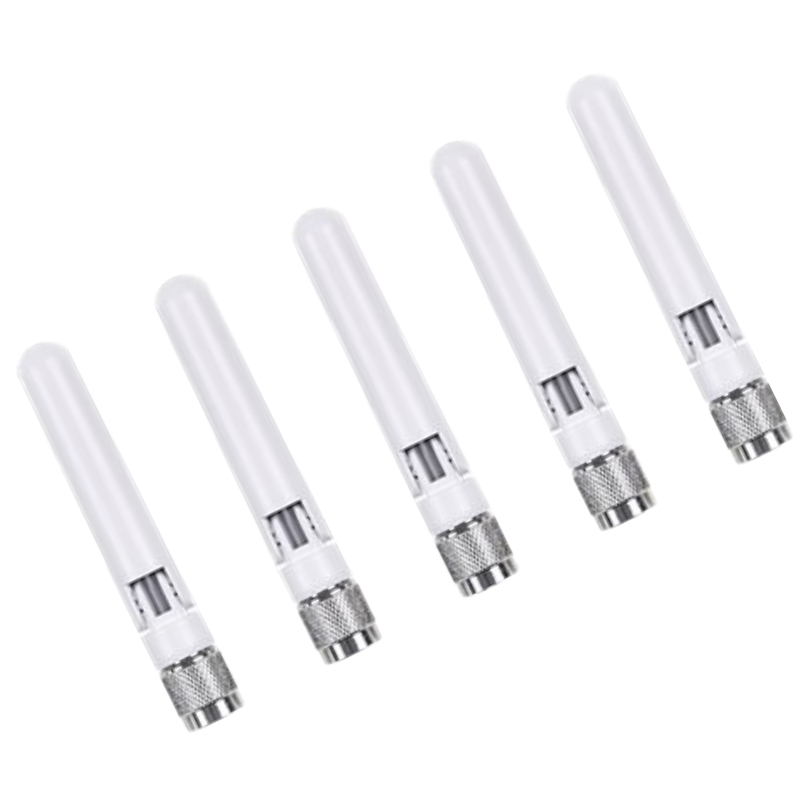
Meraki MA-ANT-3-A5 Cisco Indoor Dual-Band Omni Antennas, 5-Pack. Excellent Refurbished with 1 Year Replacement Warranty
| SKU/MPN | Warranty | Price | Condition | You save |
|---|---|---|---|---|
| MA-ANT-3-A5 | 1 Year Warranty | Contact us for a price | Excellent Refurbished | |
| MA-ANT-3-A5 | 1 Year Warranty | $125.00 | Factory-Sealed New in Original Box (FSB) | You save: $43.75 (26%) |
The Meraki MA-ANT-3-A5 is a premium-grade indoor omni-directional antenna kit designed to enhance wireless coverage and connectivity in enterprise environments. Manufactured by Meraki, this dual-band antenna set is engineered to support stable signal distribution across multiple access points.
Designed for reliable wireless expansion, this antenna offers optimized signal distribution with strong omni-directional performance, making it ideal for indoor networking environments requiring consistent coverage.
The antenna is equipped with a reliable connector interface that ensures secure installation and compatibility with supported Meraki access points.
Built with a compact dipole structure, the antenna is designed to blend easily into indoor environments while maintaining strong signal performance.
This antenna model is designed with eco-friendly materials and production considerations, supporting sustainable IT infrastructure deployment.
The Meraki MA-ANT-3-A5 Cisco Indoor Dual-Band Omni Antennas represent a specialized category of enterprise-grade wireless networking components designed to enhance indoor Wi-Fi coverage, signal consistency, and multi-device connectivity performance. These antennas are engineered to operate seamlessly within dual-band frequency ranges, typically supporting both 2.4 GHz and 5 GHz wireless spectrums, ensuring optimal balance between coverage distance and high-throughput performance. As modern organizations continue to expand their reliance on cloud-managed networking infrastructures, antenna solutions like these become essential components in ensuring uninterrupted connectivity across offices, campuses, retail environments, and distributed enterprise spaces.
Indoor omni-directional antennas play a critical role in distributing wireless signals evenly in all horizontal directions, making them particularly useful in environments where users and devices are constantly moving or distributed across open spaces. The design philosophy behind dual-band omni antennas focuses on eliminating dead zones while maintaining signal integrity across multiple access points, thereby improving overall network efficiency and user experience.
In enterprise networking environments, seamless integration with cloud-managed systems is essential. The MA-ANT-3-A5 antenna category is specifically aligned with Cisco Meraki wireless infrastructure, allowing IT administrators to manage wireless performance centrally through cloud dashboards. This integration simplifies network deployment, monitoring, and optimization while providing granular control over access points and signal distribution.
Meraki’s ecosystem is widely recognized for its scalability and centralized management capabilities, and the use of dedicated indoor omni antennas enhances these advantages by extending coverage without requiring complex hardware configurations. The synergy between cloud-managed access points and high-performance antenna systems ensures that network administrators can achieve both coverage consistency and performance optimization with minimal physical intervention.
Dual-band operation is a defining feature of modern wireless infrastructure. By supporting both 2.4 GHz and 5 GHz frequency bands, indoor omni antennas enable devices to connect based on performance requirements and environmental conditions. The 2.4 GHz band offers wider coverage and better penetration through walls and obstacles, making it ideal for general connectivity needs. In contrast, the 5 GHz band provides higher data rates and reduced interference, which is essential for bandwidth-intensive applications such as video conferencing, cloud computing, and real-time collaboration tools.
The combination of these two frequency bands ensures that enterprise networks remain flexible, adaptive, and capable of handling diverse workloads without degradation in performance. This dual-band capability is particularly important in high-density environments where multiple devices compete for limited wireless resources.
Omni-directional antennas are designed to radiate wireless signals uniformly across a 360-degree horizontal plane. This ensures that connectivity is evenly distributed throughout the coverage area, reducing the likelihood of signal blind spots. In indoor environments such as office floors, conference centers, retail outlets, and educational institutions, this uniform signal distribution is essential for maintaining consistent user experience.
Unlike directional antennas that focus signal strength in a specific direction, omni antennas are optimized for broad coverage, making them suitable for dynamic environments where device locations are constantly changing. This design approach reduces the need for frequent repositioning of hardware and allows for more predictable network behavior across large spaces.
High-density environments present unique challenges for wireless networks due to the sheer number of connected devices. Indoor dual-band omni antennas help mitigate these challenges by distributing signal load evenly and reducing localized congestion. This ensures that multiple users can access the network simultaneously without experiencing significant latency or packet loss.
The ability to maintain signal stability under heavy load conditions is a key requirement for enterprise-grade networks, particularly in industries such as finance, healthcare, education, and hospitality, where uninterrupted connectivity is critical to operational success.
Indoor dual-band omni antennas are deployed across a wide range of enterprise environments. Office buildings utilize them to ensure seamless connectivity across multiple floors and departments. Educational institutions rely on them to support digital learning platforms and high-volume device usage in lecture halls and libraries. Retail environments deploy them to support point-of-sale systems, customer Wi-Fi access, and inventory management systems.
In healthcare facilities, reliable wireless coverage is essential for patient monitoring systems, electronic health records, and communication between medical staff. Omni antennas help ensure that critical systems remain connected even in structurally complex environments with significant signal interference.
The availability of antenna systems in multi-pack configurations, such as a 5-pack format, provides significant advantages for large-scale deployments. It allows network administrators to standardize hardware across multiple access points, ensuring consistent performance and simplifying inventory management. This scalability is particularly beneficial for organizations undergoing rapid expansion or infrastructure upgrades.
By deploying multiple antennas simultaneously, enterprises can maintain uniform coverage across large physical areas without introducing variability in signal strength or performance characteristics.
The technical architecture of indoor dual-band omni antennas is designed to maximize efficiency while minimizing signal loss. These antennas typically feature optimized gain levels that balance coverage distance with signal clarity. The engineering behind these devices ensures that they can operate effectively in environments with significant electromagnetic interference.
Performance characteristics such as signal-to-noise ratio, impedance matching, and radiation pattern uniformity are critical factors that determine overall network efficiency. High-quality antenna systems are engineered to maintain stable performance across varying environmental conditions, including temperature fluctuations and structural obstructions.
Effective separation between 2.4 GHz and 5 GHz bands is essential for preventing signal overlap and interference. Indoor omni antennas are designed with precise frequency response mechanisms that allow both bands to operate independently while sharing the same physical antenna structure. This ensures optimal performance for devices operating on different wireless standards.
Proper band separation also contributes to improved network efficiency by reducing channel congestion and enabling better load distribution across available frequencies.
Wireless security is a critical component of any enterprise network. Indoor omni antennas contribute to secure network design by supporting stable and predictable coverage zones, which simplify access control and monitoring. When integrated with cloud-managed platforms, administrators can enforce security policies consistently across all connected devices.
Secure wireless deployment also involves segmentation of network traffic, encryption protocols, and authentication mechanisms. Antenna systems support these security frameworks by ensuring that connectivity remains stable and reliable, reducing vulnerabilities associated with signal dropouts or coverage inconsistencies.
Optimizing wireless performance involves balancing coverage, capacity, and interference management. Indoor dual-band omni antennas contribute to this optimization by providing consistent signal distribution and reducing the need for excessive access point density. Proper channel planning and power adjustment further enhance performance outcomes.
Network administrators often rely on cloud-based analytics tools to monitor signal strength, device density, and traffic patterns. These insights enable continuous optimization of antenna placement and configuration, ensuring long-term network efficiency.
Load balancing is essential in environments with high device density. Omni antennas help distribute network traffic evenly across access points, reducing congestion and improving response times. This ensures that no single access point becomes overwhelmed, maintaining consistent performance across the network.


 Contact Us
 Information
 Catalog
 Solid State Drives (SSD)
 Network Switches
 Hard Disk Drives
 HBA & Controllers
 PC & Servers
 PC & Server Memory
 CPU & Processors
 Network Routers
 Power Supplies
 Tape Drives & Libraries
 Network Devices
 Computer & Network Cables